Read the opening of BABES IN THE WOOD now

You can read the first three chapters of my forthcoming book BABES IN THE WOOD right now.

TRANSCRIPT:

Hello, folks, all sorts of good news to impart today. First off, if you want to read the thrilling opening chapters to my new book, Babes in the Wood, you can get it right now by joining the Woodville Village Library and downloading this chapter sampler, which also features an exclusive introduction from Woodville Village head librarian, Araminta Cranberry. Available nowhere else! The Woodville Village Library newsletter is for all things to do with the Witches of Woodville books. Sign up and you get all kinds of free and exclusive goodies.

The opening chapter to Babes in the Wood. The short story collection, the Miss Charlotte quartet, recipes for jam roly poly and much, much more and more to come in the future. Araminta sends emails out about once a month and she royally takes the mickey out of me. So what more incentive do you need? Go to: WitchesOfWoodville.com click on the library tab, sign up and Bob is your proverbial uncle.

Oh, and if you’re bookseller or a blogger and have access to Netgalley, you can read the whole of Babes in the Wood now as an uncorrected proof. Just sign in to Netgalley and do the necessary.

I’ve got some exciting events news. A real life book event. I know, though, it’s not actually one of mine. But! I’m going to be in conversation with the mighty Joe Abercrombie at Waterstones Picadilly to celebrate the launch of his new book, The Wisdom of Crowds, the final book in the Age of Madness trilogy. Joe is an amazing writer and a top bloke, and the conversation will be as lively as you would expect. And a splendid time is guaranteed for all, though space is limited, so grab your tickets now.

We’re on Friday 17th September at seven pm, Waterstones Piccadilly.

Stay tuned for more news about a charity short story anthology featuring some amazing authors… and me. And I might… I might even have some movie news soon. Anyway, what are you doing listening to me? Download the Free Babes in the Wood Chapter Sampler. Sign up to the newsletter. Happy reading. Happy writing. See you very soon.

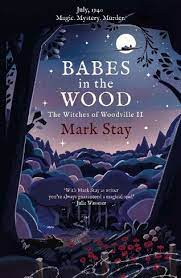
BABES IN THE WOOD

July, 1940

Fleeing the Nazi blitzkrieg, a trio of Kindertransport children come to stay with Lady Aston at Hayward Lodge in Woodville. Their arrival triggers a murder mystery involving a magic apple tree, modern art, a U-boat, and a demonic hound. Faye Bright must play nanny to the terrified children while gathering clues to uncover the dark magic that threatens to change the course of the war.

For fans of Lev Grossman and Terry Pratchett comes the second novel in this delightful trilogy of war, mystery and a little bit of magic . . .

Praise for The Crow Folk

‘Swept me straight back to days of losing myself in Diana Wynne Jones novels, and getting lost in truly absorbing, sometimes scary, sometimes emotive adventure with its roots in folklore and history. A story that is full of magic and delight that will thrill readers of any age’Rowan Coleman, author of The Girl at the Window

‘Stay has brewed a cracking blend of charm and creepiness in The Crow Folk. A rip-roaring tale of bravery and witchcraft on the wartime home front, expertly told with lashings of wit and warmth’Pernille Hughes, author of Probably the Best Kiss in the World  ?

 ‘A delightful mash-up of Dad’s Army and Charmed. An absolute treat’CK McDonnell, author of Stranger Times

‘Warm, witty, witchy wartime fun. With Mark Stay as writer you’re always guaranteed a magical read’Julie Wassmer, author of the Whitstable Pearl Mysteries

‘You’ll love it: Doctor Who meets Worzel GummidgeLorna Cook, author of The Forgotten Village

‘A jolly romp with witches, demons, and bellringing. Pratchett fans will enjoy this, and Faye is a feisty and fun hero. Dad’s Army meets Witches of EastwickIan W Sainsbury

PRE-ORDER BABES IN THE WOOD FROM YOUR PREFERRED RETAILER HERE.

Ten Questions

I was asked ten questions by the author JS Clerk on writing, agents, perspective, voice, the Bestseller Experiment podcast, and all that good stuff. And here are my answers…

You can see more of JS Clerk’s interviews here.

TRANSCRIPT:

  1. Did you always want to be an author? What were your favourite books from your childhood? 

I always wanted to make things up. Play-acting. I think that’s what a lot of creativity is. Make believe. We didn’t have many books in the home, but we went every week to the library. The Star Wars novelisation was a gateway drug to science fiction. And then it was Harry Harrison’s Stainless Steel Rat, and then Douglas Adams, and then Terry Pratchett and Robert Rankin.

I was probably also the only kid who regularly checked out books on what to do in a nuclear war. It was the early 80s and it was disturbing. 

2) Do you have an agent? What was your route into the publishing industry?

I have had many agents. I currently have two: Ed Wilson for books, Matt Dench for scripts. My road into the industry was a temporary Christmas job at Waterstones in Dorking. That was when Tim Waterstone ran the company and insisted that everyone who worked there had a degree. I didn’t. Shh. Don’t tell anyone. 

3) Do you write full time? If so, what was your lifebefore turning to writing? 

I do write full time, very lucky to be able to do that.

I worked in bookselling publishing for over twenty five years, as a bookseller at Waterstones, then a sales rep for a couple of publishers, and then looking after Amazon for Orion. 

4) Which perspective/character voice is your favourite to read? 

Not sure I have one, so long as the voice feels honest and true and suits the story. I’m not someone who gets their knickers in a twist if I see something in first person, present tense, or second person. “You open the door, you see a dragon.” Just tell me your story in your voice. That’s the most important thing. 

5) Which perspective/character voice is your favourite to write? 

I like writing in a fairly close third person. I love the present tense dynamism of screenplays, too, which is two very different ways of telling a story. I did write a children’s book, still unpublished, in third person, and then completely rewrote it all in first person, which was fun. Still hasn’t been published, though. 

6) How do you judge a book? Is it by the cover, or the authors writing style? 

That’s two things there, really. I mean, the cover is what draws you in and makes you want to pick the thing up, and I am a sucker for a great cover, which is why I’m blessed with the covers I’ve got from the wonderful Harry Goldhawk.

The author’s writing style will ultimately be what you judge a story by, I guess. I mean, I don’t like to get too judgey, as long as it’s written truthfully and you don’t bore the reader. I think it’s healthy for an author to live in fear of boring the reader. 

7) For the unpublished author, do you have any advice on querying agents for publication? How does an author know when their manuscript is ready? 

Agents ask two questions: Do I love it? Can I sell it? And if you can answer both those, you’re fine. Finding the right agent is like dating. Only the odds are more stacked against you.

Just persist and remind yourself of how many times people have been rejected before finding success. Persistence is so important in this business and I really, really, really mean that. In my case we’re talking decades of persistence. You really have to want this. As for querying, keep it short, sweet and honest and be patient. Especially now. Agents are still playing catch up after lockdown and there’s no magic combination of words that will get you repped in a covering letter.

It’s all about your writing. And when is it ready? It’s ready when you feel you could give it to anyone to read. Your worst enemy. Truthfully, that day may never come. So don’t go chasing perfection because it doesn’t exist. Get it as good as you can possibly make it. I know my stuff is ready when I go word blind. I can’t tell good from bad anymore. Then I send it to beta readers and get some feedback and perspective.

8) How did the concept for the Bestseller Experiment come about? How did you develop the concept?

The Bestseller Experiment came about… I’d written a movie called Robot Overlords and did the tie-in novelisation as well, and a guy I knew… We didn’t go to the same school, but we went to schools in the same area, had lots of mutual friends… a guy called Mark Desvaux got in touch. And he said, this is amazing, you’ve written a book, you’ve written a film. He said he’d always tried to write a novel, but he never got beyond 20,000 words. And we got talking.

One thing led to another. We both both have very similar interests, both like podcasts. So we challenged ourselves to co-write write a novel and get it self-published and top some Amazon charts within 12 months. But the important thing was that we asked our listeners to beat us to it. We said to people, if you’ve got a half-written book in a drawer or you’ve got something that’s been sitting in your trunk for years… Get it out, dust it off, polish it.  Listen to the guests that we have on the podcast.

And we’ve had people like Sarah Pinborough, Joe Hill, Joanne Harris, major best selling authors, Michael Connelly, Ian Rankin giving fantastic, fantastic writing advice… And beat us to it. And the great thing is loads of them did. I can show you. I’ll show you now. Hang on. See the shelf here. These are all the people that have listened to the podcast and, because of some advice they heard on the podcast, they got published. And that’s the best thing we… that ever could have come … Just the fact that all these people have managed to get their books out there because of something they heard on the podcast is… It’s just amazing to me.

And it’s why we keep going. We’re nearly five years old now. Five years old in October of 2021. 

8) On the podcast, how do you plan your interview approaches?

For interviews, I usually have five or so bullet points, which is good for 20 minutes, we have a really good idea of what our listeners want. So they like writing habits, writing tips, that sort of thing. I try not to get too hung up on sticking to the list. It’s important to listen. Your guest will take you to places you never imagined if you let them.

10) I find that specific pieces of music help me to engage with my characters. Do you listen to music when you write? Do you have a favourite band or artist that you enjoy? 

I used to listen to music a lot, I used to have specific playlists. I’m too old now. I need silence. I wrote Back to Reality with Disney Pixar scores and the score to La La Land. The End of Magic I wrote mostly with Jeremy Soule’s score for Skyrim, which was handy. Robot Overlords, I wrote largely to Daft Punk’s Tron soundtrack. And when I hear those now, they make me think of those books, which is a lovely thing. But yeah, at my age I need the sound of silence.

Get a FREE BADGE when you pre-order Babes in the Wood from Coles Books

Spiffing news. Simply pre-order a copy of my new book Babes in the Wood from Coles Books, and you will receive an exclusive free badge and a signed bookplate copy of the paperback.

Pre-Order Here: https://coles-books.co.uk/babes-in-the-wood-the-witches-of-woodville-2-by-mark-stay-signed-paperback-edition

THERE’S MORE ON THIS YOUTUBULAR VIDEOGRAM…

VIDEO TRANSCRIPT:

Hello, old chap. What’s that on your uniform? Why, that’s a Woodville Village. Badge. How simply spiffing. You look quite the dandy. Where can I get one of those? What’s that? One simply pre-orders “Babes in the Wood” from Coles Books for an exclusive badge and a signed bookplate by visiting Coles-Books.co.uk. Jolly good. Where to now? Oh, you have to pop off to defend this Sceptred Isle from the Nazi hordes. Actually, I was going to the pub…

Babes in the Wood coming Halloween 2021.

Don’t be a Nazi. Pre-order now.

Words To Cut To Make Your Prose More Punchy

Want to make your prose more punchy? Try cutting a few of those filler and filter words. Note: these aren’t hard and fast rules. Of course you can use adjectives and adverbs whenever you like. But if you’re editing, it’s not a bad idea to trim as many as possible.

TRANSCRIPT:

Hello folks. Want to make your prose a little more punchy? When editing, look for those adjectives and adverbs that can really make your writing drag. All those filler and filter words. Find them and get rid of them. For example… Deep breath… “Thought”, “touched”, “saw”, “he saw”, “they saw”, “just”, “heard”, “he heard”, “they heard”, “she heard”… “Decided”, “knew”, “noticed”, “realised”, “watched”, “wondered”, “seemed”, “seems”. That’s one of mine. “Looked”. That’s another one of mine.

“He looked”, “she looked”. “Could”, “to be able to”, yeesh. “Noted”. “Rather”, “quite”, “somewhat”, “somehow”. Although I think these are OK in dialogue, if used sparingly. “Feel”. “Felt”. Now this… this one always starts alarm bells ringing. Don’t just tell the reader that Bob is feeling angry. Try and describe his rage in a way that is unique to Bob. Which is easier said than done, of course. But no one said this would be easy. “And then” — paired together. Cut one or the other. “Had”. If you have two hads in the sentence, one of them has to go. Hads: two hads together… “had had”, which does happen. See if there’s a better way of writing around that. You might have to completely rethink the sentence. “He looks”, “she looks”. “He turned to her and said”, “she turned”, “they turned”… All this turning can make the reader feel dizzy and you can have whole conversations with people turning around and it goes absolutely nowhere. “Supposed”. “Appeared to be”.

“Apparently”. All of these can be weak and they can make your characters feel passive. If you’re writing the first person, these filter words can be doubly harmful. So… “I turned and looked up and saw the elephant raise its foot to squish me” is, well, it’s fine. “The elephant raised its foot to squish me” is a lot more direct. Keep those physical movements to a minimum. All that turning, twisting, looking… Give the reader just enough to animate the action in their own head. You’re not choreographing a musical.

So when you’re editing, look out for these filter words. Do a “find and replace”. Most of the time you’re better off simply cutting them. Other times you might see an opportunity to replace them with something a little more dynamic. What I mean by that? Okay. Add a bit of movement or action or texture. Instead of the “look to”, “turn to”… have them raise their chin, look down their nose, scratch their ear, run their hands through their hair, drum their fingers nervously.

Action that underlines what the character is trying to say or might be thinking. I find it useful sometimes to act the scene out. We’re all writers, spending far too long sitting on our backsides, so a little exercise won’t do us any harm. Get up, move about, film it, film yourself. No one ever needs to see it but you. But seriously, most of the time just cut the buggers. You’re better off without them. Of course there are exceptions. Sometimes we need these words to add clarity to a sentence, but too often I find myself relying on them when I should be trying to be a bit more zippy with my prose.

But hey, that’s editing is all about. Hope you found that useful. Until next time. Happy writing.

You’ve Written “The End”… Now What?

I finished the first draft of my novel this week… but what happens next? Jump right in to edit? Or…

TRANSCRIPT:

Hello, folks, I typed these beautiful words earlier this week… (The End) Of course, this is nothing like the end. This is a raggedy mess of a first draft where three quarters of the way through I realised there were two characters that were completely redundant. So they were left by the wayside. The antagonist had almost completely changed in their nature. And there are several strands that have been left dangling in the wind. Still so far to go. But why not allow yourself this little moment of triumph?

Most people who want to write a book never get this far. So, hurrah! Cheers. I… I don’t drink. So this American champagne will have to do in lieu of actual champagne. But, I hear you cry, if I know what’s broken, why don’t I just go back and fix it right now? Well, those problems I mentioned, those are issues that occurred to me as I’ve been writing. Experience has taught me that there’s going to be a ton of whole new problems that I’ll discover.

And if I were to jump back in now, it would feel like an insurmountable heap of problems and my brain will probably melt in the process. It’s time to take a break from this book, at least. So here’s what I recommend… Leave it for six weeks. Six weeks!? Yup. Especially if you’re new to this. You need to come back at this draft with your eyes as fresh and objective as possible. And you do that by not even thinking about the bloody thing for at least six weeks.

Excuse me. Windy pops. Coke. Fizzy pop. So what to do in the meantime? Read. Read all you can. Refill the tank. Read in your genre, read outside of your genre, read good books, read crappy books. Read to remind yourself what a finished narrative feels like. Also, I’m editing a client’s book… Did I mention that I edit and offer reader reports…? Visit my Writer Services site here.

Doing this, reading another writer’s text in such a way that you want to give them a constructive critique, will exercise all kinds of new synapses in your noggin. Sparking up the same part of the brain that you’ll be using when you come to edit your own text.

It’s good exercise. Limbering up for the main event. That doesn’t mean you have to be like a professional editor or anything like that. This is where you go to any writers you know, and offer your services as a Beta Reader. Ask if they have any finished novels that they need reading, and offer your eyes and brains… In a… Brains, not ears… In a quid pro quo agreement, because you’ll need a beta reader once you’ve finished your next pass. Why not cue one up now?

You’ll learn so much by reading another writer’s work in progress. You’ll see the same kind of issues that you will encounter. You might, even in the process of offering your own notes, come across a solution for your own problems. Happens to me all the time. I’m very lucky in that I have a couple of trusted readers for my stuff and I’m happy to read their stuff at the drop of a hat. It’s a great arrangement, and by the time you’ve read their book — or books — you might get through two or more in those six weeks, you’ll not only find that you’re ready to return to your own work, but what once seemed insurmountable will simply be a bunch of problems to be solved. But that’s a whole new video. Until next time. Happy writing… Or reading… Or critiquing. Cheers.

How To Write Satisfying Endings

How can you write a really satisfying ending to your story?

TRANSCRIPT:

Hello, folks. I’m getting to the final few chapters of this first draft, and that’s when I tend to find that my daily word count starts to drastically go down. Why? Well, up to now, I’ve been getting ideas down on the page, putting my characters into tricky situations, given them terrible dilemmas. And they’ve all made choices with consequences. And it’s all been driving the story forward. But sooner or later, that story has to end and endings are hard.

Just ask George R.R. Martin or J.J. Abrams or anyone who’s had to wrap up a story with a neat little bow. So the creativity brakes tend to start screeching as you realise that you just can’t keep piling on story. If you see my previous videos, you’ll now I’m big on using theme as story fuel, and that’s definitely worked for this first draft. Having a thematic argument has really helped give me focus on how to make things work and I’ve never found myself stuck or blocked.

And just for reference, my thematic argument for this story is: Are we better off working alone or working with others? And I always like to pose it as a question. And I’ve enjoyed this as a thematic argument because there are times when it’s worked for both my protagonist, antagonist, and all the supporting characters. But the problem with a thematic argument is that you have to resolve it. That doesn’t mean you should come down hard on one side or the other.

Ideally, what you want for your resolution is some kind of synthesis. So if you think of your protagonist as the thesis of your argument, they stand for this thing here and your antagonist represents the antithesis over here, then your ending should resolve into a synthesis of both, or something new and unexpected. And that’s what makes for a satisfying ending. Think of The Godfather. So the argument is: can Michael be part of a crime family and maintain his moral high ground?

Well, Michael starts the story essentially disowning his family, but the family’s business tests him, and by the end he’s running the family the way he wants it run, but he’s also defending it with violence by ordering hits on the other families. A synthesis of ideas there. Raiders of the Lost Ark. Can a grave robber prove himself worthy of a great prize? Indy starts the film dismissing the Ark as superstitious nonsense. But by the end, his growing understanding and belief in its power is what saves him and Marion.

And don’t come at me with that Big Bang Theory crap about Indy not affecting the outcome of Raiders. Those people are confusing plot with story and are completely missing the point. Finding Nemo: Marlin, the overprotective father. He crosses a dangerous ocean and finds himself proven right again and again. Yes, the ocean is a dangerous place, but he realises that he has to let his son save Dory. Pixar, frankly, are masters at this kind of thematic storytelling.

Take the time to watch a few Pixar “making of” videos and you’ll get all this good stuff in great detail. This thesis/antithesis stuff is all horribly simplistic, of course, and easier said than done. But keeping this in mind, as I write these last few chapters, has really helped me figure out how to bring my story train to a stop and keep it on the rails and hopefully give the reader a really satisfying ending. Of course, the tracks behind me are a complete disaster, but, hey, that’s what rewrites are for.

OK, till next time, happy writing.

Six Tips for Writing Action

Six tips for writing engaging action and fight sequences in your fiction…

TRANSCRIPT:

Hello, folks, as I get closer to the end of this draft and I start ramping up the tension and the stakes and the action and, well, I’m about to embark on a big old action sequence. Here are six tips for writing action in fiction. Number one, don’t just have action for the sake of it. It needs to advance the story. By that, I mean it needs to create change and have consequences. Your characters will have to make choices in the heat of the moment that will affect what comes afterwards.

If you can just take that action sequence out of the story, and the scenes that sandwich it still work together, then maybe the action sequence isn’t earning its keep. Remember, we had two big action sequences lined up for Robot Overlords. A chase in an ice cream van. And later, a chase with our heroes pursued by a new robot called Octobots. And these were fun sequences, but ultimately they had zero effect on our story and characters and they had to be cut.

That said, I’m still keen to try out an ice cream chase one day. I always file these things away for later. Two. Let the reader do the work. This is where, strangely, action sequences have something in common with sex sequences. Don’t feel the need to give the reader a blow by blow account.. Oh, behave. We don’t need every punch, kick, swerve, stab and parry. It gets tedious pretty fast. Give the reader just enough detail for them to create the action in their head.

And if there’s some sort of skill involved with a sword or a gun, then it’s worth doing a little research to make it feel real. Again, we don’t need to know the inner workings of a Glock whatever to know that it goes bang and that bullets hurt people. I rail against a lot of modern thrillers where the author seems to get sexually aroused when talking about guns. In fact, I try to put mistakes in my stories just to wind up NRA members. Ha! Three. Pace.

That is, don’t just give us big blocks of action, mix it up with some dialogue, write in short, punchy (ha!) sentences and keep the internal monologue visceral. This is not a time for ponderous reflection. That can come later. This is a time for panic, fear, anger, fight or flight. Use all the senses, the crunch of the bone, the taste of blood, the sweat and filth of battle. That will really help put the reader in the middle of the action.

Four. Think of the setting. Is it a chase down narrow streets in Paris, or the skies above the Grand Canyon? When your hero falls, is it on sand? Tiles? Stinging nettles? Can they hide in the jungle, or are they exposed in a wide open desert? What weapons are at hand? I love those unconventional fight scenes where Jason Bourne uses a rolled up magazine or John Wick uses a book. Use the setting and its props to make the sequences as fun and inventive as possible.

Five. Give it a beginning, middle and end. I’ve used the word “sequence” a few times already and I find that it helps to think of any action beat as its own little short story with a beginning, middle and end. One where the stakes are continually raised with a growing sense of urgency. Compacting all that story into a frenetic action sequence can make your hero make bad decisions — creating those consequences I was talking about earlier — and it will leave the reader breathless and wanting more. I’m quite breathless myself.

Six. Aftermath and keeping it real. In too many stories, the hero walks away from a fight with nary a scratch, and even if they do get wounded, they often bounce back with superhuman speed. That may be appropriate for some stories, but readers will better relate to characters who hurt, who get the shakes, who mourn the deaths of their friends — and enemies — who regret having to do terrible things. This is, again, where a little research will help as well.

What does it feel like to break your ribs, be shot or stabbed? I bet it hurts a lot more than we might imagine. I speak as someone who stubbed my toe recently. Well, I hope that was helpful. Any questions or comments? Then please pop them below until next time. Happy writing and stop fighting.

Found this helpful? Then please…

Five Tips for Writing Exposition

Here are five tips for writing exposition without getting bogged down in, well, exposition…

TRANSCRIPT:

Hello, folks, let’s talk about exposition. I’ve got to the bit in my book where my protagonist figures out what the villain is up to and there’s a ticking clock and she has to stop him before everything goes horribly wrong. Very much that tipping point from Act two into Act three. See an earlier video for tips on tipping points…

The great danger here is that this could turn into nothing more than a big dollop of exposition, also known, delightfully, as an info dump.

You know those moments in the movies where the villain reveals their evil plan, and this is so common that it’s become a trope in itself. There’s a lovely moment in The Incredibles where Syndrome says, “You caught me monologuing”. Basically, we’re talking about exposition. And in this specific case, how will the villain reveal their dastardly plan unless they tell the hero about it? Now, at this point in the story, the exposition is coming in late. As I said, the pivot between the second and third act, which is to my advantage, because if if you haven’t already, you can go back and leave clues for your hero and the reader to piece together what the evil scheme is, or if you want to invert that idea, your hero can think that they know what the plan is…

And then the villain can reveal a wicked, additional twist that they can take great glee in revealing. I think that’s what’s going to happen in my story. In the meantime, here are five tips for writing exposition; One: Have someone get it wrong. There’s a great moment at the start of Raiders of the Lost Ark where the two Secret Service guys come to Indiana Jones and tell him about the Staff of Ra, Abner Ravenwood, and something called the Lost Ark. And it becomes clear that they haven’t got the first clue what they’re talking about.

So Indy corrects their mistakes. This is such an effective way of getting exposition across that we, the viewer, hardly notice. It not only is Indy’s enthusiasm for the subject infectious, but it also gives him agency, and proves to us and the Secret Service men that he is the right man for the job. It’s a great subversion of an old trope because we’re so used to seeing James Bond stepping into M’s office and being told what the mission is, and it can be very passive with a big info dump. But this is a much, much better way of doing it.  Two: Dramatise it. As with any essential bit of story information, it will always stick in the reader’s mind if you can dramatise it. Don’t tell me that your hero is a witch. Show me the hero doing some magic and include a few telling details. Is she skilled or does she need more experience and practise? Does she work alone or with others?

Does she use magic compassionately or for her own gain? By creating a bit of action and drama you can reveal so much more about a character than just having someone tell us. This can also be applied to a character revealing a bit about their past. Don’t just have them tell us. Show it in a widescreen, full-colour flashback, or a dream, or a crystal ball. Any bit of drama will be better than a dry retelling. Three: Do it with style.

OK, hands up. There are times when you kind of have to just tell the reader, or viewer, a bit of essential information. So if you have to do it, do it with style. Think of the opening crawl of Star Wars. Lucas pinched that from the old Flash Gordon serials, which had to bring the cinemagoers up to speed in just a few seconds… Or sing it in a song, interpretive dance, beat poetry, or have them tell a story with the kind of zingy and engaging dialogue used by the likes of Quentin Tarantino, David Mamet, Victoria Wood, Nora Ephron, Tina Fey, Shakespeare.

You get the idea if you’re going to tell it, make it good. Really good. I mean, extraordinarily good. No pressure. Four: Parse it out. Don’t feel the need to unload it all at once. Think about what the reader needs to know and when. Your antagonist might be a spy, a Nazi, a sous chef and an expert in kung fu. But that doesn’t mean we need to know all this when they’re first mentioned. Have some fun in revealing these nuggets when — and this is the important bit — when they can have the most impact on the story and the reader. To quote Billy Wilder, “Always allow the audience to add two plus two and they’ll love you forever.” Five: “Or… just don’t bother. You know, I’m old enough to remember seeing the first Star Wars, and not knowing what the Clone Wars were, why Darth Vader was in that suit, or even if Stormtroopers were real people or robots. And it didn’t matter one little bit. You’ll be amazed at how little some exposition matters. And as for BackStory, I’m going to let you into a little secret…

There’s no such thing as back story. There’s the story you’re telling and that’s it. The reader doesn’t care what happened before or after unless it directly affects what you’re telling them now. And if it does, then it will be in this story. If it doesn’t, don’t bore them with it. Tell one story and tell it well. Don’t weigh it down with a bunch of digressions. Honestly, I blame Marvel. Ooh, controversial. Right. Well, I hope that was helpful.

Any questions? Pop them below or drop me a line. Until next time, Happy Writing. 

Quick, Quick, Slow: What have been the technological changes in publishing this year?

I’m part of a panel for the online London Book Fair looking at how technology has changed things for publishing and bookselling in the past year. I’ll be giving the perspective of a writer, and I’ll be joined by Simon Appleby, director of Bookswarm, Hermione Ireland, MD of The Académie du Vin Library, and the panel is chaired by Justine Solomons of Byte the Book. We’ll be looking at how Zoom has changed meeting culture, our favourite apps, selling direct to readers, and the future of publishing.


Come and join us on Wednesday 23rd, June, 1:30-2:30pm.

The Miss Charlotte Quartet is Complete

With the publication of THE MEMORY THIEF, the MISS CHARLOTTE QUARTET is now complete. A series of four short stories featuring the witch Charlotte Southill from my Witches of Woodville novels. Sign up to the Woodville Village Library newsletter and grab your FREE copies here… https://witchesofwoodville.com/#library

The stories were edited by Julian Barr: https://jbarrauthor.com/editorial-services/

Cover designer Andrew Bowden: https://www.ididthat.uk

TRANSCRIPT:

Hello folks, the Miss Charlotte Quartet is now complete. Okay, I know some of you will be going, “What’s a Miss Charlotte Quartet?” Well, Miss Charlotte is one of the witches in the Witches of Woodville novels. And she’s very mysterious, and there are all kinds of hints that she has a murky past, and she might just be a wee bit older than she’s  actually letting on. The four stories in the Miss Charlotte Quartet  explore her history. Not all of it. Don’t worry, she’s still as deliciously ambiguous as ever.

But the stories go from 1593 to 1910. See, told you she was old. Weirdly, I also seem to have written a love story as it’s about Charlotte falling in love with a young woman called Lizzie. And, well, to say any more would be a spoiler. These stories began life as a project to get me out of my funk during the first covid lockdown. They started with just a few hundred words a day and have become something wonderful.

Thanks to the editorial skill of Julian Barr, and the splendid artwork of Andrew Bowden, both are available for hire, I would not hesitate to recommend both of them wholeheartedly. Julian saved my bacon on a number of occasions with his sharp eye, and Andy went out of his comfort zone to produce what I think you’ll agree are a fantastic set of cover designs. Thank you, gents, for helping Miss Charlotte and me on our way. Thanks also to Claire Burgess for her help on the audio books and of course, to Woodville Village’s head librarian, Miss Araminta Cranberry for, well, not throwing me out of the library, especially when it was raining, which was… usually. And most of all a huge thanks to everyone who has read all of these stories and said nice things about them. That’s all an author ever wants, really. So what’s next? Well, I’m currently writing the first draft of SKYCLAD, the third Witches of Woodville novel. That should be done in a few weeks.

Just a first draft, very rough. Then it’s copyedits for book two, BABES IN THE WOOD. Once they’re done, I’ll be sharing the first few chapters with everyone who subscribes to the Woodville Village Library newsletter. So that’s where you can also get all these free stories, not just the Miss Charlotte Quartet, but all of these too. Hey, hey, hey. I’ll pop a link in the description below. This is the part of the video where in the past I’ve put a clip of the audiobook.

Oh, did I mention these are also available as MP3 audiobooks to download narrated by me. Never mind. But I don’t want to do this for this because it would reveal something a bit spoilery. So just grab your copy now. Free, it’s free! Thanks for watching and happy reading.