Our chums at the BFI have released this cracking little behind-the-scenes vid for Robot Overlords. It features action, robots, our awesome cast, Jon, Piers and my big flappy hands…
… but don’t let that put you off. Tickets for the festival are on sale now and you can get them here. And the video is below, enjoy!
*Edit! I’ve learned that this vid might not play outside the UK! Gah! As soon as I have an international version I’ll pop it up. Sorry!
Apart from a lucky few who came to our preview screenings, this will be the first time the general public gets to see the film on the big screen. Many people have worked incredibly hard to make this film look and sound mind-blowingly good, and these venues will really do it justice, and you get to see it with a festival crowd — there’s nothing quite like it.
As always, for news on the film do please follow @Robot_Overlords on Twitter — there’s some very cool news just over the horizon, so watch this space…
I’ve been sitting on this top secret news for well over a month now, but it’s been officially announced this morning that ROBOT OVERLORDS will be part of the 58th BFI London Film Festival!
Honestly, I’ve been fit to burst… so glad it’s out there.
Me… just now…
We’re part of the festival’s Family strand and there will be two showings:
Apart from a lucky few who came to our preview screenings, this will be the first time the general public gets to see the film on the big screen. Many people have worked incredibly hard to make this film look and sound mind-blowingly good, and these venues will really do it justice, and you get to see it with a festival crowd — there’s nothing quite like it.
As always, for news on the film do please follow @Robot_Overlords on Twitter — there’s some very cool news just over the horizon, so watch this space…
But it’s a great problem to have. I know plenty of writers who would gnaw their right arm off for an opportunity like this. Though writing without a right arm is surely more difficult than writing with both, so they clearly haven’t thought it through.
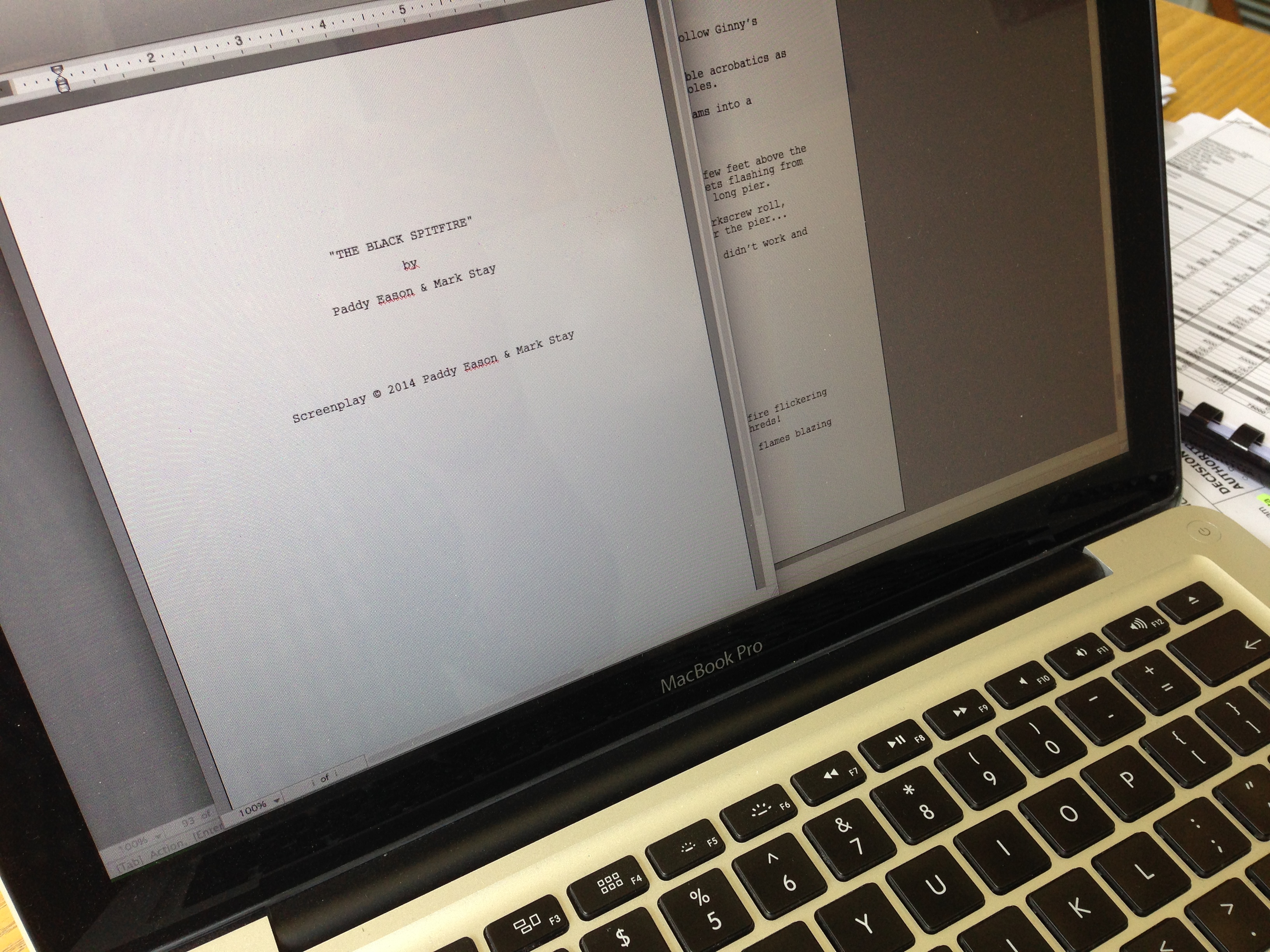
I’m also working with Jacqui Wright on a black comedy called KILLER FAMILY CHRISTMAS, and I’ve just finished a pass on a cracking World War Two adventure called THE BLACK SPITFIRE, which I’ve been writing with VFX guru and Spitfire connoisseur Paddy Eason. And I’m also trying to find time to write a novel. I’m about ten thousand words in, and all I need is an extra day in the week and I’ll be fine.
2. How does your work feel different to others of its genre?
I tend to think bigger than most of the British writers I meet. Trouble is, we don’t make many big budget movies over here, so the opportunities to write blockbusters are few and far between… but then you eventually get a reputation as the guy who can write ‘big’, and that gets you meetings. A lot of Brit writers will write a low-budget spec — maybe a horror with a £150k budget — because they think that’s all that will ever get made, and they’re largely correct, but there’s a part of me that wonders if this isn’t just a vicious circle.
People tell me that I write pacy stuff, that it’s often funny with good dialogue. I know that we’ll never be able to compete with Hollywood when it comes to crash-bang-wallop values, so I try to make the characters as interesting as possible.
One of the most gratifying things about watching ROBOT OVERLORDS with British children is seeing them enjoy watching kids that speak like they do, and live on streets that they recognise, having a massive wide screen adventure. If you’re eleven, you’re too young to have seen Harry Potter on the big screen, so this will be a new experience for you. That already marks the film out as different from anything out there at the moment.
3. Why do you write what you do?
I think you simply have to write the kind of movies you love watching. Having been through the process of ROBOTS — nearly four years and counting — I don’t think I could enjoy writing something that didn’t have me skipping to the keyboard each morning. That’s not to say it’s all flowers and sunshine — it’s often hard — but that passion is what gets you through the tricky days.
When I was younger and a little more desperate I would try and write anything. There was one comedy that I was attached to for years, which became a grim experience simply because I was wrong for the job. Tonally, it just wasn’t me and I was wasting everyone’s time. To thine own self be true, innit.
4. How does your writing process work?
I outline like a mofo. Just keep drilling down and down and down until I feel confident that I can start writing individual scenes and sequences. Then I rewrite and rewrite and rewrite.
I like rewrites. It’s the only way to improve. Then when the script is big and fat, I start cutting, cutting, cutting, bare to the bone, as lean as it can be.
I’m also very aware that as a screenwriter, what I write needs to make sense to the director. He or she is the one standing on set on the day with the cast and crew staring at them, waiting for some… er… direction… and if the director doesn’t understand why a scene is still in the script, ie: because I insisted that it stay in due to some emotional attachment that I have to it, then guess how good that scene is going to turn out?
This means I’ve learned to bend a bit. Well, quite a lot. A screenwriter needs to be a bit of a contortionist. If you want authorship, then write a novel.
Well, I’ve waffled on for quite long enough. I’m going to find a few more writers for this blog tour and will post their details here soon, and we can all benefit from their wisdom. Thanks again to Kevin for the tip off!
Last night I was invited to a screening room at Molinare, where I was lucky enough to sit with a few of the folks who’ve been working these past few months like hyperactive worker bees on Red Bull as they put the final polish on ROBOT OVERLORDS. The ADR, the sound effects, the sound mixing, the score, the VFX and the grading. All of these dark arts have finally come together to present the finished film. I can’t see into the future, so I don’t know if the movie will be a massive hit, a red-stinger of a bellyflop, or the kind of film that sneaks into cinemas for a fortnight and then disappears forever, only to sporadically reappear on cable TV on Sunday afternoons like some celluloid spectre. But I can tell you that we’ve made the film that we set out to create. A fun adventure for the young at heart. And these final flourishes have elevated it to a whole new level of incredibleness*, making me grin like a loon throughout as I watched. It’s funny, thrilling, moving and a feast for the eyes and ears (see it in a cinema with the best sound system you can find!). I hoped it would be good. I had no idea it could be this good. So many people have worked above and beyond the call of duty to make it happen. It deserves to be seen and enjoyed, and I throw myself prostrate at the mighty gods of cinema in the hope that it will. The very moment that we have any news on a firm release date, I shall shout it from the rooftops. In the meantime, here’s a fuzzy photo of Paddy’s hand on the first day of filming as he prepares to take a pic of the first clapperboard of the shoot (don’t say I never give you exclusives)…
First of all, let us gaze upon the awesomeness of the cover art…
It’s a robot… a big one!
The Sentry robot was kindly donated and posed by the good folk at Nvizible (laser weapon, model’s own), and the rest was co-ordinated and designed by Nick May of the Orion art department and the wizards at Blacksheep Design, who’ve won awards for all sorts of cool covers, not least Adam Roberts’ JACK GLASS, one of my favourites of last year.
The book has been huge fun to write and, in the tradition of my favourite tie-in novels, will expand on scenes and characters from the film, as well having plenty of new material completely original to the book. My hope is that the book and film will complement one another, so if there’s a moment in the film that leaves you wanting to know more, you’ll find it in the book.
Tie-in novels are usually a late addition to a publishers’ schedule, often written in a rush by an outside writer. So I am very grateful that Gollancz took a punt early on in the process, and gave the go-ahead to this while we were still shooting the film. It’s given me the time to write the book I wanted to and, thanks to the brilliant editing of Gillian Redfearn and the copy-editing skills of Lisa Rogers, it’s become a much better book than I could have hoped for.
It’ll be available in paperback and eBook, and there might even be an audio edition. The publication date will be as per the release of the film. We’re saying February 2015 at the moment, but that will almost certainly change. There might even be a special edition with some top secret added extras. I’ll be sure to update here with any news as soon as I get it, and be sure to follow @Robot_Overlords on Twitter for news about the film.
UPDATE NOVEMBER 2023: The bad news is neither the sequel or the proposed TV series will happen. A shame, but that’s what I get for getting excited too soon!
Last week Tempo Productions announced that there will be a sequel to ROBOT OVERLORDS, called ROBOT WARLORDS coming in 2016!
And not only that, it’s the second part of a trilogy.
But, I hear you cry, the first one isn’t even out yet. How on Earth can you be working on a sequel already? Let’s just say that now that we’ve almost finished post-production, our beloved producers are feeling very bullish about ROBOT OVERLORDS. And, like our mechanical antagonists, they are bent on world domination… or a movie franchise at the very least.
Of course, the writer side of me will believe it when I’m on set and Jon is behind the camera again… But we’re working hard on the script and I think it’s going to be a belter.
There’s no casting news or plot details yet, and we’re unlikely to release any further news for quite some time as it’s all tip-top secret. For all Robots news I’d normally tell you to follow @Robot_Overlords on Twitter, but frankly it’s always @DocFourFour who hears about this stuff before I do, so I would also advise that you follow him! He’s a background artist on Robots, Grabbers, Game of Thrones and The Fall, amongst many others, and a top bloke to boot.
So, until we get more definite news, I’ll be humming this wonderful tune…
Update: I’ve been reminded that Laurence’s extra-partner-in-crime Michael Stuart also alerted me that Robot Warlords was on IMDb… so follow him too @MichaelStuart69!
A version of this first appeared over at the Gollancz Blog.
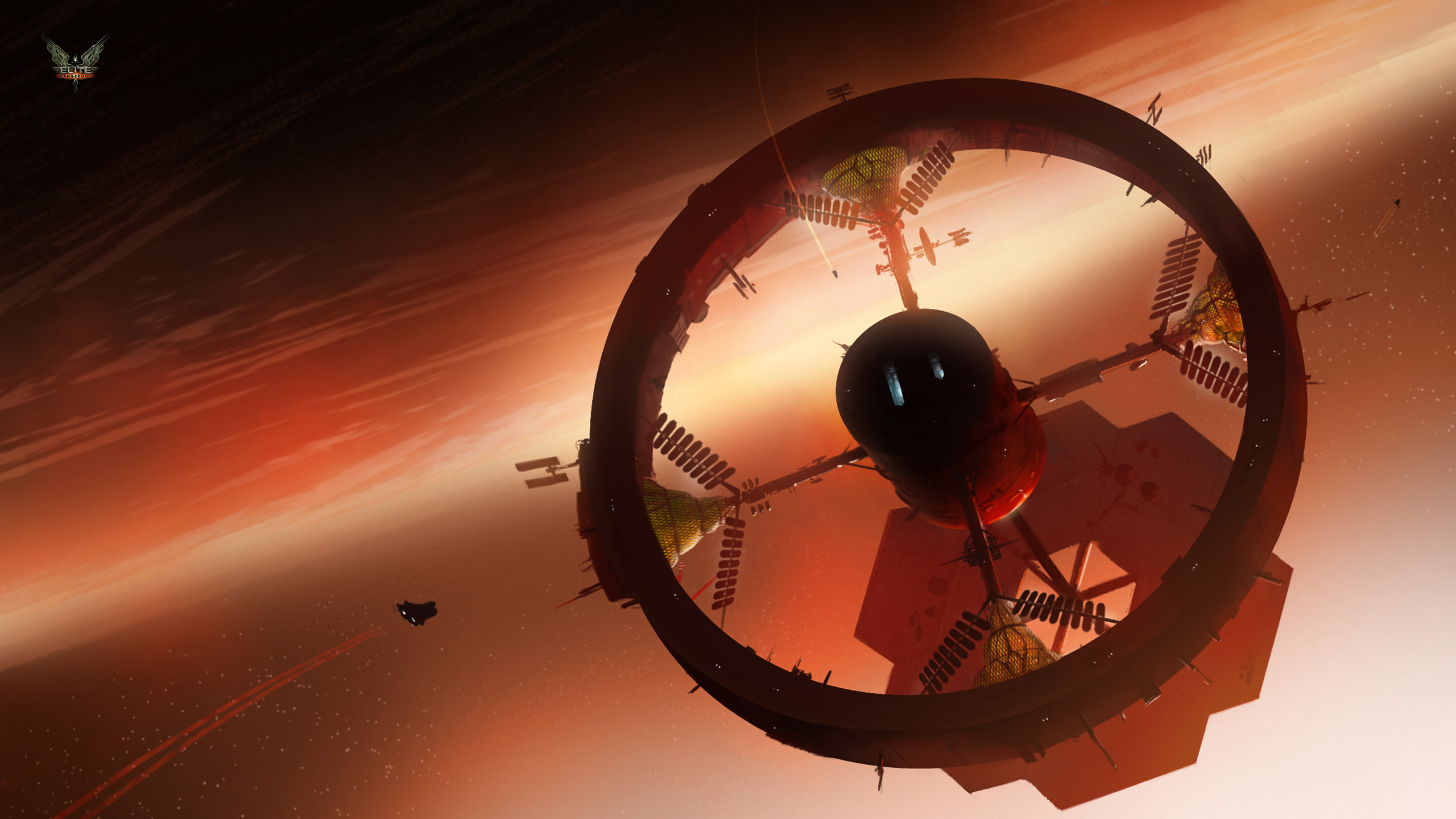
I was delighted to hear that classic game ELITE was making a comeback this year, and even more delighted when I learned that Gollancz would be publishing a trio of tie-in novels. But what is thing you call ELITE, you cry? You mean you don’t know?!
Well, I had a similar reaction from some of m’learned (or not) sales colleagues at Orion Publishing, so I put together the following to help them sell it in…
Morning all,
It has come to my attention that some of you are struggling to get your heads around the Elite books, so here’s a quick guide for you norms…
Elite was a space trading game launched in 1984. The player could pootle around the universe, going from space station to space station, buying and selling goods. Of course, after a while this got boring and the player would be tempted to sell weapons and narcotics to make more money to buy cool stuff like docking computers (docking was really bloody hard), but this would usually get you blown up by the space fuzz.
It was massively addictive, and I, like many others my age, spent hours hunched over my BBC B computer staring at simple graphics like this…
That triangle thing is a spaceship, the dodecahedron thingy with the letterbox is a space station.
It was a huge influence on gaming, and for years afterwards men (mostly) of a certain age would talk whimsically of Elite and the hours of pleasure it gave them (this was years before internet porn).
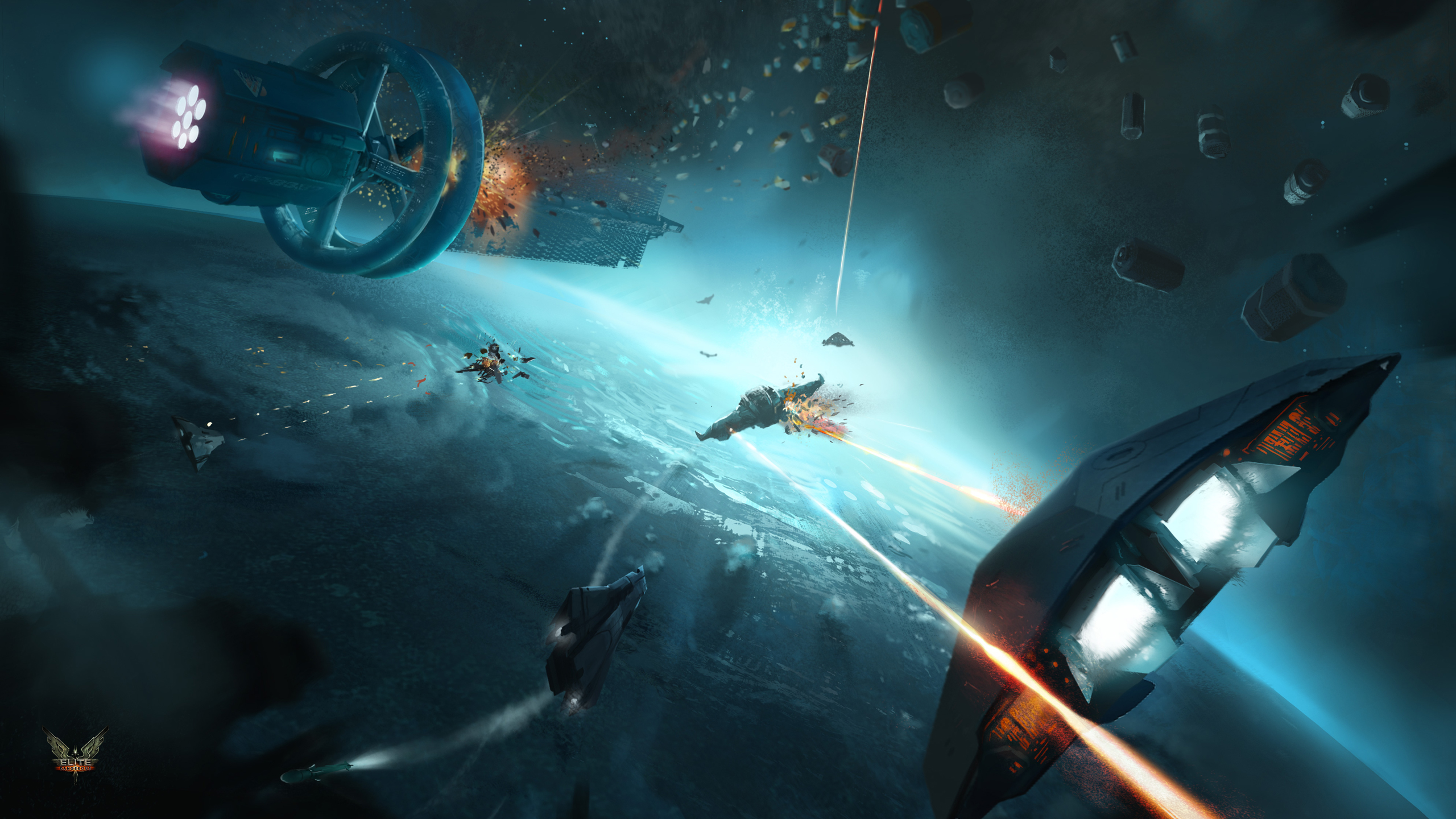
Well, of course, nothing stays dead forever these days and now Elite is coming back. Only now it looks like this (click to enlarge for the full cor blimey experience)…
Holy crap! Explosions!
Big space stations! Space ships!
More explosions! More spaceships! Where do I sign??
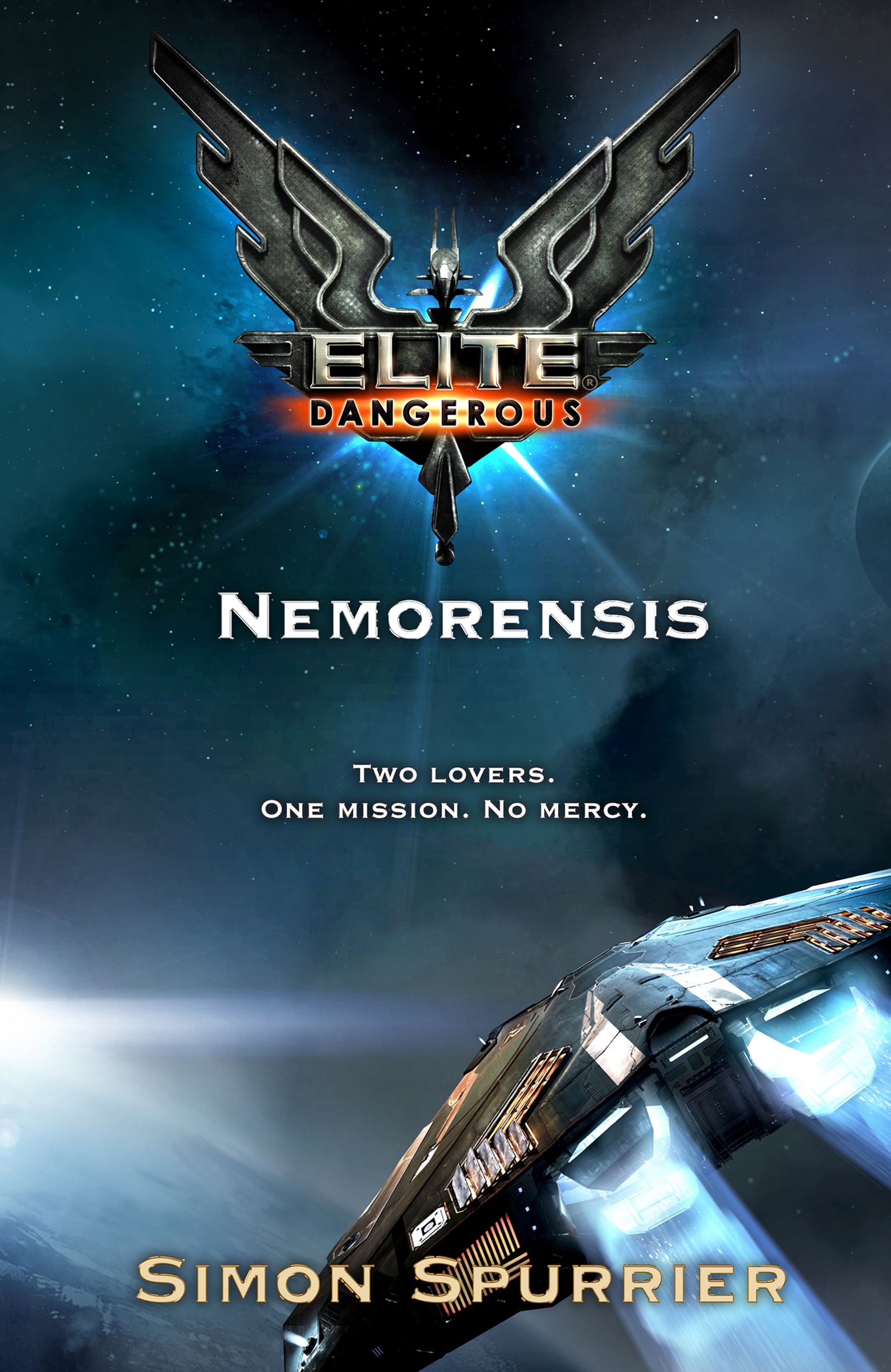
The new game has been brought to life via Kickstarter – that is, paid for by fans who will get first dibs at the game.Gollancz saw this and, as part of the Kickstarter, bought the rights to the books. The books are all set in the Elite universe and are quite different:
I’ve had a pretty incredible 2013. I also have a row of bruises on my arms where I’ve been constantly pinching myself, for 2013 was the year of things-that-do-not-happen…
The way it usually works is you get your first job on a low-budget horror, or maybe on one of the BBC TV shows like Doctors, and you struggle for years before getting a break. Or, if it is a ambitious movie, you – the inexperienced writer – are eventually fired by nervous producers and replaced by someone with a better CV.
None of these happened. Well, I’ve certainly done the struggling bit. I’ve been writing for years and failing quietly. But with each dead end, every trip to development hell, and with every new draft, my writing improved and I made new friends in the film community. I have that low-budget horror movie on my CV, it just never got made (yet).
Then, once the film went into production, my day job employers at Orion Publishing were gracious enough to allow me to take a six month leave of absence to concentrate on working on the film. Again, that never happens! Employers might understandably be wary of extracurricular activities, some might even back you into a corner and ask you choose between the security of a regular paycheque, or the risky world of a the freelance writer. Not these guys. They were incredibly supportive, and have kept the door open for my return. I could not have asked for more.
Pictured on set: one jammy bastard…
Those six months allowed me to be on set during production, to be readily available for rewrites, to work solidly on [redacted], and that script about [redacted], and to really get my teeth into [redacted]. All top-secret eggs, laid in 2013 and hopefully all hatching in 2014.
I also got to live the freelance writer life for six months. Writing in solid chunks 9-to-5, instead of sporadically on the train/lunch breaks/nights/weekends. I did not waste a second, and this has been the most productive year of my writing life.
So, tomorrow, I return to the day job. Some friends have asked if I’m dreading it. Not at all. It’s a pretty cool job, it’s not working in a salt mine or anything, and I work with some fantastic people that I’ve missed very much. I will go to work tomorrow with a skip in my step.
But I’ve had a taste of another life these past six months, and I liked it. It’s a world where the work and money is precarious, and there’s no more failing quietly once the general public get their teeth into what you’ve written, but it’s the thing I love to do most, and in 2014 I’ll be working harder than ever to make it a reality again.
Thanks to everyone for their good wishes and support and I hope you have a fantastic 2014.
I took my mum to the cinema to see PHILOMENA last night…
The last time we saw a film together was in 1978 when she took me to see STAR WARS for the second time. I remember chatting to an old lady on the bus on the way there and telling her how excited I was, and she tried to look sympathetic but told me she didn’t understand any of that spaceman stuff.
That wasn’t mum’s last ever visit to the flicks – not long after she saw ABBA: THE MOVIE and had a great time – but she stayed away after that. It was around this time that my dad, one of those people who has to have the latest gadget*, bought a VHS recorder. Why go to the movies when you can watch them at home? A man used to come door-to-door on our Hornsey estate with a typed, mimeographed list of films available to rent. Our first ever VHS rental was SMOKEY AND THE BANDIT, and I would scan the list for more, intrigued to know what kind of movie LEMON POPSICLE could be (there were no illustrations whatsoever to give us any hints or clues). I begged dad to let us rent FLASH GORDON, only for him to point out that the film listed was actually FLESH GORDON and not entirely suitable for children (he, uh, saves the Earth from Emperor Wang’s incredible sex ray, according to the trailer)…
But I still go to the movies. In fact, I reckon I’ve already seen more films in the cinema this year than any other. So why, when you take into consideration getting a babysitter, paying for parking and over ten quid for a ticket, do I still go to the cinema?
Going to the West End for the first time with dad to see THE PINK PANTHER STRIKES AGAIN. I don’t remember much about the film, but remember the bright lights of the stores and restaurants in Chinatown making a big impression.
Going on a school trip to see SNOW WHITE AND THE SEVEN DWARFS after we did it as a school play (I was Grumpy… typecast from the start).
Watching GHOST BUSTERS on a ferry to Ireland in a storm. The ship listing heavily from side to side added considerably to the feeling of horror and unease.
Watching THE GOONIES while on a soccer exchange in California. I was horribly homesick, but this had me hooting with laughter.
Bluffing my way into TOTAL RECALL with my best mate Tim (our first 18 movie – we were only 17… yes, shocking, I know).
Deciding to see GOODFELLAS with my A-level drama class after going to the West End to see a play, only to discover that it had closed the previous week (a great bit of planning on the part of our drama teacher). In the row in front of us were a pair of little old ladies who must have just come from the wrestling as they revelled in the film’s visceral violence while sucking on bonbons.
Bumping into Claire at a screening of ROBIN HOOD: PRINCE OF THIEVES. We weren’t seeing each other at the time, but it’s since become “our film”… aww, stop puking at the back.
My first free preview of a movie was CASINO, hosted by Transworld, the publishers of the book. Free food and drink and a private cinema?! Nice. I could get used to this.
Taking Claire to see RESERVOIR DOGS and knowing that she was the girl for me.
Watching SKYFALL with the kids – their first cinema Bond movie – and seeing their little faces light up at the big screen mayhem.
And many more that I won’t bore you with now, but these are all about sharing an experience that you can’t get when sitting in your own living room. I always feel a tension when a film begins. Partly it’s “will that twat who was chatting all through the trailers continue to do so through the film?”, but it’s more to do with what kind of emotional rollercoaster is this story going to take me and my companions on today?
Going with mum last night was a shared experience. Having a drink and a chat before the film, I learned stuff about her that I never knew before. Watching the film we laughed and cried together, and I suppressed a giggle when she called the nuns “Bitches” just a little too loudly near the end.
And that’s why I go to the movies.
*An expensive habit that I’ve inherited from him big time.










 Mark Stay Writes