Lucy Strange is an award-winning children’s author whose books feel like classic children’s literature, but are written in a style that is engaging and accessible for today’s younger readers. Most recently she’s collaborated with artist Pam Smy on their spooky, funny new series Lockett & Wilde’s Dreadfully Haunting Mysteries!
Often inspired by folklore and fairy tales, Lucy combines historical settings with touches of magic and fantasy to create utterly convincing worlds in which anything might happen…
And before becoming a professional writer, Lucy worked as an English teacher for fifteen years. Having also trained and worked as an actor, Lucy narrates her own audiobooks, winning the 2019 Audie Award for The Secret of Nightingale Wood.
I hope you can join us live on TUESDAY 23RD SEPTEMBER 8pm BST.
Creative Differences, the monthly podcast where I talk to writers about the little things that make a big difference to their writing process, is a year old today! It’s been such a treat to chat to authors, and to have writers and readers like your good selves joining us on the livestreams and asking such excellent questions of the guests.
If you’ve not dipped in, then there’s never a better time to start. I’ve interviewed bestselling and award-winning authors like Sarah Pinborough, Nadine Matheson, Gareth L Powell, Tracy Buchanan, Rowan Coleman and Nicola May, and debut authors and writers that I just really like. You can find them all on Youtube or on your favourite podcast provider…
Or you can watch them all on this Youtube playlist…
And there are bite-size clips here…
And if you’re a writer looking for guidance in this crazy world of publishing, then you can join me in the Green Room…
Twice a month, I run live sessions on Zoom where you can ask me questions about the craft of writing, your WIP, or the business of publishing. The sessions are fun and informal and chatty. You can send me questions in advance. They’ll be recorded live and saved on Kofi for exclusive access to Green Room supporters.
I’m running this via Kofi, where you can join by clicking on the Green Room membership tier for £20 a month. There’s no long term commitment. With Kofi, you can support for just a month, or for as long as you like.
My goal is to be able to give supporters advice that will make a real difference to their writing and career, because the way I see it: having worked in this industry as a salesperson, bookseller and author for over 30 years, I’ve made every mistake, so you don’t have to.
Thanks again to everyone who has supported the podcast by listening, sharing or leaving a rating/review with their podcast provider. It makes a huge difference!
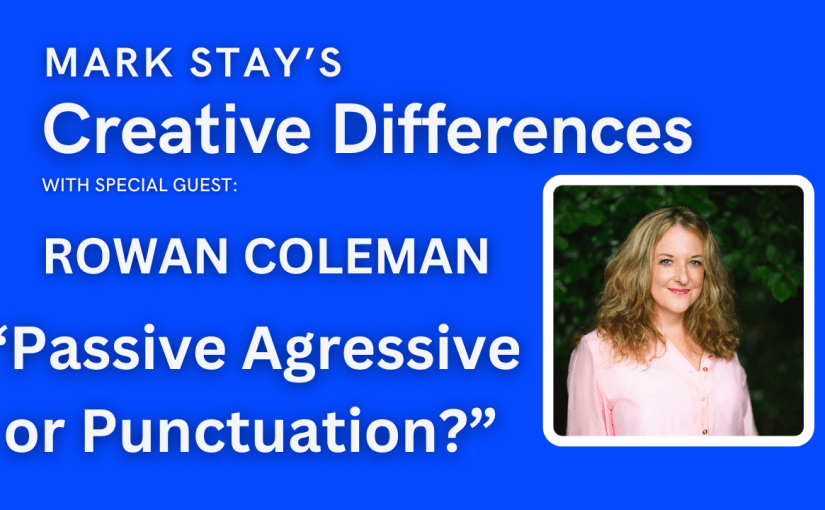
A learned debate on the use of punctuation in messaging apps from the Creative Differences podcast, featuring contributions from professors Rowan Coleman and George Stay …
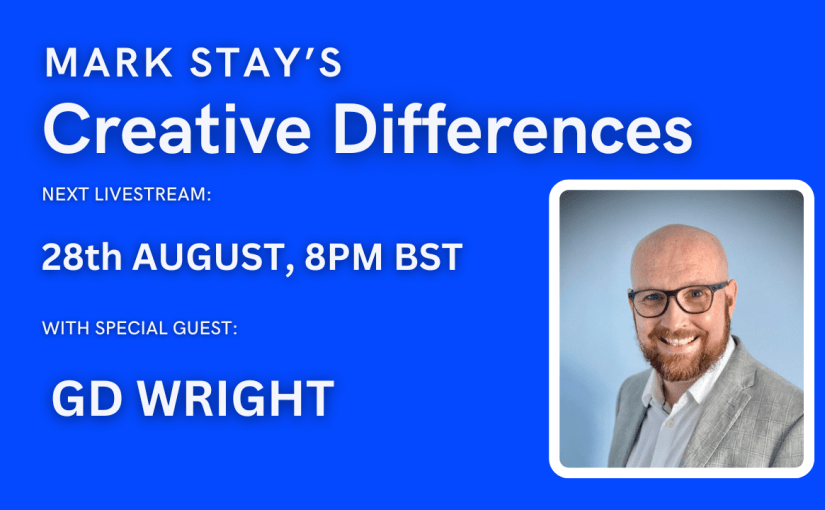
Join me LIVE tonight 8PM BST with GD Wright, bestselling author of Into the Fire, on the Creative Differences podcast where we discuss the little things that make a big difference to the creative process…
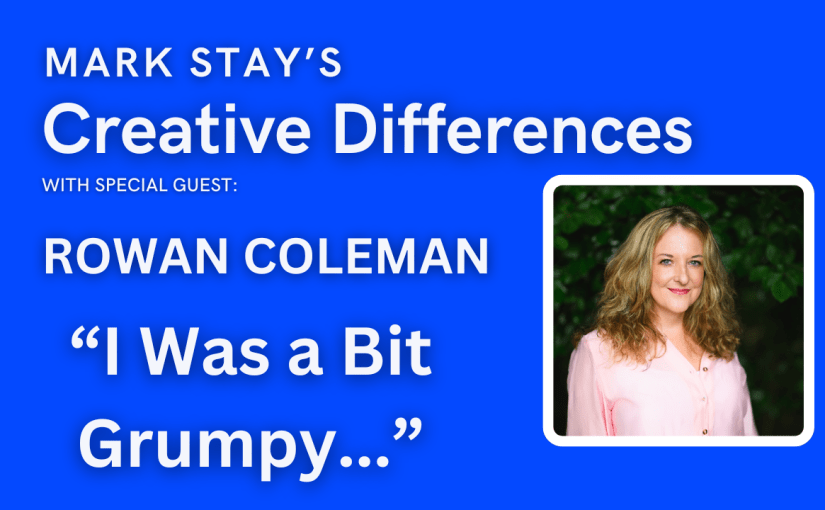
Special guest Rowan Coleman, bestselling author of Never Tear Us Apart, reveals how a research trip to Malta started with her being ‘a bit grumpy’ but resulted with her making a magical connection with the island…
TRANSCRIPT
MARK: You went to Malta to research this. So what’s your process when you go to a place to research? Do you have like a shopping list of things to do, or do you just step out the hotel and go, right, where do I go now?
ROWAN: I was a bit grumpy about it, actually. Because, believe it or not, because the island itself is… but it’s sort of tied up with my own feelings about my relationship with my father. And so I was like, well, I expect I’m just gonna hate it and it’s going to be rubbish and I won’t like it. But when I turned up, it was the opposite. I did actually feel weirdly, immediately connected to it. And my shopping list is… I don’t really have a specific set of things for this book, because I first visited before I started writing it, really. If I’ve written a book already, like with The Summer of Impossible Things, I knew that I wanted to get to various locations in Brooklyn. But for this book, I was just getting a sense of the island for the first time, and so I just let it lead me. And it’s very small. It’s about the size of the Isle of Wight. And so the first thing that drew me were the ancient temples, and there are many Mesolithic temples on the island that are absolutely magical and fascinating. And that kind of was like my my first step on a very organic journey into putting all the components of the book together.
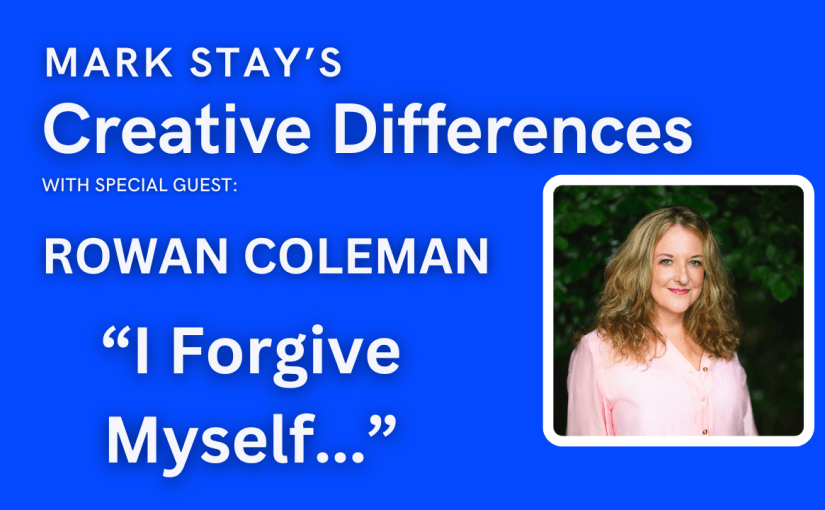
Special guest Rowan Coleman, bestselling author of Never Tear Us Apart, reveals how forgiveness has become part of her creative process…
TRANSCRIPT
MARK: What small thing has made a big difference to your creative process?
ROWAN: I think the thing that’s made the biggest difference to my creative process is forgiving myself. For not… Sometimes going quite slowly to sometimes just doing small bits at a time. I am a late diagnosed, unmedicated ADHD woman, and I used to think… I was convinced that I had a very strict writing regime and sat at my desk from 9 to 5, and wrote every day, and I didn’t realise that this was, in fact, not true until I took my kids with me to a book event when they were quite young. And I was saying this and I heard this laughter from the back of the hall, I was like, what? Why are you laughing, darling? “You don’t do that. All you do faff around all day on the internet.” (laughs) I thought, that is true. That is all I do. So now I sort of just think, well, if it’s not… if you can’t… you know, sometimes you have to write when you have to write because we all have multiple things that we’re juggling, you know, proper jobs and, teaching courses and all that stuff. And sometimes you just have to go, right. Well, this is my time to write, and I have to write, but if it’s… if I can’t be that disciplined, I just say, all right, well, it’s not happening today, but it will happen tomorrow. And you only write ten words. That’s fine, because that’s ten more words and you’ll add to it tomorrow. And I sort of just let myself off the hook and I don’t let myself feel shame about it anymore, which is a big part of growing up with neurodiversity. Undiagnosed neurodiversity particularly is kind of constantly feeling that you’re not trying hard enough. So I try to tell myself now that I am, in fact, trying hard enough, and it does somehow work out in the end. I don’t know how, but it does.
MARK: Yeah, I think the moral of the story is be kind to yourself and don’t invite your kids to book events.
ROWAN: I mean, I don’t know what’s worse: that one, or when they came when they were a little bit older and were sitting in the front row on Switches.
Bestselling and award-winning author Rowan Coleman joined me to discuss her new book Never Tear Us Apart, revealing how a family photo inspired her to research in Malta, why she wrote her next book, The Good Boy, under a pen name, then there was something about quantum physics, and ultimately she asks the question we all want an answer to in any situation: What would Charlotte Brontë do? This was a really fun chat with tons of great advice for writers.
There are some fun questions (and answers!) in this Q&A that I did for that most-excellent thriller writer Max Elwood on his blog. To find out what book I think should be adapted as a movie, how I organise my bookshelves, and why I think Amazon is both the best and worst thing to happen to publishing, click on the image below…
Let’s try again, shall we? After the Starlink failure this week, we’re going to have another go at a livestream with the magnificent ROWAN COLEMAN on MONDAY 28th JULY, 8pm BST!
Rowan Coleman is the internationally bestselling and award winning author and screenwriter of many novels including THE MEMORY BOOK, THE SUMMER OF IMPOSSIBLE THINGS and THE GIRL AT THE WINDOW. Her latest novel NEVER TEAR US APART is out now, and under the name Stella Hayward she’ll be publishing THE GOOD BOY in September (about a dog who turns into a man)… Rowan and I have also been working together on a few collaborations, so we might chat about that too. Who knows? You will if you show up! Do please join us live as you’ll have the opportunity to ask Rowan questions on the night. It’s going to be so much fun. Monday 28th July 8pm BST.




 Mark Stay Writes