Great podcasts for screenwriters…

I love me a podcast. On my daily commute, any long(ish) drive or walk, or when I’m doing the ironing or washing up, I’ll plug in and absorb news and information like Neo in the Matrix. Well, I like to think that’s how my mind works, though the reality is I need the same ideas reinforced again and again and again, and podcasts are a great way of doing that.

Many of the podcasts I listen to are writing- or film-related, and I thought I would share them with you now (and yes, I did something similar a couple of years ago, but these are updated and I have a handful of new additions)…

You can get all of these on iTunes or whatever podcast software you use for free, but it’s well worth having a look at their related blogs and Twitter feeds too.

Scriptnotes with John August and Craig Mazin:


@johnaugust

@clmazin

There’s never been a better time to get on board with this one, as the latest episode is a Spring Break clip show, essentially a greatest hits. Click here to listen.

What sets these guys apart from the Syd Fields and Robert McKees of this world, is they’re actually working as writers in the film industry, so they can talk with authority about how the industry works today. They cover everything from writing techniques, to agents, managers, lawyers, the WGA, writing software (don’t get Craig started on the vagaries of Final Draft!), and even typefaces and fonts (John August also develops apps). It’s been running for quite a few years now, and the most recent 20 episodes are free, and the backlist is only available via the premium feed, or you could buy a USB stick with all the episodes. It’s worth it: this is cheaper than any seminar or writers’ retreat and far more useful.

Scriptwriting in the UK with Danny Stack and Tim Clague:

@scriptwritingUK

Danny has one of the best UK scriptwriting blogs out there, and, in this monthly podcast, he and Tim Clague cover all aspects of writing for the screen: film, TV and games. And, most astonishingly, they actually went and made their own children’s film, WHO KILLED NELSON NUTMEG? which premiered at the London Film Festival. An incredible achievement, and an experience that has informed their podcast ever since.

This is invaluable for insights into the UK film and TV industry, and they’ve interviewed the likes of Tony Jordan, Chris ChibnallAndrew Ellard, and yours truly (if I sound like I’m at the bottom of a well, it’s because it was recorded via Skype in a glass room!)

The Q&A with Jeff Goldsmith:

@yogoldsmith

Jeff gets an amazing roster of writers talking at great length about how they started, their careers and their latest film. This is American too, but he gets loads of British writers on the show. These are often recorded after a screening, and the audience get to ask questions.

He previously presented the Creative Screenwriting podcast, which no longer seems to be on iTunes, but I’m sure you can find it if you go digging online. They were terrific, essentially the same format, but presented in association with the magazine Creative Screenwriting.

Filmsack:

Not a podcast about writing, but these guys love popcorn movies. They watch them on Netflix (which can skew what kinds of movies are available) then get together over Skype to dissect them. They’re really good at pointing out tropes and plot holes, which is invaluable for a writer. The earlier episodes on films like Superman and Wrath of Khan are outstanding.

Kermode and Mayo’s Film Review:

@wittertainment

Probably the best film show on radio. It goes through phases of being overly self-referential, but Kermode is passionate and really knows his stuff, and Mayo keeps him in line, and it’s a weekly lesson in how intelligent, informed audiences will react to movies.  Hello to Jason Isaacs.

Empire:

I bloody love Empire, and this podcast is huge fun, but it’s the spoiler specials that are particularly good for writers as the gang will often dissect the story in minute detail. The epic Chris McQuarrie Mission Impossible spoiler special (nearly three hours long!) is an incredibly frank look at how a blockbuster gets made. Gold:


https://soundcloud.com/empiremagazine/christopher-mcquarrie-mission-impossible-rogue-nation-special


The BAFTA Screenwriters’ Lecture Series:

More of an annual event than a regular podcast, these are live lectures recorded for podcasts, and so there are references to clips that the listener doesn’t get to see, but there are some very experienced and wise minds dispensing advice here and you’d be a fool to miss out!

Film Nuts

Filmmaker Mustapha Kseibati shares his colossal passion for film in this series of interviews with UK writers and directors. And it’s the only place where you’ll here me get excited about the Dad’s Army film. Mus’ is a busy man, so there aren’t as many of these as I’d like, but each one has nuggets of wisdom.

The Allusionist

Okay, so not a podcast about writing, but if you’re a writer you’ll love words and Helen Zaltzman’s podcast is a delight. You’ll come away from each episode with another insight into what makes word work, and that can only make you a better writer.


And that’s it! Do please let me know if there are any I’ve missed. I’m not sure I can squeeze any more into my week, but I’m always up for something new.

When is my script ready to send out…? Or, Am I ready for Edna Krabappel?

Imagine you’re going on a date. It’s someone you’ve fancied for ages, and after finally plucking up the nerve to ask them out for a cheeky Nando’s, the time has come to woo them one-on-one with your wit and charm. How do you prepare for this night of nights? Shower, brush your teeth, wear the most obscure geeky film reference T-shirt in your collection, and wear clean underpants. And then you rush straight out the door, yes?

Of course not. What kind of idiot does that?

We all check our appearance in the mirror, or, better still, ask someone else to check for us, ‘How do I look?’ And it is this wonderful friend who points out that there’s a huge bogey dangling from your left nostril, a massive zit threatening to explode on your chin, or that your flies are undone and your Captain America underoos are exposed of all the world to see.

That person just saved your life. And every writer needs at least one person who will do the same for their work, and yet so many of us will gleefully ejaculate our work into the wild without so much as a second glance.

And I know that feeling all too well. I recently finished a draft of a new book. I’ve been working on it for about 18 months in between script work and writing pitches. It’s been my happy place for all that time. I love the characters, the settings, and the story excites me every time I return to it.

Typing ‘The End’ — a naive act by any writer on their first draft, and yet we all do it — activated that overwhelming impulse to send it out immediately to agents and publishers and everyone in my address book. It’s perfect! I even did a ‘But’ pass…

https://twitter.com/markstay/status/692344877871403008

… I checked for all my usual tropes, I made a timeline, and I even drew a bloody map. Surely it’s ready?

A few years ago I would have succumbed to this seductive urge, but experience has taught me that doing so would have killed the project before the poor wobbly-legged lamb could have staggered to its feet.

Nothing is more likely to wreck a writing project’s chances than sending it out before it’s ready. That agent/publisher/producer is your hot date with Edna Krabappel, and as Sideshow Bob said…

https://twitter.com/SimpsonsQOTD/status/540140778589523969

My life was saved by my friend Graeme. I work with Graeme and we’re both writers and we’ll read each other’s stuff and give notes.

I got about five pages of notes from Graeme.

Five!

As well as words of encouragement, he confirmed many nagging doubts I had about certain parts of the story, and he also spotted a couple of whopping plot holes that would have almost certainly made me look a complete dingus.

I bought Graeme lunch. It was the least I could do. He wanted the film rights and a co-writer credit, but I could only afford lunch.

I shall rewrite accordingly. And then I shall probably give it to another friend — a fresh pair of eyes — for their opinion. And I suspect yet another rewrite will be on the cards after that. I’m not on a deadline with this. I can afford the luxury of time and I intend to spend it.

So, when will it be ready to send out…?

I was asked this when talking to some third year writing students recently, and the truth is I still don’t know. There usually comes a point where you go completely word blind and can’t tell what works and what doesn’t. So maybe then? Maybe when I run out of Graemes. Eventually, we all run out of Graemes. What I do know is that I’ve not made the error I’ve made so often in the past by sending it out too soon. Edna awaits…

At the foot of the mountain – starting a new writing project…

Jon Wright and I are just starting out on a new writing project, TOP SECRET PROJECT X. I know, catchy! This is immediately coming off the back of over a year’s solid work writing a script that we hope to get into production this year, and we wanted to have something ready to follow it up with (always helps to think ahead). So we’ve gone from hurtling at a hundred miles an hour, steering skilfully round familiar bends, to suddenly pushing a clapped-out old Vauxhall Viva uphill to the nearest garage.

Starting a new thing can be very daunting indeed.

It’s taken us about six months to get around to the actual writing bit. Time is great aid to fomenting ideas, and it’s a luxury a screenwriter doesn’t often get, but I would recommend using it whenever you can. Take any intriguing idea you have, jot it down, nurture it with seedling ideas and before you know it, new ideas will be presenting themselves to you at three in the morning, demanding that they be implemented immediately. Here’s one I made earlier…

Late night scribbles can produce surprising results...
Late night scribbles can produce surprising results…

This one started with lots of talking — initially with a conversation outside a pub — then continued with more chatting in places where tea is served, and then long phone conversations about situations and characters, and then we progressed to tentative emails. With each of these gently flirtatious stages we’ve been collating nuggets about characters and situations and themes, and now we’re at the stage where we’re putting together the actual building blocks of a story.

The nitty-gritty starts with character work. On our previous project we were adapting someone else’s script and didn’t feel that we had a good enough grip on the characters, so we wrote monologues for each of them, bouncing drafts back and forth between the two us, adding more interesting details and texture until we really knew who these people were. That was when we finally felt that we had taken ownership of them and the script, and our writing after that became a lot more instinctive: the sports car swerving round tight bends.

So, this is where we’ve decided to start with TOP SECRET PROJECT X: character monologues, like pieces to camera, confessional and candid and revealing, and it’s a great way to get a story that’s driven by characters and not set pieces. There are lots of blind alleys, things we’ll get wrong, but it’s worth it for the things that shine and excite and inspire. We’re off to a great start, but there’s still a very long way to go, that clapped-out Vauxhall Viva is still very heavy and the mountain is very steep. In the meantime, here’s a bit of Paul Weller to chivvy us along…


The painting above is The Wanderer Above the Sea of Fog, (Der Wanderer über dem Nebelmeer um) 1818 ~ by Caspar David Friedrich, and is how all writers should visualise themselves when embarking on a new project, and not hunched over a laptop wondering if they can have another chocolate Hobnob yet.


It’s okay to be scared…

I’ve been working on a story idea this week, and its big theme is fear. Initially I was thinking that my characters would face their worst fears and learn to overcome them, but the events in Paris yesterday stopped me in my tracks.

I sometimes get anxiety attacks, and I’ll wake up in the middle of the night, heart racing, hands shaking. I know this isn’t uncommon, and I’m a worrier by nature, so I’m okay with it.

But I’ve never had to cope with the kind of fear that some people faced in Paris yesterday. And that fear has spread. Already fingers are being pointed, and knee-jerk reactions from governments will inevitably lead to more bloodshed.

We’re also seeing wonderful things: taxi drivers turning off their meters so people can get home, Parisians offering food and beds to bewildered tourists, queues of people lining up to give blood, and a man playing a piano…

How we live with fear defines us.

There’s a moment near the end of Time Bandits where the gang ask if Kevin can come with them, but the Supreme Being says that he needs to stay and continue the fight against evil. I think it’s the same with fear.

Fear is never overcome. It will always be with us. It’s okay to be scared, as long as we don’t let it turn us into monsters. That way fear wins. So, I’m going to re-think my story.

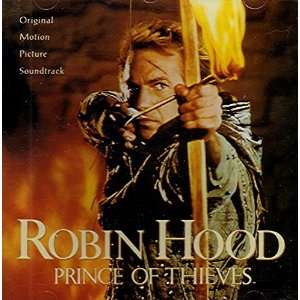
“Ullo my lover..” – Robin Hood Prince of Thieves and how an imperfect film can mean so much.

Robin... mate... your pants are fire...
Robin… mate… your pants are fire…

Robin Hood Prince of Thieves is on TV, and I’m getting all misty-eyed.

Here’s the trailer and, yes, voice-over man really does start by saying “It was a time of waaaaar…”

This is a much maligned movie: the myriad, wandering accents, the glaring historical inaccuracies, the poor grasp of British geography, Costner’s mullet, the dodgy attempted-marital-rape-done-for-laughs scene, and last but by no means least, that bloody song… As anyone who was alive with any degree of hearing will tell you, you couldn’t turn on the radio that summer without Mr. Adams’ gravelly tones imploring that everything he was doing was indeed solely for your benefit. Still, it does have a lovely middle-8 guitar solo.

But, for all its faults, I bloody love this film and it’s my favourite Robin Hood movie by far (ahead of the sprightly Errol Flynn classic and the slightly more mournful Robin and Marian). Yes, Alan Rickman steals everything but the scenery, but this is the film where the woman who would later deign to marry me first flirted with me at the cinema. It later became our film and we will still greet one another with “Ullo, my lover.”

Also, I was working in a hi-fi/CD shop in Dorking at the time, and our rep for BMG records was called Steve Densham. I learned that his brother was Pen Densham who was the screenwriter of this beloved movie. This was the first time I had known someone who knew someone that had written an actual film. And not just any film, but the biggest film of that year. My one regret is that I never asked for some writing advice, but I was 17, unsure of myself and these things only ever occur to me some twelve hours after they might have been useful. (Top writing tip for younger writers: don’t be shy and always take the opportunity to ask for advice from more experienced writers – they can only tell you to sod off).

And watching again on TV just now (the horrible extended director’s cut with unnecessary backstory for Rickman’s Sheriff) I got all the feels all over again.

The emotional impact of a film often has less to do with the content, and more to do with when you saw it and who you saw it with. This is why seeing a movie in the cinema is so important. Sitting in the dark with your friends and family, surrounded by strangers, and sharing that experience is one of only a few communal experiences we still have in the modern world. And when it works, even with a less-than-perfect film, the event gets wrapped up in memories and emotions that resurface like old friends when you watch the movie again.

I had a meeting recently with a development exec at a very big animation studio (ooh, get me!). He told me that their most successful films transported the audience to worlds. Not just to other planets, but any place where the audience can escape to time and time again. That’s not to say that all films should be pure escapism, but they seem to be the ones we like to watch on repeat.

So, historical accuracy and gritty reboots be damned. Give me Kevin “This is English currige” Costner every time. All together now… “Look into my eyes…”


PS. Oh, and if anyone has a cut of the film where they keep in Christian Slater’s “Fuck me!” line, then do please get in touch.

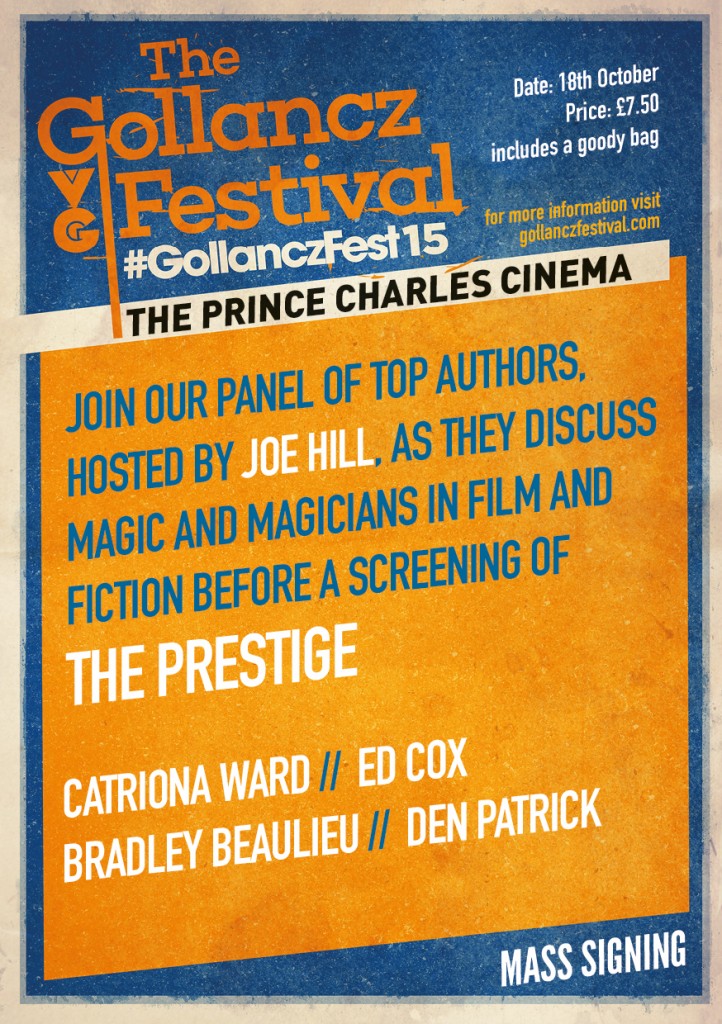
GollanczFest 2015 – behold the awesome line-up (and, er, me!)…

GollanczFest 2015: 16th-18th October – Manchester and London


**STOP PRESS: LONDON AND MANCHESTER HAVE SOLD OUT, BUT THERE ARE STILL TICKETS AVAILABLE FOR THE WRITERS’ DAY ON SUNDAY 18TH**

This is going to be awesome, with an amazing line-up of authors including Joe Hill, Joe Abercrombie, Brandon Sanderson, Joanne Harris, Ben Aaronovitch and Sarah Pinborough, spread over four days starting Manchester and ending in London.

Day one: Friday 17th October, Waterstones Manchester Deansgate

I’m in the CLASS OF 2015 bit with Aliette De Bodard, Alex Lamb, Al Robertson and Tom Toner and it should be great fun…

Manchester - Room 1
Manchester – Room 1 (click to enlarge)
Manchester Room 2
Manchester Room 2 (Click to enlarge)

Day Two: Saturday 18th October, Waterstones Piccadilly.

This has officially sold out, but if you’re a lucky ticket holder, then I’ll be in the Class of 2015 bit again, with a slightly different, but no less awesome, line-up:  Antonia Honeywell, Alex Lamb, Al RobertsonTom Toner and Catriona Ward

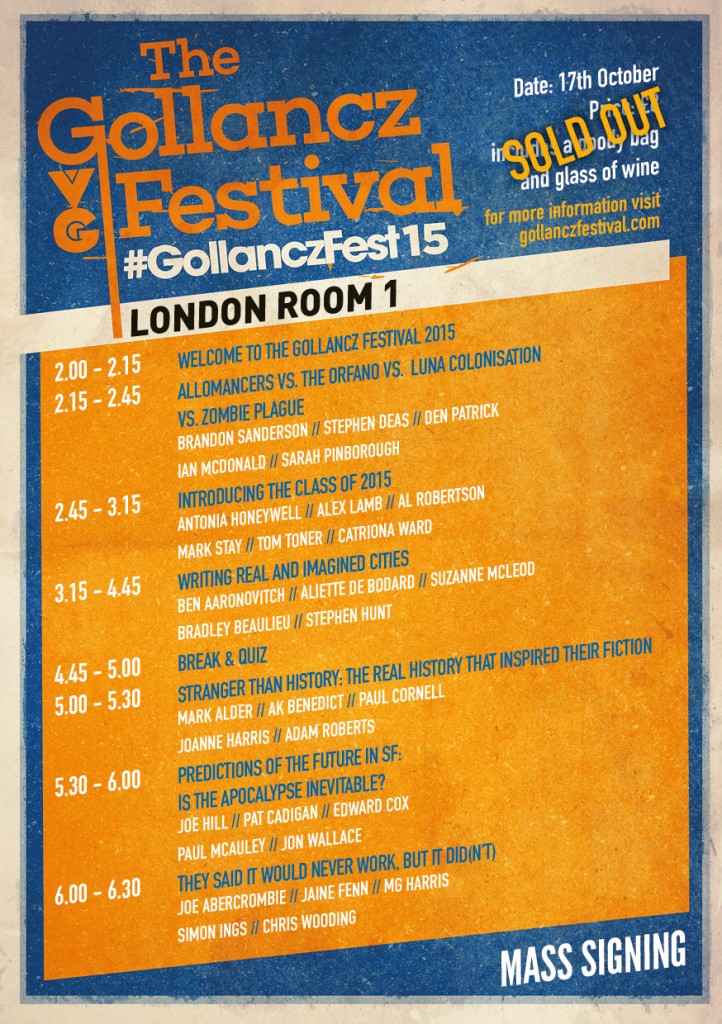
London Room 1 (click to enlarge)
London room 2 (click to enlarge)
London Room 2 (click to enlarge)

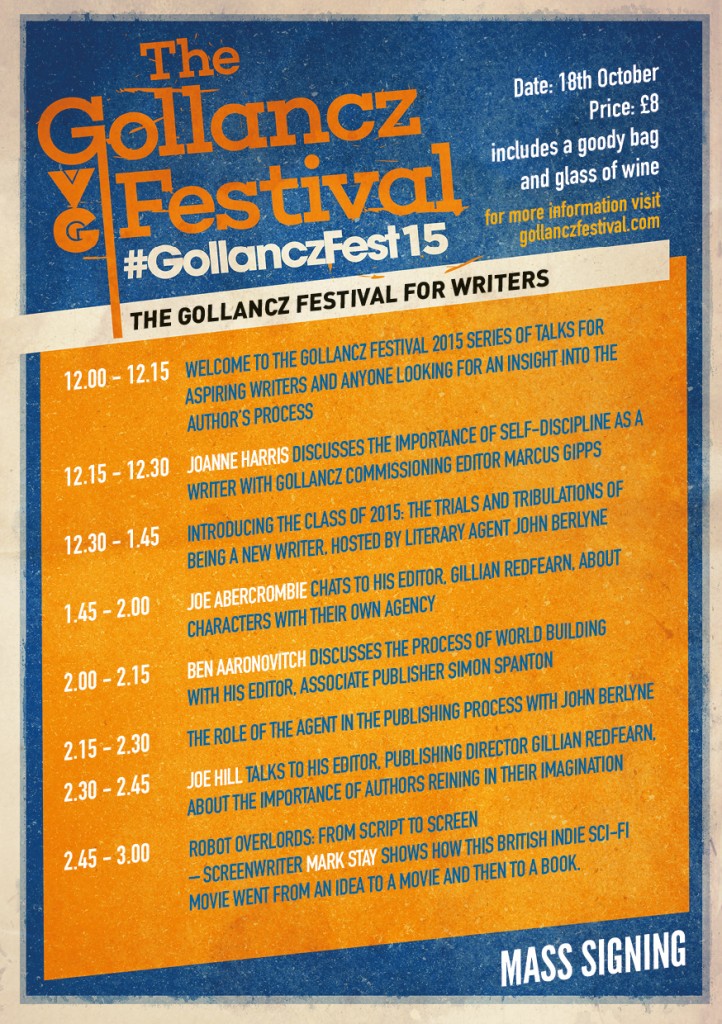
Day Three: Sunday 18th October, Waterstones Piccadilly – Writers’ day

This has just been added so grab your tickets now! If you’re a writer, this day is gold dust. If I weren’t already going, I’d be first in line for tickets. Top writers and agents (and, er me!) talking about their craft. Unmissable…

What a line up! (Click to enlarge)

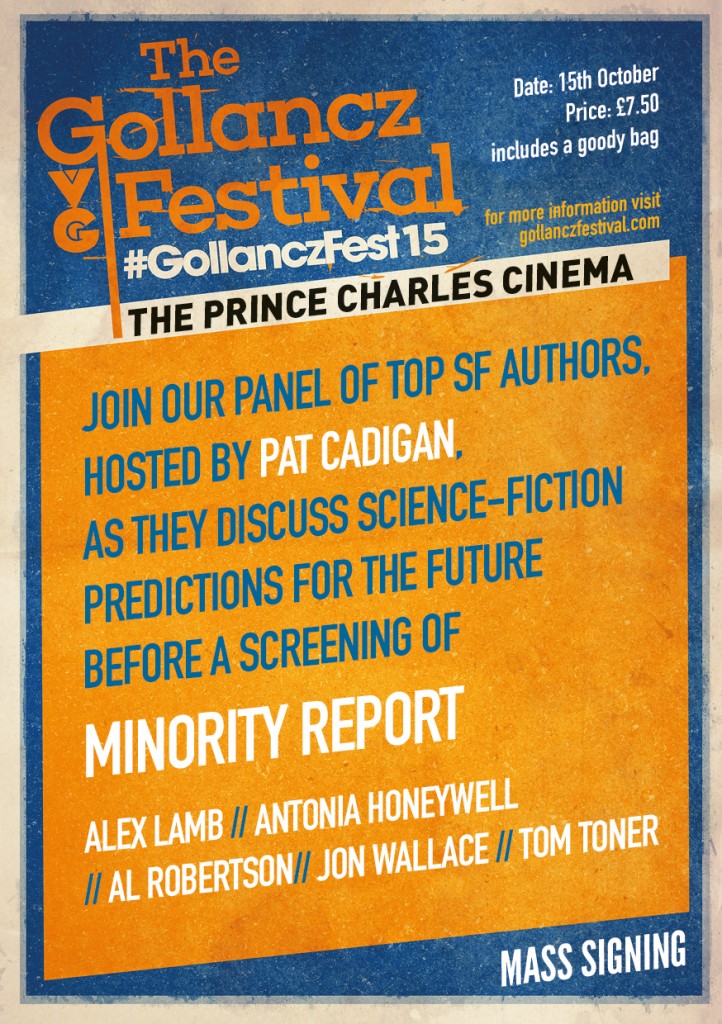
Friday and Sunday, Prince Charles Cinema screenings of Minority Report and The Prestige.

And after all that, why not kick back enjoy a couple of classic movies with introductions from Pat Cadigan and Joe Hill?

minority

prestige

Really hope to see you there. It’s going to be a blast.


In praise of the @ScriptWritingUK podcast…

I was delighted to be interviewed on the UK Scriptwriters’ Podcast this week. I’ve been following this podcast – as far as I know, the only one of its kind in the UK – since the very beginning, and it’s an invaluable resource for any writer. In each episode Danny Stack and Tim Clague bring their considerable industry experience to talk about writing for TV, film and games. They’ll cover the practicalities of writing as a career, and it’s inspirational stuff for any writer; beginner or pro. Seriously, if you want a career in writing and you’re not listening to this, then you’re definitely missing out.

So, to end up as a guest on the podcast is a particular honour, especially on their fifth birthday! You can download it from iTunes, or you can check it out on Podomatic.

And be sure to visit Danny’s blog, which is a treasure trove of good advice.

Oh, AND Danny and Tim did what so many filmmakers just talk about and actually made a film. Off their own backs! Via Kickstarter they raised the funds to make WHO KILLED NELSON NUTMEG?, the kind of British children’s film they really don’t make any more. Here’s the trailer…

So do the subscriby thing and start from the very beginning!

Robot Overlords and Gemini Force at YALC: Fri 17th July 2015

I’m delighted to be confirmed for a panel at the 2015 YA Lit Con, which is part of the London Film and Comic Con.

yalc2015

Here’s the blurb…

Friday 17th July, London Film and Comic Con YALC:
PAGE AND SCREEN: ROBOT OVERLORDS & GEMINI FORCE ONE

4.30-5.15pm

What are the differences between writing for the page or the screen? Find out in this session bringing together co-creator of Robot Overlords Mark Stay with the team behind Gemini Force One, MG Harris and Jamie Anderson.

Mark Stay will be talking about his experiences of writing both film script and novelisation for Robot Overlords, and sharing some behind the scenes insights; whilst MG Harris and Jamie Anderson will discuss how they collaborated on their new series, originally devised and developed by Thunderbirds creator Gerry Anderson before his death.

This should be great fun. The Gemini Force project is hugely exciting (especially if you’re a Gerry Anderson fan!), and over the whole weekend YALC will be hosting panels with the best names in YA lit, including Charlie Higson, Malorie Blackman, Joe Abercrombie and Patrick Ness, so you’re guaranteed to have a great time!

Click here to get tickets.


My Jazz Chord Theory of Creativity

I found myself with a free afternoon yesterday, not something that happens often these days as any spare time I have tends to be dedicated to writing, but I’m in a lull on one project and stuck on another, and so I found myself plugging my guitar into a pedal board and amp, and I started thrashing out a few chords.

Inspired by its inclusion on the GUARDIANS OF THE GALAXY soundtrack, I thought I’d have a go at learning David Bowie’s splendid MOONAGE DAYDREAM and was surprised by how simple it was: lots of nice major/minor chords, a very easy riff and a straightforward melody.

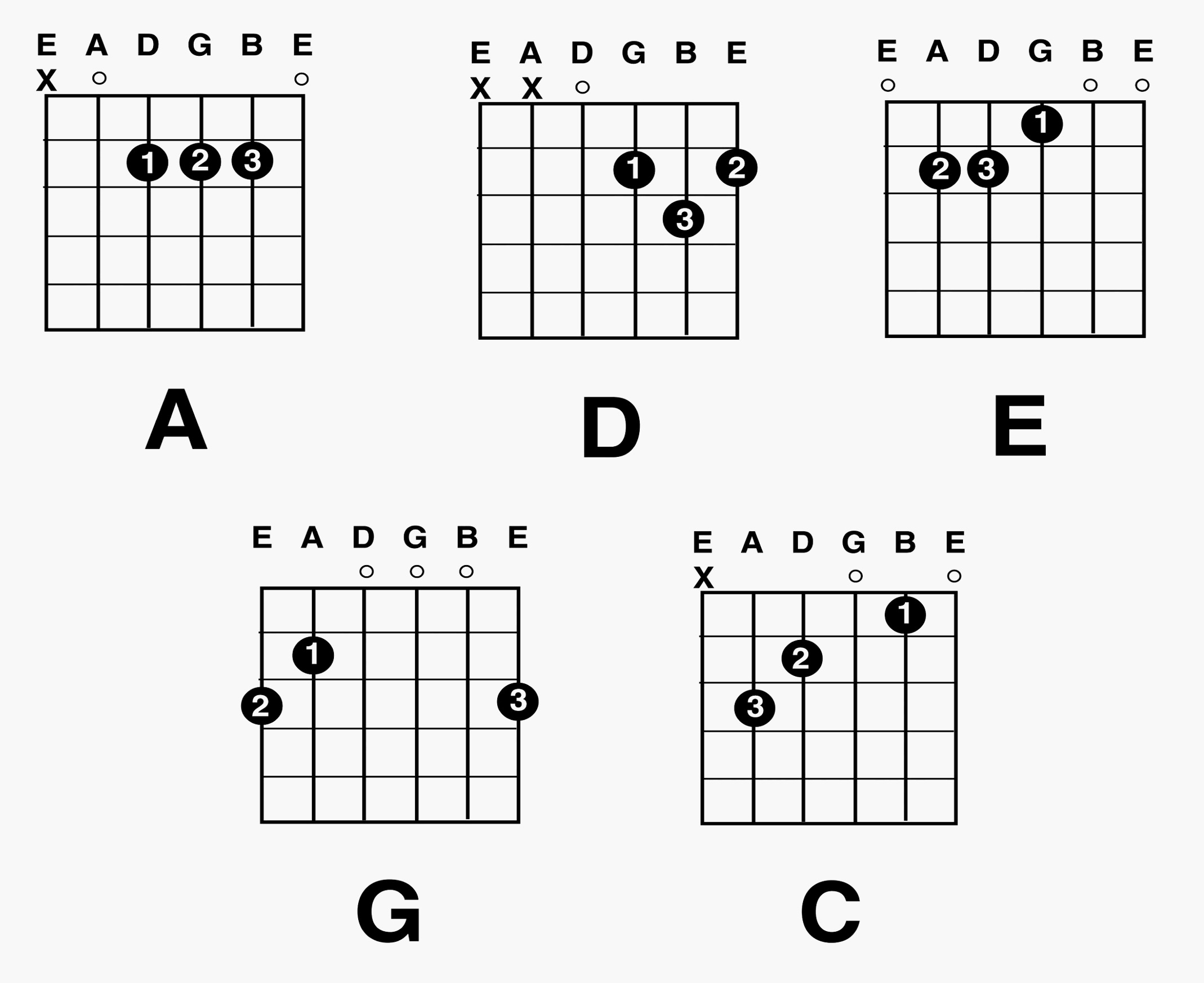
And it got me thinking about a half-baked music analogy I have about creativity. When rock bands start out they begin with the simple stuff: twelve-bar blues, major chords dropping to minors, and a cool hook. Stuff that’s basic, but highly effective, hitting people right in the feels…

Major chords. Easy peasy, lemon squeezy.
Major chords. Easy peasy, lemon squeezy and making people feel totes emosh since the dawn of time.

But as an artist progresses in their career, they understandably want to try something more complex and challenging, and, if you’re a guitarist, this means that sooner or later your favourite band will start using complex jazz chords…

Jazz chords. Evil bastards. Not to be trusted.

Don’t get me wrong; I enjoy jazz, but in quite small doses. It just doesn’t engage me emotionally in the way that a big, stupid rock song does. Just as I prefer Bowie’s early stuff, I suspect that it’s songs like STARMAN and LIFE ON MARS that are paying the mortgage at chez Bowie, rather than anything he’s recorded in the last twenty years. It’s also why the musically straightforward 1970s-era Pink Floyd continue to sell more than the jazz odyssey stylings of their early Syd Barrett stuff or, say, Captain Beefheart…

Of course, this theory is full of holes: if anything, the Beatles’ songs became more straightforward as they progressed, Kate Bush’s stuff was always complex musically (though her early albums are arguably more tuneful), and it probably doesn’t apply to classical or opera, though Beethoven’s Fifth (Duh-Duh-Duh-Duuum!) is as rock n roll as classical gets.

But you get the idea: the simple stuff works. It will always have a greater reach, audience-wise, than the introverted, “clever” stuff.

And here comes the big, clanging, G-major analogy that I’ll be trying to apply to my writing: I won’t be putting too many jazz chords into my stories. I might think I’m being clever by killing the hero on page 35, or starting in the middle of my story and working backwards via flashforwards, but some poor producer has to pitch that idea to raise money, and nine out of ten of them will always go for the simple sell.

That’s not to dismiss “simple” as “easy”: keeping a story truthful, engaging and emotional is hard enough as it is. So why make life more difficult for yourself?

And so my creative aim in life is to hit the same simple and moving peak as Bowie who has Mick Ronson open a song with a big, fat D-major chord as he cries, “I’m an alligator!” There’s no greater achievement in art…


The Black Spitfire – a spec script that’s learning to fly… UPDATED WITH REVIEWS

Feast your eyes on this (clicken to embiggen)…

A girl, a gun and a Spitfire...
A girl, a gun and a Spitfire… Artwork by Brian Taylor

The Black Spitfire is a script project that Paddy Eason and I have been working on for a couple of years now. Here’s our logline…

May, 1940: Headstrong young pilot Ginny Albion crashes in France as the Nazi Blitzkrieg sweeps across the country. Her passenger is Winston Churchill, and the fate of the world is in her hands.

Who could resist that, eh?

It’s a spec script – meaning that it’s not been commissioned by any entity – and we’re doing this in the hope that a producer or director will take it under their wing and make it fly (apologies for the abundance of flying metaphors throughout this post).

Spec scripts are nigh-on impossible to get off the ground these days: the studios are more interested in building on their existing brands, and anything original is branded as “untested”, putting the fear of God into those clutching to the studio purse strings.

But we’ve had a fantastic response from those who have read the script, and we’ve already met with a few eager producers. It’s still early days, but Paddy and I commissioned artist Brian Taylor to put together a poster concept (these things help when you’re pitching to producers and directors) and he blew our minds with the results, perfectly capturing the adventurous spirit of the film and our heroine Ginny Albion. Our model was actress Claire Garvey, who gamely posed for photos as I wafted slabs of polystyrene at her to make her hair billow (no budget for a wind machine, sadly) as Paddy snapped the pics.

If you’re in the industry and want to read the script, it’s over on the Black List, if you want the latest news do please follow us on Twitter @GinnyAlbion, and if you’re a producer with, say, £30 million handy, we’d like to buy you lunch.

We hope you like it, and we hope to see Ginny in action at the movies soon.

UPDATE: We’ve had some great reviews over at the Black List. Here are a few choice quotes…

“What a terrific read! The script starts off with a bang and our brilliant Ginny anchors a wonderful story about courage, self-actualization, love, and friendship. As our charming heroine, Ginny is flawed but never lacking in gumption or charisma. She leaps off the page and lights up an otherwise monotonous time period. Her rapport with Kit is absolutely darling, and the friendship that develops between her and Churchill is deftly written. Churchill himself is captured beautifully – from the wry commentary on his unlikely guide to the humor that arises from his verbosity, he’s all there and with a pout to boot. Although at times the narrative feels a bit predictable, it’s a delight to read. Tonally, it’s similar to INDIANA JONES, but this time we get a kickass female protagonist. Overall, a well structured story with engaging, dynamic characters, a commercial tone, and strong dialogue.”

“A great piece of writing and a killer idea, demonstrating excellent world building and character work… it’s a fantastic read and at the very least, the writers should have no problem getting hired off of this.”

“This script is rooted first and foremost in a strong and engaging lead with Ginny… She’s brave, funny, and moody all at once. She’s compelling to follow. The action is also quite exciting throughout. It’s cleanly written and easy to envision from what’s on the page. Later on, Ginny saves a number of Allied prisoners from German executioners at the last moment. It’s tense and fun all at once. Ginny’s relationship to Churchill is also cannily drawn and entertaining. The two bicker and fight and like each other. At one point, he excoriates her for radioing details to the enemy in a panic, and they argue and she shoves him down. He then stomps off in the middle of a war. It’s memorable and gives the piece a good sense of personality.”

“This is an invigorating and original concept that is sure to catch the attention of industry readers. The dialogue stands out as the major macro strength to the project as it’s upbeat, quick and natural throughout. The banter between Ginny and Churchill is funny a lot of the time, but in a very grounded way — especially after they land. It adds a comedic relief, that is extremely dry and grounded… Churchill’s voice and character development overall is fantastic and will prove to be captivating for readers as his dialogue is accurate to portray his place in history, but shown in an exciting way. One of the coolest things about his character is the standard he holds Ginny to the entire time, but also how he begins to trust her and respect her more and more as they continue on and it’s a fantastic moment when she holds the knife to his throat… physically and emotionally. Ginny’s character gets comfortable around Churchill as well and it’s tracked nicely alongside her growth as a character. It’s very triumphant in the end when Winston’s calling out for Ginny over the radio and along with being extremely cinematic it ties up their story well for the audience.”