It was the 90s, and poster budgets were smaller then…
“Mum! Mum! You have to see this!”
Have you ever watched a film that was so uncannily like your own life that you were convinced that the film-makers were monitoring and recording your every move? For me, LIFE IS SWEET was that movie.
I’m not talking about the events in the story, but all the way through there were little character moments that chimed so precisely with the world I lived in (still living at home with mum, dad and sister, in a house too small for us all) that once I finished watching it, I rewound the tape, dragged my mum and sister into the room and made them watch it too.
They did so, with wide eyes and open mouths. One scene in particular had them screaming with recognition…
We were used to seeing a sort-of hyped-up reflection of reality in soaps on TV, but they were always done in such a rush, with such a sense of melodrama, that it was hard to take them seriously. But Life Is Sweet is a Mike Leigh movie. The actors spend weeks, if not months, working on their characters, rehearsing and refining them through improvisation. It’s a fairly unique method of film making, but gives the dialogue a naturalistic rhythm that would look impenetrable on the page.
To say that this film was a major influence on my early writing, especially my first play, would be a massive understatement. It gave me licence to write characters that sounded like people I knew.
Leigh gets a lot of flack for being patronising to his audience, characters and even the working classes*, but in Life Is Sweet, and the better-known SECRETS AND LIES, I saw truthful representations of ordinary people I recognised, and the trials they faced. Not epic struggles against monsters or aliens, but just people coming to terms with life in an ordinary suburban world. I’m learning that story is all about characters discovering who they are, reconciling the conflicting parts of their own selves. If you can pull that off, whatever the setting, you’ll have the ingredients of a great drama. And Leigh’s films have this in spades.
*Though I only ever see this criticism from middle class journalists, so…
Psycho was the first film that I ever studied in any kind of depth. Up till then, films were just films to me. Good, escapist fun, but nothing I ever thought about in any kind of academic sense. I’d seen Psycho on TV. My dad, just leaving the house for a night out, saw that it was on, ‘Psycho. You’ll like that,’ he grinned, leaving me alone in the house and possibly scarring me for life.
It was unlike anything I’d seen before. I’d enjoyed horror movies with my friends, but they were always in glorious technicolor, never black and white. This one felt slow and talky, and there were only a couple of murders. To this teen, it was okay, but I preferred a bit more claret with my horror. But, that aside, there was definitely something odd about it. It made me think, for a start, which no other horror movie had achieved so far.
Then one of our teachers announced that he would be running an after-school film club and Psycho would be our subject. By now, I’d seen a few more of Hitchcock’s movies and was aware of Psycho’s importance, but I hadn’t seen it since that original TV viewing.
Well, we took that baby apart. We analysed everything: shot composition, shot lengths, the importance of light and shadows, the motif of birds – Crane, “Eats like a bird”, Phoenix, the positioning of the stuffed birds in shots – the abundance of reflective surfaces throughout, and even the colour of Janet Leigh’s underwear before and after she steals the money.
And the shower scene? Took it apart shot-by-shot. All 3 minutes and 50 cuts.
From then on, I would never look at movies in the same way. It made me aware of symbolism, motifs, music, casting, lenses, lighting, sound – all the building blocks of a movie. And, most of all, it had me hooked. Movies were now my thing. More than music. More than books.
Not long after that, my friends and I made a short movie for a national schools competition. Fresh off our Psycho experience, we thought we knew it all. Of course, the end result was mostly dreadful, but there was one scene where dozens of kids came charging out of their classrooms into a hallway (our film was about a revolution in a school), and seeing that cut together – the doors crashing open, the feet pounding, the kids running – was the first time that anything we’d done actually looked like a movie. The stuff we’d learned watching Psycho had, for a few seconds, paid off. We can do this, I realised.
Despite ripping its guts out, Psycho is still fun to watch. My sister and I still talk about it (it’s one of her favourites too), and its power hasn’t been diminished by the 1998 remake, or the poor sequels (though Psycho II isn’t that bad!).
The original was on TV just this week, and I subjected my 13-year-old daughter to it. She talked over the shower scene, ‘That’s what you get for using all my hot water!’, but stuck with it till then end. And now she’s asking questions… That’s what the movie does. Provokes dark and disturbing thoughts. Some have been explored in documentaries, films and books, not least Stephen Rebello’s excellent Alfred Hitchcock and the making of Psycho, but the mysteries of the human frailties of jealousy and murder will always remain. So let’s leave the last word to the master himself…
My son is at an age where rating things is all-important. The most common question I get from him after we watch a movie is, ‘How many stars would you give that?’ This in turn has led to an extended ‘What’s your favourite movie?’ conversation.
Well, he’s got me thinking. Just what are my favourite movies? And why? So, over the next few blog posts I’ll be putting these thoughts into some kind of order. So, imagine for a moment that the world has been invaded and occupied by an army of robots, and you could only grab a handful of DVDs before you were incarcerated… what would they be?
These have to be the movies you simply couldn’t live without. They don’t have to be the best films ever, just the ones that mean the most to you. The ones that tell your own story.
So that’s what I’m going to do. And I’m going to start, as all good stories should, in the middle somewhere…
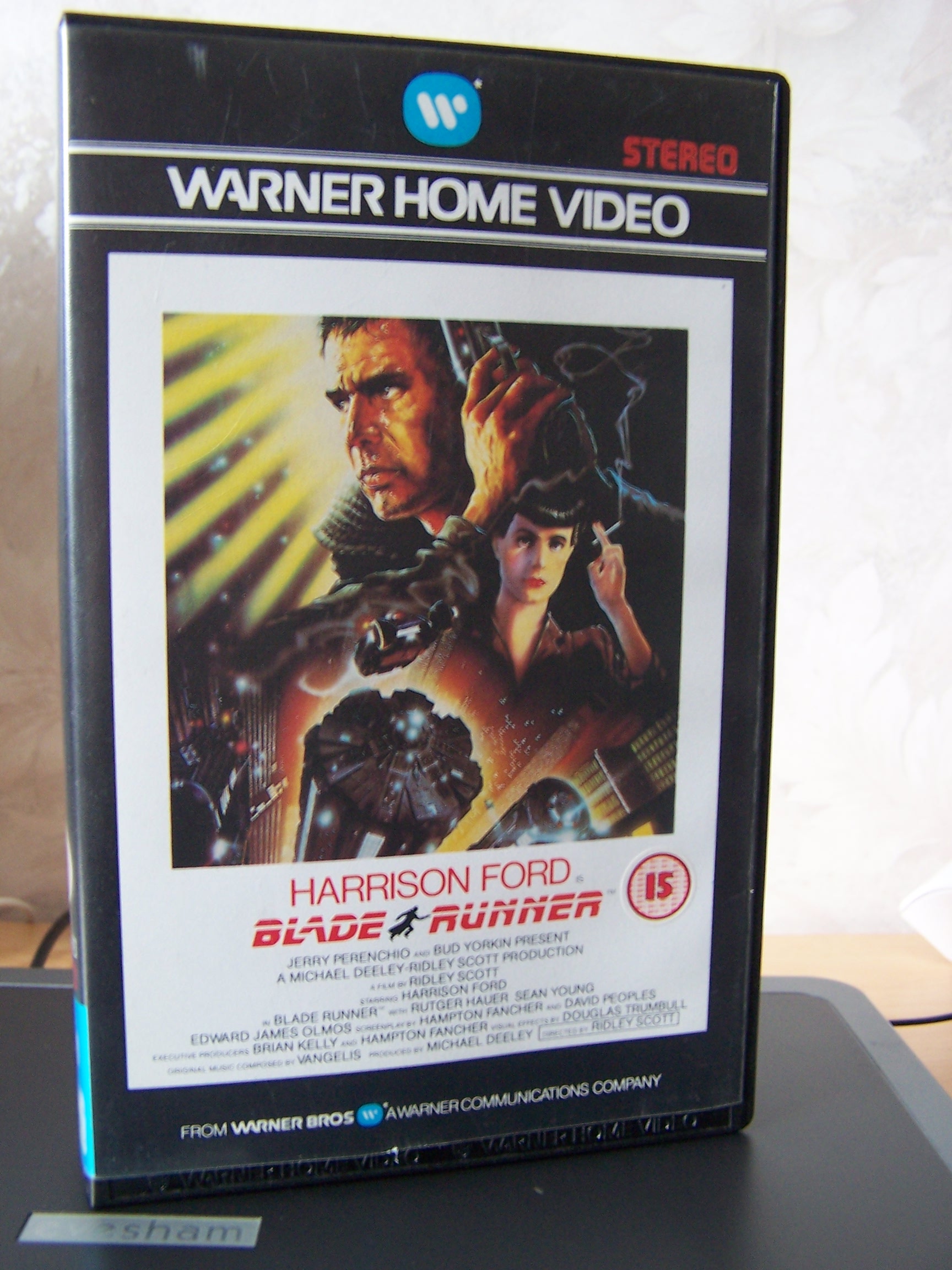
I first saw Blade Runner at my friend Kristian’s place. It was his birthday, and I’m guessing we were 11/12 years old. The room was full of boys expecting a kind-of Indiana Jones in the future. That’s what the VHS cover art promised, and that never lies, right?
In stereo!
What we got was something that split the room. Most of the group found it boring. Just me, Kris, and another kid called David Snell thought it was cool, though if you asked any of us to explain it, I doubt we could have managed anything more articulate than “There’s this bloke who has to hunt these robots – no, replicants! – and there’s a cool bit where this guy gets his eyes gouged out, and it was all very dark…”
But then the Marvel comic adaptation started appearing in the back of my weekly Return of the Jedi comic, and the story started making more sense. I read this again and again, then rented the movie, and there was definitely more than first met the eye with this film.
Too late for my GCSE English (and probably just as well) I found a film tie-in copy of Blade Runner in my local second hand bookshop. Only it wasn’t a mere tie-in, this was an original book by some guy called Philip K Dick (snigger). This would surely answer all my outstanding questions! Oh boy, was I wrong. Dick’s incredible book, with its meditation on identity and reality, just brought a million more questions flooding to my brain.
Then, on my 18th birthday, I went alone to the Odeon on Shaftesbury Avenue to see the legendary director’s cut (yeah, I know how to party!). To see that grand opening on the big screen with Vangelis’s score turned up to 11 was just amazing, though – to be honest – I missed the much-maligned voice-over. And to fully understand the whole meaning of the unicorn footage, I had to read Paul M Sammon’s excellent book FUTURE NOIR.
Since then, I’ve bought various VHS and DVD special editions and box sets. It’s bloody exhausting trying to make sense of this film. I’m now not convinced that Deckard is a replicant. That whole backstory now feels like Ridley retconning, and I still miss that voiceover.
My wife has yet to see the film all the way through without falling asleep. I have younger colleagues who can admire the film, but wouldn’t rate it as a classic, and I firmly believe that this is because you had to make the journey with this film for it to have its full impact. From first viewing, to comic, to book, to more books, director’s cuts and final cuts, to box sets with little dinky toy Spinners in them.
It is imperfect, but its riddles will never fully be resolved, and that’s one reason why I love it.
Here’s the orignal trailer. In keeping with the film’s history, it’s terrible:
PS. My friend Kristian also introduced me to Mad Max 1 & 2, various horror movies, and Firefox, and for that I shall always be grateful.
So, yesterday someone asked me for screenwriting advice. Never mind that I have no movie credits to my name (yet), but the news that I’ve co-written a script that’s going into production was enough to send a 22 year-old I’d never met before, pelting down three floors of our office building to seek out my sage wisdom.
“Have your inciting incident in the first ten pages, you must.”
I was flattered to say of the least, and my ego puffed-up to full as I prepared to dispense pearls of wisdom to this young neophyte. But, as I opened my mouth, I realised that I was one microsecond away from becoming a pompous Robert McKee type, and managed to stop myself.
The truth is I don’t have a bloody clue. I managed to piece together a chronology of how I managed to get where I am today, but anyone can do that, and everyone’s story will be different, so what use that is, I have no idea.
The only vaguely useful advice I could give was, “Er… Write, keep writing, and eventually you get better at it, and one day people start to take notice of it, and maybe you’ll get some work.”
I also urged her to meet and befriend other writers. Not only are they fun, if slightly mentally unhinged, but we all have the same doubts and fears and share them on Twitter when we know full well we should be working to a deadline.
Then I started reeling off lists of podcasts I listen to (and I’ve shared them below), because this has been a big part of my education in writing in the last few years, and these guys all know a lot more than I. And that was it, really. I was all out of advice.
I’m collaborating on a new script with a new writer. It’s his first, my umpteenth. And the thing I must not do is start telling him how to write. I have more experience, yes, but to tell him how to write is tantamount to telling him how to think, and that’s how cults and religions and very bad things start. Why do you think they call them script gurus?
MY FAVOURITE PODCASTS:
You can get all of these on iTunes for free, but it’s worth having a look at their related blogs, and do follow them on Twitter too.
What sets these guys apart from the Syd Fields and Robert McKees of this world, is they’re actually working as writers in the film industry, so they can talk with authority about how the industry works. This one covers everything from writing techniques, to agents, managers, lawyers, the WGA, writing software, and even fonts (John August also develops apps). It’s been running for a couple of years now, and it’s worth dipping into the backlist, though you can jump in at any time. This is a very American podcast, but if you’re thinking of working in the States, this is very useful.
Scriptwriting in the UK with Danny Stack and Tim Clague:
Danny has one of the best UK scriptwriting blogs out there, and, in this monthly podcast, he and Tim Clague talk about writing in the UK.
Danny is clearly smart, professional and knows his stuff. Tim now seems to mostly write for games, and never fails to mention that he once won a Bafta for a short film he made years ago (and, to be fair, neither will I when the day comes). Not as zippy or slick as the US podcasts, but invaluable for insights into the UK film and TV industry.
Jeff gets an amazing roster of writers talking at great length about how they started, their careers and their latest film. This is American too, but he gets loads of British writers on the show. These are often recorded after a screening, and the audience get to ask questions.
He previously presented the Creative Screenwriting podcast, which no longer seems to be on iTunes, but I’m sure you can find it if you go digging online. They were terrific, essentially the same format, but presented in association with the magazine Creative Screenwriting.
Not a podcast about writing, but these guys love popcorn movies. They watch them on Netflix (which can skew what kinds of movies are available) then get together over Skype to dissect them. They’re really good at pointing out tropes and plot holes, which is invaluable for a writer. I’ve lost interest recently, as they don’t seem to be covering movies I particularly like, but the earlier episodes on films like Superman and Wrath of Khan are outstanding.
Probably the best film show on radio. It goes through phases of being overly self-referential, but Kermode really knows his stuff (even if he never shuts up about bloody 3D), and Mayo keeps him in line. Hello to Jason Isaacs.
I bloody love Empire, and this podcast is huge fun. Their reviews tend to be more forgiving than, say, Kermode’s, and the interviews are always good. The hour long specials are wonderful. The Terence Stamp one is a gem. And Helen O’Hara should have her own show.
*Okay, so I’m not exactly Jabba the Hutt, but I have a bit of a tum, and boy, do I love to eat.
Kathryn Bigelow’s new movie ZERO DARK THIRTY (with a screenplay by Mark Boal) has come in for criticism for its depiction of the events leading up to the death of Osama Bin Laden.
But isn’t this all missing the point? Does anyone really go to the movies for factual truth? Is it even the job of the movies to give us facts? Emotional truths, most definitely, and if you want facts then try reading a book. But then, as Greg Proops has said on a number of occasions, most of human history has been written by icky white men who rape their maids (I couldn’t find a link with the exact quote, but he says it enough on his podcast, so check it out), so even the written truth from esteemed historians should be approached with caution. Even the best of them are writing with an agenda or bias.
Maybe the way to go is to follow the example of Quentin Tarantino’s INGLOURIOUS BASTERDS and start taking massive liberties with history? It added hugely to my enjoyment of the film when (SPOILER ALERT) Hitler was shot to pieces near the end. If the guardians of the facts aren’t happy with how film depicts history then maybe we should abandon all pretense and go all out? Have Napoleon riding a dinosaur into the battle of Agincourt! Why not? Well, I guess the process has already begun with ABRAHAM LINCOLN: VAMPIRE HUNTER, and may God have mercy on our souls for that.
On one script that I’m working on at the moment, my co-writer and I are having enormous fun placing one very prominent historical figure precisely where he shouldn’t be and then putting him through hell. I know it will probably enrage Antony Beevor, but we’re not writing the script for him, we’re writing it for you because you’re smart and you know the difference between the truth and the facts.
PS. A quick update: I was delighted to get a reply to this post from Antony Beevor himself! Only he did it over on my ‘About’ page…
Last week we took our screenplay up to the Television Workshop in Nottingham, an institute for training young people for drama that’s nearly thirty years old with some very impressive alumni. The aim of the day was to take the dialogue that we (two crusty old geezers with a vague memory of childhood) had written for our juvenile characters and hand them over to actual youngsters and see what worked and what didn’t.
I was a little nervous, but also really looking forward to it: the trouble with being a screenwriter is you rarely get to hear actors playing out what you’ve written. Too many scripts go into development hell and the words are doomed to remain on the page. When I first started out, I was writing for local theatre, turning out a play a year and regularly working on the text with actors. It was always the proof of the pudding; if it didn’t work when they got it up on its feet, then it was back to the drawing board.
Writers can have a reputation for being precious with their words. In his book True and False: Heresy and Common Sense for the Actor, David Mamet says “Invent nothing, deny nothing, speak up, stand up, stay out of school.” Or, to paraphrase it as I interpreted it, “Learn the fucking lines, no stupid backstory, and do as I say.”
I think this can apply to a lot of theatre, where the text is set and there are audience expectations. If someone started dicking around with the finely-honed dialogue of GLENGARRY GLEN ROSS, I’d be the first on stage to beat them to death with my heavily annotated copy of the Faber edition.
But movies are different: from the first producer notes, to the shoot, edit, and final ADR, changes will be made, some little tweaks, some major changes, and if the writer stamps his feet and has a hissy fit with each and every one, then he will soon be fired.
That’s not to say you should be a pushover, but even when you get a dumb note, it’s usually a symptom of something wrong. The fault or solution offered might not make sense, but it was a moment that took the reader out of the script and it needs to be addressed. Roll with those punches, work with people, keep the anger for private moments and you’ll find your script can only improve (and you’ll remain employed).
In the end, I needn’t have been nervous with the kids from Nottingham. Under the guidance of the Television Workshop’s Ian Smith, they did a reading on the script, then improvised off-script with great confidence and skill. It was great to see these characters finally come to life, and we found a few kinks in the dialogue that we’re now working on ironing out. More importantly, we discovered that the main concept worked, and that they found the characters relatable and fun to play (and we discovered some new swears that we’ve filed away for future use!).
So don’t be too worried about your actors. Yeah, some are crazy and have massive egos (like… er… writers), but the good ones can make you look awesome.
Aww, remember this? Remember how excited you were…?
And then you saw the movie.
Some have been scathing of PROMETHEUS, but I rather enjoyed it. No, it wasn’t Alien or Aliens, but it looked jaw-droppingly stunning, and there were great performances. But something wasn’t quite right, and it was largely the screenwriters Jon Spaihts and Damon Lindelof who came in for a kicking.
It’s an absolutely fascinating read, and if you’re a screenwriter I urge you to read it. i09 does a great job of highlighting the main differences, but for a writer it illustrates one of the main perils of rewrites: THE EARLY DRAFT HANGOVERS!
I mean those little moments that made perfect sense in draft 6, but now seem completely nonsensical in draft 12. And I’m not talking big things, like the alien goo and losing the xenomorphs from the story, it’s usually little things; a character’s motivation, a single line, a brief moment, the tiny hole that can sink a very big ship.
For me, the best example of this is the character of Vickers: in Spaihts’ version, her motivation is very straightforward: she’s there to ensure that Weyland gets the technology that allows the company to terraform new worlds. Simple. She’s following the company line and if it means a few people die along the way, then so be it. A good villain is the hero of their own story and that’s what we have here.
In the filmed version… oh, blimey, can anyone figure out what she wants? There’s the whole father/daughter thing, and she sleeps with Janek, and she torches Fyfield, and blah-blah-blah-blah-blah… A lot of the original motivations are there and make sense, and maybe the daughter-superbitch thing makes sense too, but then the early draft hangovers get confused with the new stuff and you end up with a bit of a mess, squashed by a spaceship that looks like a giant croissant.
One of the projects I’m working on is at draft 15 and it looks like (fingers crossed) that we’re going into pre-production. Therefore we have to deliver a script for the producer to budget, the cast to read, the production HoDs to start doing their thing. This is it – the map that will steer the ship. And we’ve spotted a couple of these moments. Not big things, but scenes that used to make perfect sense, but now seem a little… odd, out-of-whack, ‘Why is he saying that now?’ ‘Why does he give that to them here?’. We’re fixing them and the script has improved tremendously as a result, but then we perhaps have the luxury of time that Damon Lindelof didn’t have when the juggernaut of PROMETHEUS went into production.
So next time you spot a plot hole or weird line that doesn’t seem to fit, spare a thought for the poor writer, head in hands, suffering from a bad case of early draft hangover. It can happen to us all.
First of all, apologies for two Bond posts in a row (but it’s all Bond fever round these parts, y’know), and secondly if you haven’t seen Skyfall, then read no further. This one’s riddled with spoilers…
All good? Let’s go…
Skyfall is getting the kind of notices that genre movies dream of; fans and critics alike seem to be united on praising this as one of the best Bonds ever. And it deserves it, with some great action, a fun villain and a light smattering of Komodo dragons.
But what really sets this Bond apart is that Sam Mendes and the writers have taken advantage of a fairly unique situation that gives them the chance to tell a story with real emotional heft, the likes of which Bond fans haven’t seen since On Her Majesty’s Secret Service.
Just checking one more time – spoilers ahoy – anyone here who hasn’t seen the film should leave now. We’ll be here waiting for you when you get back…
Okay, as we all know, Judi Dench’s M dies at the end of the film. I guess she announced to the producers that she was retiring from the role and that she wanted to go out with a bang. So, for once in a Bond movie, we get to see the death of someone who really matters to us and to Bond. She’s been in the role since 1995, she’s done seven movies – as many as Connery and Moore – and she’s a national treasure. Everybody loves her. How often does a Bond writer get a chance like that?
So it’s great that Purvis, Wade, Logan and Mendes made the most of it and caused friends of mine, who aren’t big Bond fans, to shed a tear at the end.
But here’s the rub; some poor sod has to follow that. Okay, it’s probably going to be Logan. A fine writer. But at the end of Skyfall, we’ve hit a reset button. We have a new M, Moneypenny, and the set of M’s office now looks like the wood-panelled room of the Roger Moore era. You can’t help but feel that they’ve painted themselves into a corner and been too clever for the franchise.
I recently caught the beginning of The Man With The Golden Gun on TV and cringed at how it had the look and feel of an ATV series like The Persuaders: episodic, flat lighting and odd pacing. I don’t think for a second that Craig’s next films will end up like that, but by their nature Bond films are episodic and do seem to have a boom and bust cycle to them. So how long before Craig is driving an invisible car into a low Earth orbit space station to the tune of a penny whistle?
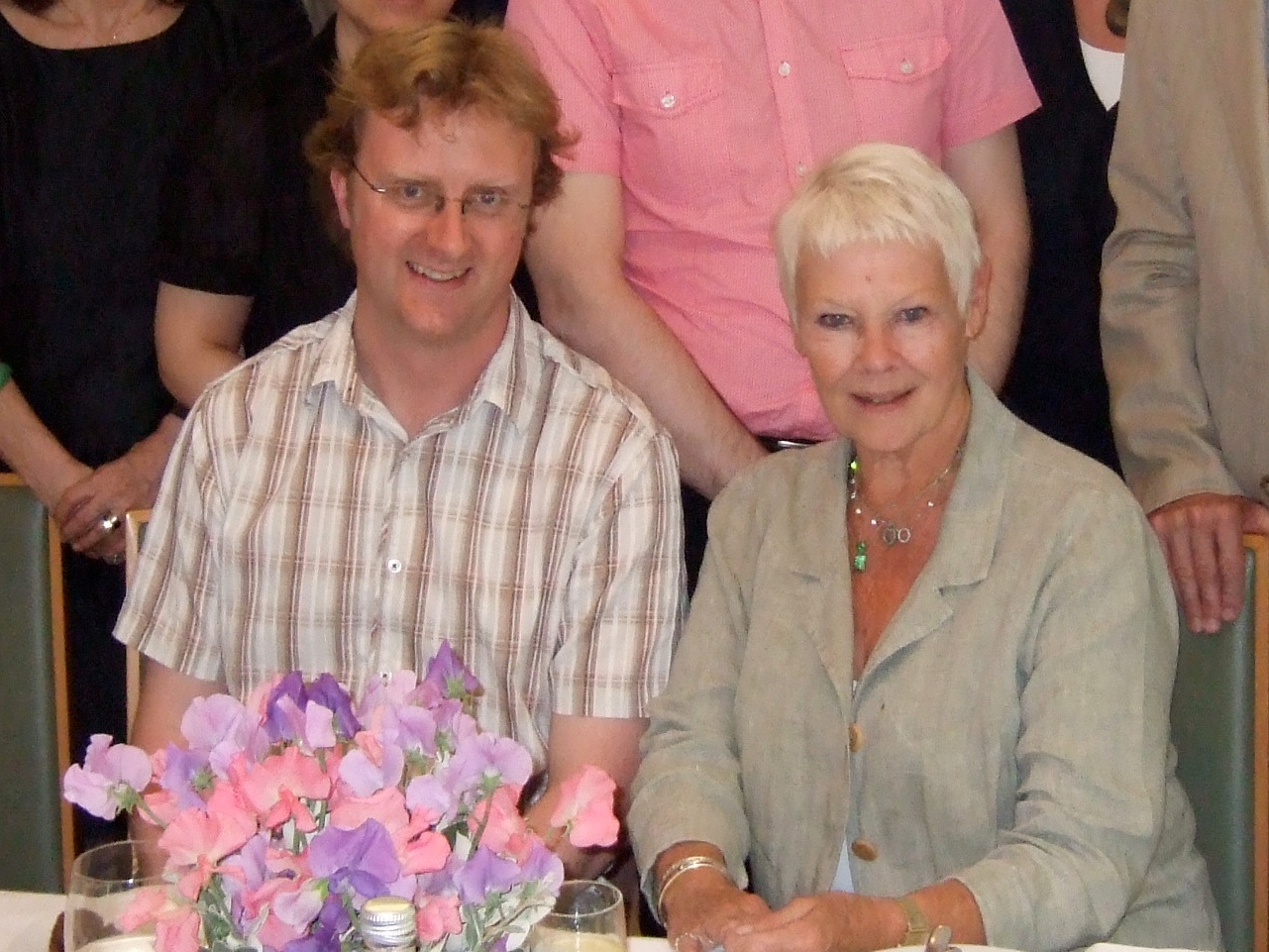
I once met Judi Dench. She really is lovely. Here she is giving me orders to kill the photographer.
PS. Oh and Albert Finney at the end… He was great, but do you not think that role was written with Connery in mind? 50th anniversary and all that…
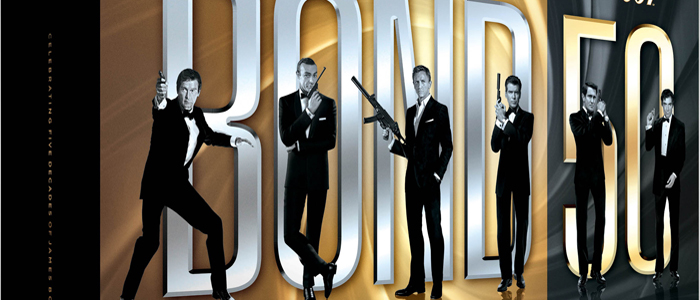
There is a theory, and not a very good one, that the name James Bond is a nom de guerre that comes with the 007 job, thus explaining all the different incarnations over the years. This theory is typical fanboy fodder – we just love to tie up all the loose ends – and it even seeped up to the film makers themselves, with DIE ANOTHER DAY director Lee Tamahouri wanting to include a scene where a retired Connery Bond passed on advice to the then-active Brosnan’s Bond. This would have been fascinating and no doubt a lot more watchable than the godawful CGI parasailing sequence that somehow found its way into the film.
But if this theory is true*, then what happened to all the other Bonds over the years?
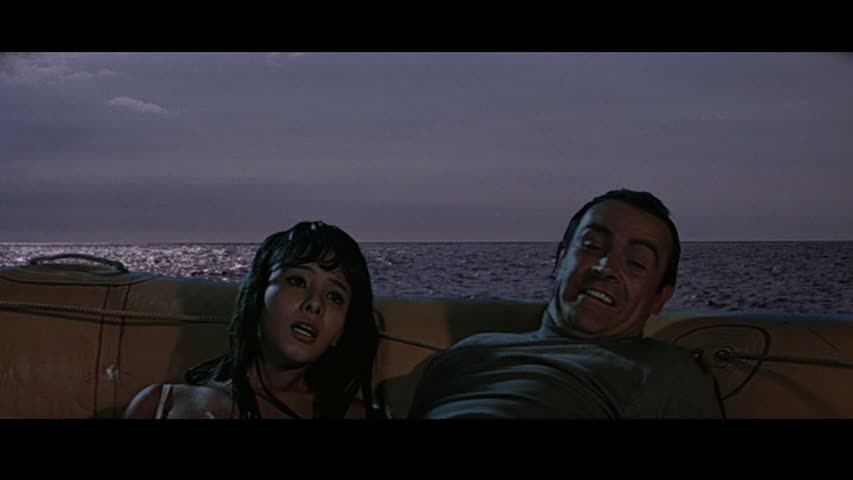
The first incarnation of Bond died of emphysema and cirrhosis of the liver aged 44.
Waiter! 40 Bensons and a Vodka Martini.
The second incarnation retired in anger after nearly dying when a British Navy sub sub capsized his lifeboat…
“Is that a submarine in your pocket, or…?”
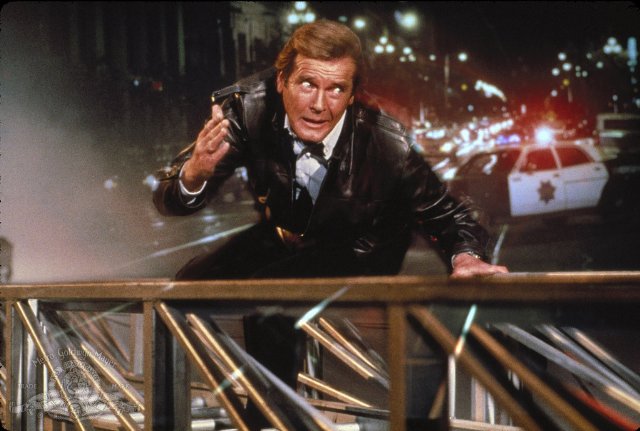
After some years advising the Chicago Police Department (“He pullsh a knife, you pull a gun…”) he’s now happily residing in the Darby O’Gill home for the elderly.
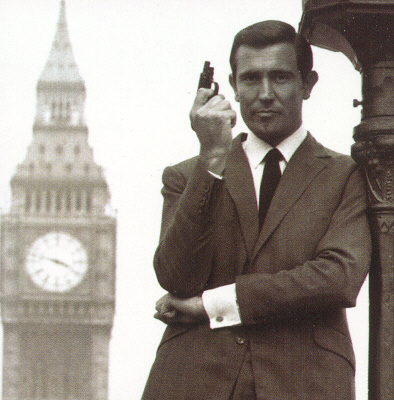
After the tragic murder of his wife, the third incarnation…
Do you get Fry’s with that?
… suffered from a severe lack of self-confidence, and on his second mission had reconstructive surgery to look like his predecessor. But whatever he tried, he could never quite get the hair right…
Matching the eyebrows was the hardest part.
He later died in a foolhardy attempt to retrieve diamonds from an orbiting satellite.
The fourth incarnation enjoyed a long and successful career…
It’s like you’re actually there!
… but was tracked down and beaten to death by this man…
… who was set free by a sympathetic jury once his defence lawyer successfully proved he had suffered years of mental anguish at the hands of the deceased. A Venetian pigeon was a key witness.
The fifth incarnation caused a scandal when he turned down an offer from M to rejoin MI6. He eventually moved to Sandford in Somerset where he became the manager of a branch of Somerfield.
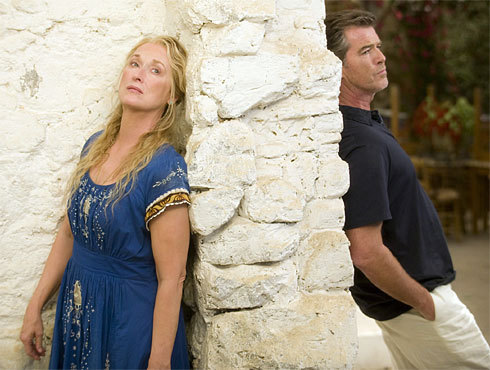
The sixth incarnation was last seen driving an invisible car off a cliff after seeing the film Mamma Mia.
Though there are reports that he’s been seen as a gun for hire in Ireland…
Of course, these are just theories. Feel free to add your own.
*And it doesn’t stand up to much scrutiny: Connery, Moore and Brosnan all make reference to the death of Diana Rigg’s Contessa at some point… THEY’RE ONLY FILMS, PEOPLE!
Really enjoyed Troll Hunter the other night, but slightly baffled by its 15 rating for ‘sustained intense threat’. I watched it with the kids (10 and 12) who were thrilled, but never terrified.
But then my poor kids have been subjected to all sorts of horrors over the years. I made the mistake of showing them Gremlins when they were way too young, and they never made it past the first hour, and this has subsequently put them off ever watching it, or its sequel, ever again (the merest suggestion sends them running from the room).
And yet they both loved Joe Dante’s more recent and much more frightening movie The Hole…
So I guess it all comes down to timing. This blog post was inspired by a chat with my friend Jo who revealed a friend of hers didn’t get The Goonies. I didn’t understand. He’s about the same age as me, and everyone in my generation loves The Goonies. Was he mentally deficient somehow? Missing a gene? No, he’d simply made the mistake of seeing it in his 30s and for him it was a bunch of annoying kids running around.
I first saw it when I was 12. I was in California on an exchange trip and feeling very, very homesick. The previous film I’d seen on that holiday was Mask…
Aaargh! Laura Dern!
… so my hopes weren’t high. But The Goonies was a non-stop roller coaster thrill ride, that made me laugh so much I thought I’d puke, and the people sitting around me were giving me some very concerned looks. For me, it’s one of the most pivotal films of my childhood. Beyond reproach.
Similarly, esteemed critic and Jessie Birdsall look-a-like Mark Kermode has frequently said he just doesn’t get Star Wars. And I totally understand this: to really feel the full power of the force you need to have seen it between the ages of 5 and 12 (I was 5: first generation Star Wars fan and it ruined my life).
So be wary of film ratings and remember that age and context is everything. The Omen (first viewing aged 11) is far scarier than The Exorcist (I was 21), but nowhere near as ball-tighteningly horrific as the Wicked Witch in The Wizard of Oz (I was probably 3) or the ultimate horror… the video for Bohemian Rhapsody (age 2).






 Mark Stay Writes