How to Write Great Antagonists

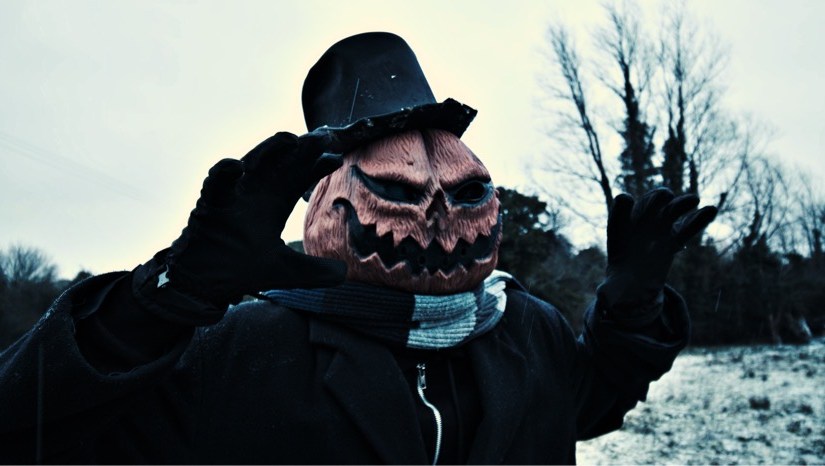
Some top tips on how to write great baddies!

A couple of months ago I started a little forum for Writers called The Green Room. We meet twice a month over Zoom: writers send me questions in advance on the craft and business of being a writer and it’s all relaxed and fun and chatty and there’s a great mix of writers: some just starting out, others are published and experienced and it’s all recorded exclusively for folks who support me over on Ko-Fi.
Here’s a little taster from last week’s session with a great question on how to write believable and unpleasant antagonists…

I hope you found that that little taster helpful. The sessions are supposed to run for half an hour: they’ve all gone on for a good hour so far. I love chatting about this stuff with writers like you. If you’d like to try it out, pop over to my page on Ko-Fi and become a Green Room supporter. Untill then, happy writing!

Here’s a sort of transcript of the video above…

How do you write a believable and unpleasant antagonist? I have tried looking at antagonists I like from other books, but I can’t put my finger on why some get under my skin and some don’t. Where do you begin?

Fantastic question! And I’m going to take my time with this one, because this is so important…

An antagonist is a person who actively opposes or is hostile to someone or something. This means your antagonist isn’t just a black hat villain who is evil for the sake of it. They have historical or psychological motivations for what they’re doing. And that’s a great place to start when creating a great antagonist.

Look at Ray Bradbury’s classic Fahrenheit 451, set in a world where books are banned and burned – the antagonist is Captain Beatty: he hates books for their contradictory facts and opinions and that they encourage dissent and unrest. But he’s also well-read, which makes him a hypocrite, but he has made a choice to destroy outlawed books that might encourage people to think. As far as Captain Beatty is concerned he’s providing a public service, and Montag — our hero who saves books — is a renegade who must be stopped.

Antagonists are often in a position of power: Captain Beatty, Uriah Heep in David Copperfield becomes secretary and business partner to Mr Wickfield, allowing him to deceive Mr Wickfield. Mob bosses, corrupt officials, powerful businessmen and women all make for great antagonists because of their position and the power they hold over others.

Antagonists are a dark shadow of the hero. Moriarty is a match for Sherlock Holmes’s wit and deduction, but he has chosen a life of crime. He is what Sherlock could become if he made the wrong choices. Same goes for Luke/Vader, Harry/Voldemort, Batman and the Joker etc.

Create the right Antagonist for your Protagonist

The antagonist’s role in the story is to force your protagonist to change. They will torment your hero so much that they have to rise up and overcome them or be defeated. If we think of our story as: thesis, antithesis and synthesis – the antagonist is the antithesis: they represent the opposite of what your hero believes to be true. That’s not to say that the antagonist is always wrong. A good baddie will have their own agenda that might even seem reasonable to others: 

Shere Khan in the Jungle Book: turns out he was spot on about men hunting tigers to extinction!

Nurse Ratched in One Flew Over the Cuckoo’s Nest: a care provider who maybe lets power go to her head.

Javert in Les Miserables has a slavish devotion to the law and righteousness which drives him to pursue Jean Valjean tirelessly.

Each of these represent the antithesis to our hero: Mowgli wants the freedom of the jungle, but with none of the responsibility. He will learn through his encounters with Shere Khan that freedom is hard won.

McMurphy challenges institutional power in the form of Nurse Ratched, but discovers that institutions can be more powerful than the individual.

Jean Valjean epitomises how a man who has done something that society sees as wrong can be a good man, but Javert refuses to show any leniency.

With all of these, the stories would have been much shorter and less satisfying if the villains had been just a little bit reasonable… Imagine if Shere Khan had accompanied Mowgli to the human village instead of trying to kill him, what if Nurse Ratched had acknowledged her own tyranny and relaxed some of her rules, what od Javert said, ‘Y’know what, it’s a loaf of bread and those kids were starving. I’m going to look the other way this time…’

But each of these villains refused to bend and why? Because they have power.

Think about their POWER

If a villain is too easily overcome, then it will be unsatisfying for the reader. If they’re overpowered (and this happens a lot in SF&F) then you might find yourself reaching for some deus ex machina solution at the end.

NOT ALL VILLAINS ARE CREATED EQUALLY… and do you even need one?

So far we’ve discussed the traditional kind of antagonist: the dark shadow of your hero that must be overcome, but not every baddie needs to be Darth Vader. Here are some other examples…

A Force of Nature

Yes, it doesn’t even need to be a person. Your hero could be trapped in a storm, or tormented by a shark, Robinson Crusoe was surrounded by an unforgiving sea. The world around your hero could represent the antithesis of who they are.

A Rival/Opponent

Rather than an out and out evil bad guy, your antagonist could be more of an irritant. The kind of antagonist we’ll meet in real life: the annoying boss or co-worker, the strict parent 

They’re simply someone whose goals are in direct conflict with the protagonist’s.

A Many-Headed Hydra

The antagonist doesn’t need to be just one person. In Mean Girls you have the alpha females

Most villains have henchmen who in some way embody an aspect of their ethos and as the hero overcomes them they will learn something essential about the villain that will help them overcome them.

The Protagonist Themselves

Ever been told you’re your own worst enemy? A character’s own failings and doubts can stop them from reaching their goal. Holden Caufield in The Catcher in the Rye, the narrator in Fight Club, Willy Loman in Death of a Salesman is delusional, insecure and volatile  

Describing villains…

Uriah Heep, for example, in David Copperfield:

When we first meet him, he is described as a “cadaverous” man, “who had hardly any eyebrows, and no eyelashes, and eyes of a red-brown, so unsheltered and unshaded, that I remember wondering how he went to sleep. He was high-shouldered and bony; dressed in decent black, with a white wisp of a neckcloth; buttoned up to the throat; and had a long, lank, skeleton hand.”

‘As I came back, I saw Uriah Heep shutting up the office; and feeling friendly towards everybody, went in and spoke to him, and at parting, gave him my hand. But oh, what a clammy hand his was! As ghostly to the touch as to the sight! I rubbed mine afterwards, to warm it, and to rub his off.’

David Copperfield, by Charles Dickens

Annie Wilkes in Misery (she gets a long description, essentially one of only two characters in the book). Here’s an excerpt from p8 of my paperback edition…

Most of all she gave him a disturbing sense of solidity, as if she might not have any blood vessels or even internal organs; as if she might be only solid Annie Wilkes from side to side and top to bottom. He felt more and more convinced that her eyes, which appeared to move, were actually just painted on, and they moved no more than the eyes of portraits which appear to follow you to wherever you move in the room where they hang. It seemed to him that if he made the first two fingers of his hand into a V and attempted to poke them up her nostrils, they might go less than an eighth of an inch before encountering a solid (if slightly yielding) obstruction.

Misery by Stephen King

A lot of this initial description de-humanises Annie. It’s broad and derogatory, and as the novel goes on Paul Sheldon and the reader discover more and more about Annie and her motivations. I won’t give too much away, but it’s a masterclass in writing a psychopath.

And here’s how Holmes describes Moriarty in The Final Problem:

“His career has been an extraordinary one. He is a man of good birth and excellent education, endowed by nature with a phenomenal mathematical faculty. At the age of twenty-one he wrote a treatise upon the Binomial Theorem, which has had a European vogue. On the strength of it he won the Mathematical Chair at one of our smaller universities, and had, to all appearance, a most brilliant career before him. But the man had hereditary tendencies of the most diabolical kind. A criminal strain ran in his blood, which, instead of being modified, was increased and rendered infinitely more dangerous by his extraordinary mental powers. Dark rumours gathered round him in the university town, and eventually he was compelled to resign his chair and to come down to London, where he set up as an army coach. So much is known to the world, but what I am telling you now is what I have myself discovered.”

The Final Problem by Sir Arthur Conan Doyle

No mention of his physicality at all.

Here’s how Watson describes him in the same book:

He was extremely tall and thin, his forehead domed out in a white curve, and his two eyes were deeply sunken in his head. He was clean-shaven, pale, and ascetic-looking, retaining something of the professor in his features. His shoulders were rounded from much study, and his face protrudes forward, and was for ever slowly oscillating from side to side in a curiously reptilian fashion.

The Final Problem by Sir Arthur Conan Doyle

Hannibal Lecter, ch7 of Red Dragon: he’s mentioned 29 times before we meet him, and he never leaves his cell, doesn’t kill anyone for the duration of the narrative, and yet he is Will Graham’s antagonist.

Dr Hannibal Lecter lay on his cot asleep, his head propped on a pillow against the wall. Alexandre Dumas’ Le Grand Dictionnaire de Cuisine was open on his chest.

Graham had stared through the bars for about five seconds when Lecter opened his eyes and said, ‘That’s the same atrocious aftershave you wore in court.’

‘I keep getting it for Christmas.’

Dr Lecter’s eyes are maroon and they reflect the light redly in tiny points. Graham felt each hair bristle on his nape. He put his hand on the back of his neck.

‘Christmas, yes,’ Lecter said. ‘Did you get my card?’

‘I got it. Thank you.’

Dr Lecter’s Christmas card had been forwarded to Graham from the FBI crime laboratory in Washington. He took it into the backyard, burned it, and washed his hands before touching Molly.

Lecter rose and walked over to his table. He is a small, lithe man. Very neat. 

Red Dragon by Thomas Harris

There’s more in the subsequent chapter, a drip-drip of little details that send a chill down your spine. It’s brilliant and Harris basically repeats it for The Silence of the Lambs…

In Conversation with Ben Aaronovitch and other Dates for your Diary…

MCM COMIC CON, LONDON, 25-27TH OCTOBER

I’ll be at the MCM Comic Con in London for all three days, selling and signing my books and I’ll also be on the “Building Worlds” panel on Sunday 27th at 11am on the Writers’ Block Stage.

Aside from me, there’s a ton of amazing authors to see over the weekend!

IN CONVERSATION WITH FMA DIXON

01 Nov 2024, 18:30 – 20:00

The Pier Ceylon, 163 Station Rd, Herne Bay CT6 5NE, UK

I’ll be chatting with Herne Bay author FMA Dixon about his sequel to The House on Everywhere Street (which I loved!).

IN CONVERSATION WITH BEN AARONOVITCH

TUESDAY 26TH NOVEMBER, 6.30-8PM

OXTED LIBRARY

I’ll be chatting to the legend that is Ben Aaronovitch about his latest Rivers of London novel, and there will be books for sale and to be signed!

Episode 2 with LJ Shepherd

My special guest on the podcast this month is LJ Shepherd, author of the stunning debut novel The Trials of Lila Dalton. We discuss first lines and …

Episode 2 with LJ Shepherd

Join me live with author LJ SHEPHERD on Friday 20th September

Join me live with author LJ SHEPHERD on Friday 20th September.
LJ Shepherd is author of the stunning debut novel THE TRIALS OF LILA DALTON, which has…

Join me live with author LJ SHEPHERD on Friday 20th September

My Last Ever Episode of the Bestseller Experiment Podcast

Merry Christmas! That’s if you celebrate, if not then Happy Monday! Mondays have been ‘New Podcast Day’ for the last seven and a bit years, and today marks the release of my last ever episode of The Bestseller Experiment as co-presenter. Why am I leaving? I explain myself in full here. And rest assured that this isn’t the end of the podcast: Mr D will continue and it’s going to be amazing.

What will I be up to in the meantime? Well, stand by for an update in the New Year. Until then, here’s our special Christmas episode where I share some of my favourite moments, outtakes, and we get a visit from a very special elf…

The Very Entertaining Mike Gayle

Can’t think of a better author to wrap up 2023 on the Bestseller Experiment with than Mike Gayle. He’s celebrating 25 years of his amazing debut novel My Legendary Girlfriend and he’s got a new one out, A Song of Me and You. We chat about keeping warm in the winter (we’re middle aged writers, so this is relevant!), how to make unlikeable characters engaging, and the really important lesson he learned from being the agony uncle for the teen magazine Bliss in the 90s…

Jake Lamar Makes Words Sing

As if getting notes from an editor wasn’t stressful enough, this week’s podcast guest Jake Lamar recounts a time when he got his edit notes while recovering from a heart operation in an intensive care unit. He tells me that during recovery he found that writing was ‘Even more of a solace.’ And he’s right. Even as I’m typing this I’ve just had some notes come through on a project, and while it make me groan and think, ‘Here we go again…’ this thing we do is still better than spending a fortune commuting on a delayed train to an office that’s designed to grind me into submission. So I’ll take these notes on the chin and get on with it. It’s a privilege that I’m all too aware of.

We discuss all sorts in this week’s episode, including jazz, making your writing sing, and I recount that time I was in a minibus from London to Manchester with Joe Hill, Joe Abercrombie, Joanne Harris, Brandon Sanderson and more…

Soft Linkage with Graham Hurley

Soft Linkage sounds vaguely filthy (or that just might be my warped mind), but it’s a concept that the brilliant Graham Hurley — author of 49 books and counting — came up with when pitching his series of Second World War thrillers to his publisher. They naturally wanted a central character that the reader could follow through the war, but Graham wanted to tell the stories that fascinated him without having to shoehorn the same protagonist into every novel. And it really works. His latest novel, The Blood of Others, is well into the series but anyone could pick it up and if you love WWII thrillers you definitely should.

We also discuss the benefits of long publisher lunches, searching for the Titanic (yes, really) and writing in a genre you’re not a fan of. Full disclosure: I used to sell Graham’s books when I worked at Orion so there’s a little bit of nostalgia in here too. Enjoy!

Fight for your Rights with Fiona Valpy

A surprising number of traditionally-published authors don’t realise that their publisher only owns the rights to their novel for a set period of time. It’s usually five years, and yes there are caveats in contracts meaning that they can retain the rights for longer if the book is still “in print”, and print on demand technology can complicate this arrangement, but… there’s a good chance that one day you’ll get the rights back to your book. It happened recently with me and The End of Magic and opened the door for me to write a sequel.

Fiona Valpy discusses this and much more in this week’s episode of The Bestseller Experiment!

And in the extended version for Academy members and podcast Patrons, me and Mr D discuss reissuing books with new titles, why you should think of your books as lifetime assets, research when you can’t travel, and much more! If you want to support the podcast and keep us going click on this here link.

Healing Through Writing with Mira V Shah (and we won an award!)

I first heard of Mira Shah after reading her excellent blog on how to manage the expectations of debut authors (read it here), which ended up on The Bookseller and on pretty much every bit of writers’ social media. She’s spot on when it comes to how the industry is great when it comes to the big deals and ad campaigns, but can be lacking when it comes to the rest of us and how the launch days for our books can be a bit of a damp squib.

We also discuss how her writing came about through grieving, but if all that sounds a bit heavy for a Monday, don’t be put off. Mira is a delight and this is a really uplifting chat…

And at the end of the podcast, I tell Mr D all about my night in London’s glittering King’s Cross where I was honoured to collect our award for Best Books Podcast at the inaugural Independent Podcast Awards. It was an amazing night celebrating the terrific indie podcasts and I’ve added a whole bunch of them to my pod catcher. You can find out more about the award and the evening here.

Mark Stay gurning for the camera after collecting the award for Best Books Podcast for the Bestseller Experiment. Photo by Simon Brew.
Mark Stay with presenter Esther Manito at the Independent Podcast Awards 2023.
With Esther Manito at the Independent Podcast Awards