Join me live with bestselling crime author Nadine Matheson!
THURSDAY 27TH MARCH, 8PM GMT.
Nadine’s debut crime fiction novel, The Jigsaw Man, was won by HQ (HarperCollins) in a six-publisher auction. The best-selling ‘The Jigsaw Man’ was published in 2021, has been translated into fifteen languages and has been optioned for television. Nadine is also the presenter of The Conversation podcast, which for my money is one of the best British podcasts for author interviews. Nadine is a brilliant writer and really insightful on the craft and business of writing. You are not going to want to miss this one! Join us live and be part of the podcast.
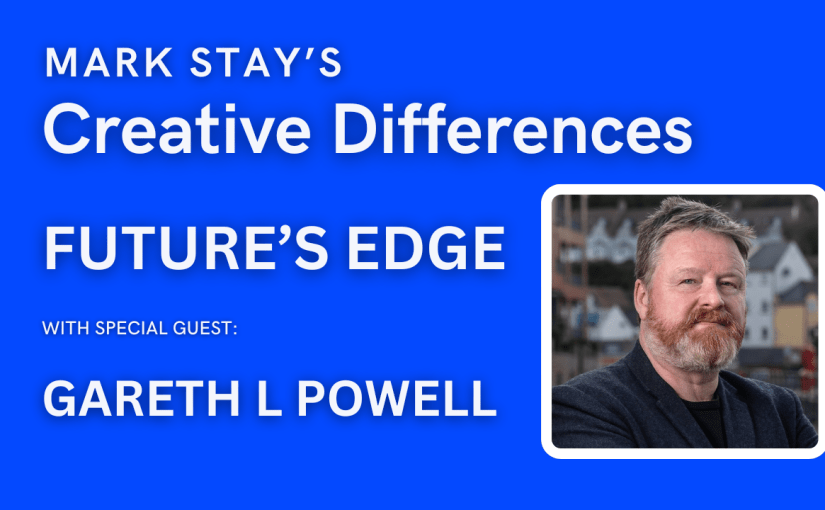
This month’s special guest Gareth L Powell reveals the biggest mistake of his writing career, but how this particular disaster was a blessing in disguise…
MARK: What’s the biggest mistake you’ve ever made in your writing career?
GARETH: Oh, Lord. The worst thing — I don’t know if it’s a mistake, It could have been an Act of God — But was when the first half of the first draft of Descendant Machine vanished.
MARK: Oh, God, I remember this.Yeah, yeah, yeah.
GARETH: I’d been working on it for three months, I think. And then one day, it just wasn’t on my computer. It wasn’t in the recycle bin. It wasn’t, you know, anywhere. I used various kind of, programs to claw through the hard drive to try and find it. And… nothing. It just completely vanished. So if unless I just did something ridiculously stupid in my sleep or, you know… I don’t know what, I’ve no idea what happened to it. But this entire three months work just absolutely vanished. That was a big setback because, you know, that was when I, you know, you go in that feeling where you just go cold.
MARK: Yeah.
GARETH: You know in the, sort of Agatha Christie films from the 70s when there’s, like, a pistol blast or a scream, and then you’d get a shot of a load of crows flapping up from a tree. It’s kind of like that. I just uttered a curse. Venomous. It turned the air to glass and… And I lay on the sofa and thought, I’m never gonna write again. It’s all over.
MARK: And I remember talking to this, about this at the time, and it was just one of those complete mysteries. It wasn’t like you weren’t backing stuff up. It just absolutely vanished. Is it… because this happened to a friend of mine the other day, and I said, Oh, this happens to all sorts of writers, but every one of them tells me that when they go back and rewrite it, it’s so much better. Would you say that’s true, or am I just trying to make my friend feel good?
GARETH: No, that’s true, but the book I wrote was, substantially different from the first draft I had done, and much better for. So it was a blessing in a very, very heavy disguise.
What’s bringing you joy this week? In this clip from the latest episode of the Creative Differences podcast, Gareth L Powell and I reveal what’s bringing us joy, including works by: Elif Shafak, Sutej Singh, Mythic Quest, Barry Sonnenfeld, the Film Stories Podcast and Eva St John…
GARETH: Well, at the moment I’m reading… there’s books on this desk at all times… I’m reading this book, which is The Rivers in the Sky by Elif Shafak. I’m not sure where it’s going, really, or what it’s doing, but it’s just so beautifully written. It’s just relaxing to read. And it’s about four characters at different periods in history, and they’re linked by this drop of water. So it’s like a raindrop that falls on the head of a Sumerian ruler. And then it’s, you know, it’s a tear that comes out to another character in Victorian times and so on. So it’s got that kind of link, but also it’s… they’re all somehow connected to the, Epic of Gilgamesh. So you have this Sumerian ruler who’s trying to get all the different versions together to create the definitive text, but it’s just beautifully written and it’s got some interesting kind of, little throwaway lines that make you think, oh, that’s really good. That’s a really good observation. That’s a really good motto for life.
MARK: Yeah. And is that one of the books that you said earlier that, you know, you might not have come across it had you not worked in a bookshop? Is that an example of one of those?
GARETH: Yeah, that’s one I kept looking at on the shelf. And after reading bits… Yeah, dammit, I’m going to have to read it.
MARK: So what else is giving you joy this month, Gareth?
GARETH: My granddaughter. So who’s she was born in December, so she’s still very small, but very wriggly and very smiley and very giggly. And it was always lovely to see her.
MARK: I’m going to run through the things that are bringing me joy at the moment. I’m going to start with Sutej Singh, who has a new single out, which is called Kaadambari and features Nandini Srikar on vocals… It’s an epic, guitar track. Singh is this incredible virtuoso guitarist, but he’s not someone who just plays a million notes per second. He knows when to leave space and his solos… like those of my favourite guitarists like David Gilmour, Mark Knopfler, they have their own narrative. They’ve got a beginning, a middle and an end. And here’s a lesson for you writers out there; Sutej always wears a long coat and a turban and A guitar. And when he’s in silhouette, you always know it’s him. So I have a think about how your characters might look in silhouette, how they can be more iconic. If you think of characters like Batman, Darth Vader, Sherlock Holmes; once you see the silhouette, you always know who they are. Other things that are bringing me joy: Mythic Quest on Apple TV. We talked about workplace shows earlier with Star Trek. This is a workplace comedy. It’s about the makers of an online roleplaying game called Mythic Quest. You don’t need to know anything about gaming. It’s warm hearted, very, very funny. You got Rob McElhenney in the cast. He’s co-creator But I think the show’s secret weapon is Megan Ganz. She’s a co-creator, but she’s also written for Community, Modern Family, Last Man on Earth, It’s Always Sunny in Philadelphia. She’s a brilliant, brilliant writer, and there’s a recent episode where they did a murder mystery retreat. It was just perfect. And in terms of books, I’m loving Barry Sonnenfeld’s book Best Possible place, Worst Possible Time: True Stories from a Career in Hollywood. Barry’s directed many of my favourite films: the first two Addams Family movies, Men in Black, Get Shorty. He did the TV version of A Series of Unfortunate Events. He was also a cinematographer, working with the Coen brothers on films like Blood Simple, Miller’s Crossing. He also did When Harry Met Sally, he talks about how they did that multiple phone shot in When Harry Met Sally: it took 67 takes. He’s now at the stage in the career where he talks very, very frankly about some of the people he’s worked with. And I first heard him about this book when he was interviewed on the Film Stories podcast. And that’s what this is, a brilliant, brilliant collection of film stories. And finally, I had the great privilege of reading an advance copy of Flint in the Bones, which is a new novel by Eva Saint John. Flint in the Bones is a brilliant blend of crime and history, the past, the present. Brilliant thrills, there’s a loyal dog. Now, if you’ve read Eva Saint John’s Quantum Curator series you’re going to be familiar… She has these page-turning stories that blend history. If you haven’t, you’re in for such a treat. Now she’s just launched, she’s launching a Kickstarter soon. And you can sort of pre… you can sign up for it. So you can find out when it’s going to launch. It’s launching very, very soon. I’m going to put a link in the comments here so you can have a look at it. I’m definitely going to do it. One of the things she’s offering as well is to, have a character named after you. And I did that with The End of Magic. And it was really, really popular. So do check that out.
This month’s special guest Gareth L Powell reveals how he keeps track of story ideas when they come late at night… and then we’re interrupted by a digital overlord.
MARK: How do you remember that idea that you have it, say three in the morning?
GARETH: I always have my phone next to the bed. And I can say, “Hey, Siri,” take a note, and just dictate it to the phone.
SIRI: (Interrupting) And then what do you want it to say?
(LAUGHTER)
MARK: I was waiting for that!
SIRI: I created you a note. It’s called BRA.
MARK: Oh. That’s priceless. Thanks for that, Gareth.
GARETH: I thought, my phone is off. I’ll be safe saying this, and I forgot it’s on the damn computer as well… I will go through that process — that I just demonstrated — and then in the morning, because it’s synched up with my desktop, the I just open my notes file and the notes are there waiting for me.
MARK: A comment from Usman here: “22:32. Siri gained sentence.” It’s the end times, people. Oh, fantastic.
MARK :What small thing has made a big difference to your creative process?
GARETH: (thinks) Tea…
MARK: Do you have a particular brand? Because I’ve seen your pictures on social media. You’ve got that wonderful little cast iron kettle, haven’t you?
GARETH: It was my lockdown coping mechanism. I got really into tea. Loose leaf teas and different types of teas and, so now it’s like… no tea bags. It’s proper bags of loose leaf teas. I’ve got a… I made an app for my phone, which is a picture of a teapot it, and I press it and it ultimately times five minutes, which is just right for the tea to stew.
MARK: Properly brewed. Fantastic. And do you have a favourite brand of tea What should we be looking out for?
GARETH: I’m kind of in between favourite brands at the moment. I was very fond of Whittard’s English Breakfast Loose Leaf. I’m kind of looking around for a slightly less expensive version, but I’ve tried lots of different ones. So at the moment I’m on the, Sainsbury’s Red Label, which is quite good.
MARK: You’ve got me some Yorkshire gold for Christmas, didn’t you, Emily? That is first class stuff. That is really good.
Join me and Gareth L Powell for the next Creative Differences livestream on Tuesday 25th Feb, 8pm GMT.
Gareth L. Powell is an award-winning British author of science fiction and horror. He has written over twenty published books and has twice won the British Science Fiction Association Award for Best Novel. He’s also Managing Editor of Stars and Sabers Publishing, which has a brilliant new anthology out now! If you follow Gareth on social media you’ll know he’s incredibly generous with his writing advice and now you can join us live on the livestream to ask him that burning question you’ve always wanted an answer to!
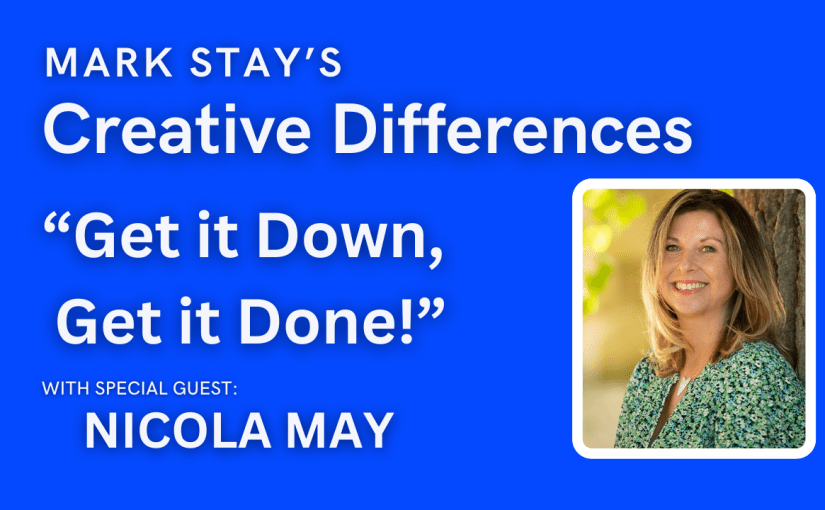
This month’s special guest Nicola May has wise words for anyone worried about finishing their novel…
TRANSCRIPT
MARK: How do you know when you’re done?
NICOLA: Again, as a writer, do we ever know we’re done? It does annoy me, and I’m going to say this out loud: writers who procrastinate for bloody years over their manuscript, though. I do think get it down, get it to an editor, because what’s the point? Six years, going over this thing. What? It might not even be good enough. So that’s another bit of my advice. But, once I get to about 70,000 words — because my books are 75 to 80,000 words — I’m so happy to get to the end, thay I think, ‘Right, that should do. For now. The editor can look, then come back.’
MARK: And what do you do once you’ve finished that first draft? Do you sort of step away from it for a particular period of time, or are you straight back into editing mode?
NICOLA: Straight back into editing. To be honest, I’m a bit of a One-trick-Tina. My first draft is actually usually pretty good,
MARK: Right
NICOLA: Yeah.
MARK: Nice.
NICOLA: Don’t get me wrong. No, there’s been quite a few edits for ‘How Do I Tell You? — which I’ll hold up here. Here it is — That have made it much better by the editing team. So I’m not like, oh my God, there’s no edits at all. Of course there are.
MARK: Yeah.
NICOLA: It hasn’t had to be pulled apart.
MARK: So yeah. So a good sense of structure essentially is (important).
This month’s special guest Nicola May reveals a tip for naming your characters that will save you time in the long run…
TRANSCRIPT
MARK: So, let’s start with what small thing has made a big difference to your creative process?
NICOLA: I mean, again, I found this quite hard, but what I do do is… all my heroines have very short names; four letters or three letters. Ruby, Avy, Rosa. Victoria’s Vic. Because if you think how many times you type that in a manuscript, it saves you so much time. I mean, if you have something like Everard or, I don’t know, Christopher, you don’t want to be writing that… all those times. Although it’s good for word count.
MARK: I’m writing something at moment that has a character called Michael, and I’m four chapters in and already I’m thinking, I just want to call him Mike.
NICOLA: Yeah. You know, and I bet you you’ll have to go back because you will have so many wrong spellings of that as well.
MARK: Exactly. Yeah.
NICOLA: But it’s a little point, but it’s a good point. And also don’t choose a name that people can’t understand like Niamh, or things like that because there is nothing worse… As a reader, I hate it when I don’t know how to say the name.
MARK: You have to go to one of those those YouTube channels where they tell you how to pronounce it. Yeah, yeah,
NICOLA: Because I’ve got I’ve got a Joti in my book, would you say Joti or Jotti? And my audiobook narrator… I didn’t think actually to brief her on that.
MARK: I was going to mention this later. I went to the audiobook recording for The Corn Bride yesterday. And once I was in the room with them, they had a list. You know, it’s how you pronounce that? How are you pronouncing that? I. And I was like… (makes a non-commital noise). I don’t have strong opinions either way.
NICOLA: I never want to meet my narrator, because I’ve got one character who has an accent of someone who’s traveled many places abroad. So you don’t know where she’s from. And I put that on the brief. I’m like, oh my God, the poor woman.







 Mark Stay Writes