
Towards the end of my interview with Freya Berry, author of The Dictator’s Wife and The Birdcage Library, I do my usual thing of asking what’s coming next. Her reply was to say that while developing ideas for her third book it occurred to that it might be the most challenging one of all. An author’s first book is about simply seeing if you can get to the end, which is a huge achievement. The second book is to prove that the first one wasn’t a fluke, and so with the third book she is “trying to be ambitious” as she develops her ideas. And she’s right to think that. It’s hard enough to get one book published, but few authors get beyond three books, particularly in when working in traditional publishing, and those that sustain a career do so by continuing to surprise and delight their readers. Yes, there are authors who have great careers by seemingly writing the same book over and over (naming no names, but there are some very formulaic books out there), but as AI threatens the livelihoods of writers everywhere, I think that style of cookie cutter fiction won’t be enough to appeal to readers. A writers’ voice needs to develop and grow over time and a reader will join them on that journey. In the podcast I give the example of Terry Pratchett, whose Discworld books started as brilliant and funny parodies of the fantasy genre, but as the series continued his themes and characters deepened and became their own thing the parody elements fell by the wayside. His voice is what we kept coming back for and AI might try to parody that, but it will never truly have a voice of its down.
Tag: Patreon

Heide Goody & Iain Grant on the Bestseller Experiment: How to Appeal to as Many Readers as Possible…
I had a bit of revelation while recording this week’s podcast. As is traditional, me and Mr D discuss the interview with our guests — this week it’s the brilliant duo of Heide Goody and Iain Grant — and at one point Heide brings up Maslow’s Hierarchy of Needs. If you’re not familiar with it, it’s a theory of human motivation and is often represented as a pyramid, with our most essential needs at the bottom, rising up to self-actualisation and transcendence…
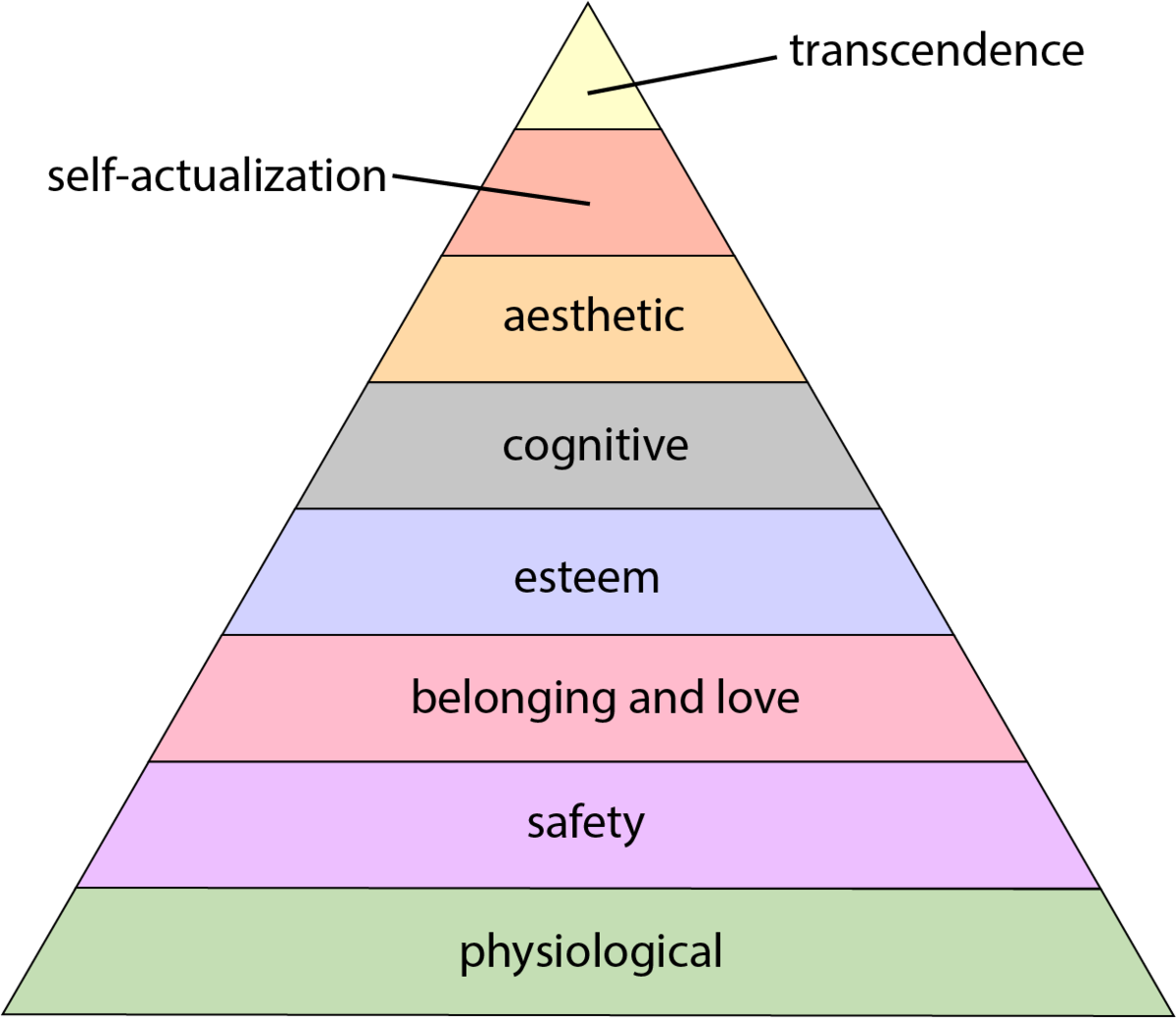
Heide told me how she and Iain would use this in their writing to help develop their characters’ needs and wants. My little revelation came in my post-interview chat with Mr D when it occurred to me that the bottom layers of the pyramid — the basics of survival: food, water, health, security, safety — are the stakes that we find in good genre fiction. Then a little further up we find belonging, love and esteem, which is what we love about romance novels and contemporary fiction. Then above that are the things that we associate with finding meaning in life: cognitive needs and higher planes of existence and all the kind of self-indulgent stuff that bores us in literary fiction (insert smiley face)… So my tip for you writers is if you want to appeal to as many readers as possible, then go for that lower half of the pyramid.
Of course we discuss much more, including the essential elements of cozy crime and how being a writer opens doors that are usually shut. In the extended version for our Patrons Mr and Mr D offer tips for co-writing. If you want to support the podcast and get loads of extra material like this you can do so by clicking here.

Katherine Faulkner and “Light Americanisms” on the Bestseller Experiment
There comes a point in this week’s interview with Katherine Faulkner, author of excellent domestic thrillers like Greenwich Park and The Other Mothers, where she talks about making changes to her British prose for the American market: replacing pavements with sidewalks, trousers with pants etc. This is a commonplace practise now, particularly in the commercial thriller genre, but it does wind me up that this is very much a one-way street. Growing up, I devoured all kinds of American culture, including the likes of Stephen King and Mad Magazine which were stuffed with Americanisms. If I didn’t get a joke about Spiro Agnew (Mad were always making fun of this guy) then I had to find out for myself who he was. This usually meant asking my parents or going to the library. It opened my mind to a new culture and I learned a lot. So why is it that publishers and agents don’t think that the good folk of the United States can’t cope with pavements, nappies, biscuits and other Britishisms? I’ve got lots of American friends, and I’ve been there a couple of times, and the people I met were smart and curious about the world. I’m fairly sure they could cope with a few words outside of their own experience. I know authors fear getting one star reviews from people who can’t cope with the word ‘colour’ spelled with a U (I saw one such example just the other day), but I think living in fear of folk who are so blinkered isn’t exactly the artistic ideal we should be striving for.
When it came to writing Back to Reality, me and Mr D agreed to not make any such changes, but instead we would have a glossary in the back explaining what some of the stranger terms meant (including Colin the Caterpillar Cake and a Cheeky Nando’s) and we’ve never had any complaints. And I’ve just published the Witches of Woodville books in the US on Kindle and I’ve not changed a word. No puzzled readers yet. Mind you, my stuff has never been big in the US, so maybe that’s why? It’s possible that I might be working on a thriller with another writer late this year and I’m sure this will come up, so watch this space. In the meantime, enjoy this interview with Katherine. And in the extended version, me and Mr D discuss keeping the reader in the forefront of your mind and I offer a few tips for editing your first draft.
If you want to support the podcast and get your hands on the extended episodes and over 130 Deep Dive specials, then pop along here and become a Chart Topper supporter.

Katie Fforde on the Bestseller Experiment | Understand a Reader’s Addiction
There’s a point in this week’s podcast where it all clicked for me. Katie Fforde — the multi-million selling “Godmother of Romance” — was telling me how she would read Mills & Boon romance novels on the sly when she was supposed to be working. What she understood was that books can be addictive and that if you want readers you have to feed that addiction. It’s what we mean when we talk about keeping the reader on the hook, and it’s an important lesson to learn.
There’s tons more, including tips for finding time to write around a busy life. And in the extended version, Me and Mr D go to town on celebrity authors and I give tips for writing historical fiction. To hear that, you just need to support the podcast. We’ve got over 130 Deep Dives exclusive to our Chart Topper supporters here!

JD Kirk on the Bestseller Experiment: Libraries Change Lives
JD Kirk (real name Barry Hutchison) is a phenomenal writer, having written over 200 books in a little over ten years. Many of these were children’s books, which would be shorter than a regular novel, but they all have a beginning, middle and end and anyone who tells you writing kids’ books is easy is a liar. You learn how to write by doing it, and you’ll learn even more by finishing something, and if you finish over two hundred of the bloody things you’ll learn an awful lot about story, character, structure, theme and how they’re all intertwined. It’s that ten thousand hours theory on steroids. Barry was a real treat to talk with and his tales of naysayer teachers, and getting inspired by librarians and the legendary Iain Banks will hopefully inspire you, too…
In the extended version, me and Mr D discuss the secret to writing crime fiction (actually, a secret that applies to any genre), dealing with publishers and something called The Unicorn Compromise. To hear this and hundreds of hours of bonus material you can support the podcast here.
James Naughtie on the Bestseller Experiment and Bookshelves as Shrines
Back when I was a sales rep for Headline publishing, I would drive all over the south east of England from my home in Epsom, Surrey. I decided that if I was going to be stuck in a car for much of the day, then I would use that time to fill my brain with some good nutritious listening, which meant a lot of Radio 4, including In Our Time with Melvyn Bragg and Women’s Hour. But the day almost always started with the Today programme and so many of my early morning traffic jams were in the company of one of its presenters James Naughtie. So it was a particular delight to be offered the chance to interview him for the podcast. Of course, whenever I’m interviewing a journalist I worry that I’ll fluff if and look like an amateur, but James was great and put me at my ease right away. It’s a fun interview and James’s Will Flemyng spy thrillers are from all accounts proper page-turners.
Later in the podcast, inspired by my chat with James about books as treasured things, me and Mr D discuss how bookshelves are like carefully arranged shrines with sacred objects (books!) from significant moments in our lives. I recalled buying a copy of David Selzer’s The Omen in a second hand English language bookshop while I was holiday in Spain when I was about 11-years-old. I can’t tell you how many times I read and re-read this, but I loved it, totally falling for the (fake) quotes from Revelations. I’m pretty sure this was the first horror novel I read (unless you count Jaws, which I probably should) and it sparked a love of the genre that’s never left me. Just holding it on my hands takes me back to that holiday and happily reading in the shade… What was the first horror novel you ever read? Let me know in the comments below…

Here’s this week’s podcast for you to enjoy. In the extended edition I give all sorts of tips for building characters. If you want to hear that, then become a Chart Topper supporter of the podcast here.
Scarlett Brade on the Bestseller Experiment | Can You Be Too Young to Write a Novel?
I first heard Scarlett Brade on Nadine Matheson’s excellent podcast The Conversation and immediately got in touch to see if she would come on our podcast. There’s something brilliant about her journey from a six-year-old girl demanding that she’s old enough to read the first Harry Potter, to self-publishing at 23, to having a hit with her thriller The Hive.
I also go on a bit about ‘living a little’ before writing a novel. Apologies if I come across as a crusty old git, but that’s mostly me wincing when I look back at the plays, sketches and half-arsed attempts at novels that I wrote in my youth. I could string a sentence together (just about), but I had nothing to say because I hadn’t really lived yet. It wasn’t till I hit my late 20s/early 30s that I’d experienced love, rejection, grief and existential angst that I felt there was enough gas in the tank to actually write these things convincingly. Of course, your own mileage will vary. I had a perfectly happy childhood with very little trauma, so of course I was a guileless goon (still am to some extent). Anyway, Scarlett is amazing and you’ll definitely be inspired by this week’s episode.
And in the extended version for Academy members and podcast Patrons, me and Mr D discuss if it’s essential to be an author on social media, life pivot moments, the importance of friendship groups and mentors, how to generate hooks and high concepts and much more! You can get all this extra stuff and hundreds of hours of exclusive material by supporting the podcast here.

Jonathan Whitelaw on the Bestseller Experiment
I’m always interested in writers who pivot from one genre to another. I read all across all sorts of genres, so why should writers be expected to write the same stuff for the rest of the their careers? (Answer: to make the marketing department’s life easier, but that’s a conversation for another day) So it was a delight to speak to Jonathan Whitelaw, whose first book was Iain Banks-style contemporary fiction, followed by a couple of satirical thrillers, and now he’s returned with a series of cosy murder mysteries with a unique crime fighting duo — a son-in-law and mother-in-law — in The Bingo Hall Detectives and The Village Hall Vendetta. Jonathan was really good fun. Enjoy!
Oh, and if outtakes are your thing, then hang around to the very end of the recording…
Katy Brent on getting away with murder…
Katy Brent’s debut novel How to Kill Men and Get Away With It is a very funny book that tackles some very serious issues. She tells me how it evolved from an almost flippant idea into a dark satire. We also discuss provocative titles, tone, escaping into writing and moving from journalism to fiction where she finally felt that her writing could make a difference…

Amita Parikh on the Bestseller Experiment
There’s a danger that writers can get stuck in our little worlds. I mean, most of use are stuck on our bums for most of the day. Getting off your backside is not only good for your health, both mental and physical, but you never know what might be around the corner. I really enjoyed chatting with Amita Parikh on the podcast, and loved the idea that had she not been lost in London and asked for directions, then her amazing debut novel The Circus Train might never have existed. She’s good fun, not least when she talks about how she coped with rejection…
 Mark Stay Writes