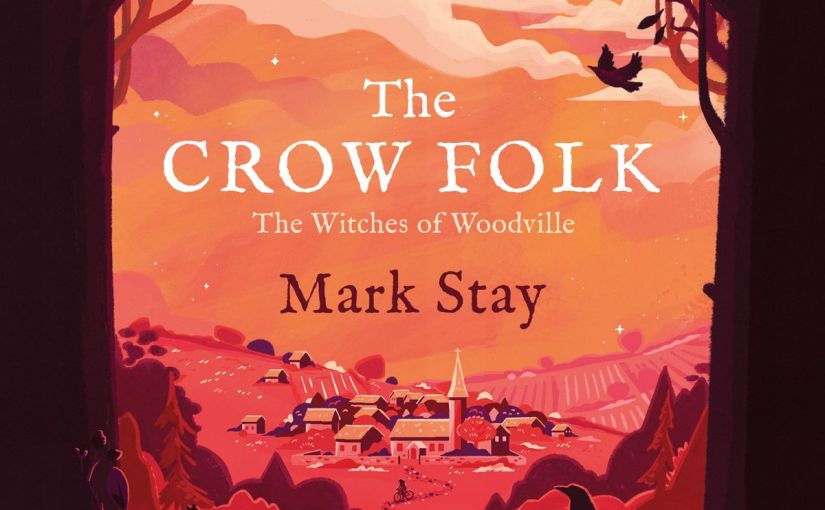
I’ve just got my first set of notes back from my editor for the next Witches of Woodville book BABES IN THE WOOD, so this is a great time to take you on the journey with me from editing a book to publication. I run through what a marked-up manuscript from an editor looks like and how I plan to tackle over 500 changes and comments…
TRANSCRIPT:
Hello, folks, Mark Stay here. The second Witches of Woodville book Babes in the Wood, is coming in October 2021, October 28th, I think, just in time for Halloween. And it’s March now, March the 5th. And I’ve just had my first round of line edits turn from my editor, Bethan, at Simon and Schuster. So I thought what I’d do on the ol’ YouTubes is start a whole new thread of the road to publication for Babes in the Woods, starting now. So where I am now, I’ve already written a couple of drafts which have gone to friends, beta readers who’ve made comments and sent thoughts back to me, and I’ve made changes before sending it off to Bethan. I’ve also had… This book involves Kindertransport children, so Jewish children fleeing the blitzkrieg and the Holocaust and coming to England. And I’ve already had a reader, a Jewish reader, go through that and give me all sorts of feedback and notes on that as well. So it’s in pretty good shape. Bethan has come back with a marked-up Word manuscript, which has got… 560 comments or changes, which I’m pretty happy with, actually, I think my first book Robot Overlords had well over 3000 comments and changes on there, so that’s doing pretty, pretty good. So, yeah, we got the first round of edits. I got this marked up manuscript of all sorts of little bumps in the road. So we have a look at some of these on screen. So Bethan’s… uh… Just if you’ve never done this before, we have a thing on Word and Pages and bits of software like that could tracked changes where any changes or comments that your editor makes is marked up so you can see it and easily recognise where a change has been made and accept or reject that change. And also, she’s left comments. And Bethan is brilliant because she doesn’t miss a thing. She notices all the little bumps, all the little things I got wrong,anything that bumps her out the story. But she also does the old “praise sandwich” as well, which is where you say, “Oh, this is good, this needs work, but this is great.” So the author’s poor, fragile, ego isn’t too bruised. What I’ve got now is what I call the edit triage, which is where I go through the comments. I make my own notes in a notebook. I try and take it off the page. And also Bethan has sent me a separate document as a kind of summary of her editorial notes of the big, big problems to solve, which is why the triage thing comes in. If you’ve got you know, do you think of your book as a patient lying on a gurney, you know, what do you have to fix first to save their life? You know, what’s the what’s the biggest injury? So rather than worrying about, you know, slightly… Any punctuation or grammar or anything like that, at the moment, you look at the bigger picture, start wide and move in and move in. So, yeah, really, really good notes. I’ve got a month to sort this out, which should be plenty of time. So we’re in March now. Book is published in October…
Yes, October. Babes in the Wood is book two of the Witches of Woodville series and available to pre-order from retailers now. Visit your retailer of choice or go to the bookshop at WitchesOfWoodville.com and now back to your regular programming
… which if you’re an indie author thinking, well, why are you taking so long? Why does it take so long to get the book to market? Well, part of that is that we’re working to retailer critical paths. So someone like Simon & Schuster will be selling in two retailers, six, seven, eight, nine months in advance of publication. For some retailers, they ask for a lot longer ahead of publication or sometimes over a year. So, yeah, that’s one of the reasons. And of course, you know, a publisher Simon & Schuster will be doing it in forty, fifty, sixty books a month depending on the month. So the marketing departments, the publicity, the art departments, they’ve all got to you know, they’ve got huge, huge workloads to work through. So better to give yourself plenty of time to do it properly, then have it as a last minute rush. So, yeah, I’m looking forward to this. I’m going to I’m going to dig in and start figuring out the big changes I need to make. There’s a murder mystery element to this, which I’ve never done before. And what’s been great with Bethan’s notes is, you know, she just said: a bit of clarity here, a little bit more mystery here. Wouldn’t she have thought this here, stuff like that. So it’s it’s been very, very helpful. So, yeah, I’m going to jump in and maybe check in in a week or maybe two weeks to give you an idea of how I’m getting on. And then after that, we’ll go through the whole rest of the process.
Things like looking at bits of cover art, looking at the blurb, looking at how we might publicise this one, what with lockdown, hopefully not being a thing by the time this comes out. So, yeah, first step on the path to publication. I hope you’ll join me further down the road.
I explain what it’s all about here on one of my walks…
TRANSCRIPT:
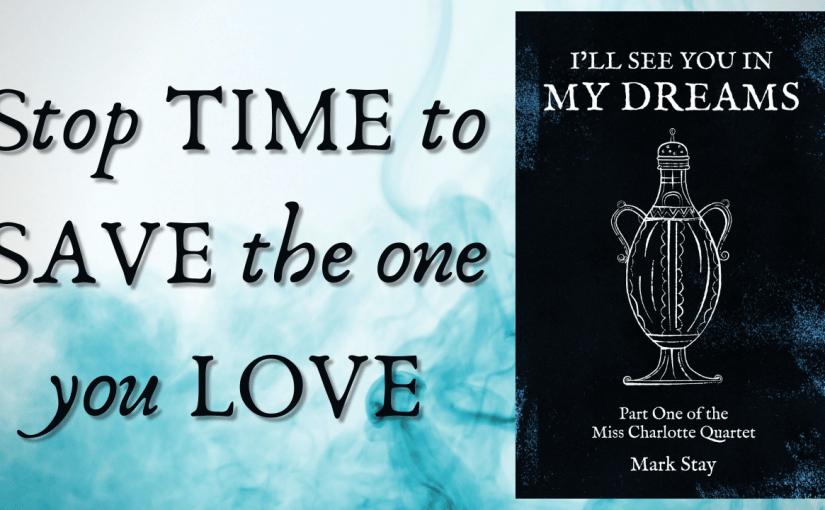
Hello folks, how are you? Hey, who wants a free short story? You do! Definitely well, you can have one right now. Just sign up to my newsletter if you haven’t already. And it’s called I’ll See You in My Dreams. And it features Miss Charlotte, Southhill, who, if you’ve read The Crow Folk you’ll know, she’s one of the witches in the Witches of Woodville, and she has something of a mysterious past, maybe a bit older than she at first looks, which is why the story starts in 1593. And it asks the question, “Would you stop time to save someone you love?” Let’s have a listen to a quick bit right now…
Charlotte Southill first met Time when the plague came to London. Many thought the bitter winter would kill the summer’s pestilence, but it endured and the deaths only increased. The theatres and taverns closed. The streets were lousy with rats and handbells clanged as bodies were taken away on carts. Charlotte had never so much as caught a cold in her 38 years, but that was a reason for that. Lizzie was not so fortunate. She complained of aches and a fever two days ago. On the first day she kept vomiting. Then the swelling came. Charlotte had tried every apothecary trick she knew, but nothing would work. Lizzie’s breath rattled. Her body was riddled with buboes, and it was now only a matter of time.
OoOOOoooh! I have no idea what clip I was going to use, but I assume it’s going to be an “Oooh!” bit, you know, for the sake of marketing. Well, I hope you enjoyed that, because there’s going to be four of them. Four short stories in the Miss Charlotte quartet. Four. Quartet. See what I did? And they’ll tell a much bigger story over the course of the four stories, one a month every month for the next four months. So, yeah, just sign up to the newsletter and hopefully enjoy them. There’ll be e-books and there’ll be audio versions as well every month. So yeah, sign up now, put a link below and do that sort of thing. But yeah, it was, it was, it was fun to write. Short stories are hard, they’re really hard. There’s no room for my usual waffle. I have to be very concise. I have to thank my editor, Julian Barr, for really cracking the whip on this one. He’s a tough taskmaster. And to Andy Bowden for the cover art, which is just splendid. And thank you to everyone who’s bought a copy of The Crow Folk, who’s put a review up. It’s always massively, massively appreciated. Four weeks in the Hive chart in the UK, that’s the chart for a lot of the independent bookshops in the UK. I thought I was going to be out after three weeks. I was at number 19. I got back up again to thirteen. So thank you. Thank you all. You’re all bloomin’ marvellous. Um, Book 2, uh, Babes in the Wood coming in October, October twenty seventh. I see preorder links for that pop up online because that’s what happens. Publishers put it on their database, push a button and (blows raspberry) it feeds out to the Internet. That’s the actual noise that it makes when they push the button. And so yeah, I’ll put a link on the website so you can find it on there: witchesofwoodvile.com and any pre-orders would be appreciated. Check out The Hive, check out Bookshop.org – that helps indie bookshops. And of course, as you know, Amazon, Waterstones and all those lovely people as well. Whatever way you want to do it, any pre-orders much appreciated. So, yeah, free short story. Get in, enjoy and happy reading.
If you’ve enjoyed reading The Crow Folk, then do please consider pre-ordering the next book in the series BABES IN THE WOOD. Here’s a quick blurb…
July, 1940
Fleeing the Nazi blitzkrieg, a trio of Kindertransport children come to stay with Lady Aston at Hayward Lodge in Woodville. Their arrival triggers a murder mystery involving a magic apple tree, modern art, a U-boat, and a demonic hound. Faye Bright must play nanny to the terrified children while gathering clues to uncover the dark magic that threatens to change the course of the war.
I had so much fun writing this one. There’s all kinds of gleeful and exciting stuff to be revealed, so stay tuned.
In the meantime, if you’re the kind of person who likes to pre-order nice and early and then enjoy the surprise when a book arrives in the post (I know I do!), then you can find links to most retailers at the Woodville Village Bookshop here.
I say “most”… some retailers can be slower than others when updating their catalogues, so I’ll be updating as and when.
Also, if you were one of the lovely people who ordered from Coles Books to get a signed book and art print…
Ooh, pretty!
… and you would like to do so again for Babes in the Wood… why not drop them a polite line and ask if they will? A little bit of positive customer feedback goes a long way these days. Oh, and I’ve had a sneak peek of Harry Goldhawk‘s “rough” of the cover art for Babes in the Wood. If you though the cover of The Crow Folk was gorgeous, then you ain’t seen nothin’ yet. More news as I get it!
In this series author Mark Stay & video marketer Jeremy Mason lift the lid on how to market a book. The series is a real-life case study – as we catalogue the book marketing journey of Mark’s latest book The Crow Folk (Simon & Schuster). Each episode comes laden with book marketing tips, offers insights into book publishing as well as ideas about author marketing.
In this episode we cover: book blog tours (and why they’re critical to a post-launch book marketing strategy) – how to find your dream book editor – beta readers (why you need them, and how to find them) – using StreamYard for virtual book launches…
I was delighted to gatecrash Ian W Sainsbury’s Friday night chat last week. We discussed Alpha/Beta Readers, book covers, Facebook Groups, the joy of editors, the wonders of notebooks, Ursula Le Guin and why whenever Ian hears my voice he thinks of dog poo…
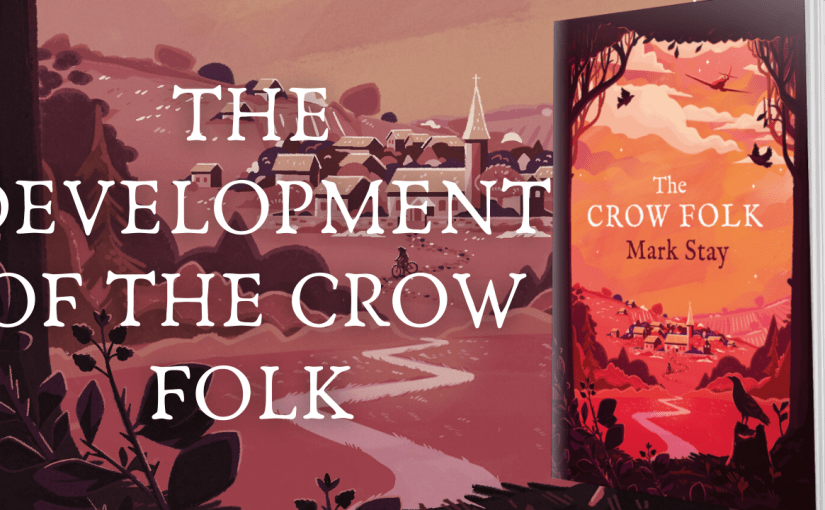
How long did The Crow Folk take to develop? A lot longer than you might think. In this second part of the highlights of the Bestseller Experiment podcast, I talk about false starts, rewrites, junking old versions, nearly self-publishing, and how some notes from my agent changed my mind.
TRANSCRIPT:
Hello, folks, welcome to the second part of the highlights from the episode of the Bestseller experiment, we talked about all about this thing.
And in this one, we talk about the development of the book, how long it’s been swishing around in my mind, versions that I got rid of, how it was nearly self published. And we feature notes from my editor. All of this in about eight, nine minutes. It’s jam packed. So do please enjoy…
That’s really what I wanted to ask as well. Mark, a bit about this come up a lot, actually. And people are very curious about how the book was developed. And and Mike Revell, thanks for your question. Mike, he said, I’d love to know more about your writing process for the book. Now, if I’m if I’m not mistaken, this book was written with the two hundred word a day challenge, wasn’t it?
No, that’s book two.
That’s book two.
Yes, yes. Way ahead.
Yeah. But this this was well, the thing is, I had as I said, I had entire drafts of scripts and novels dating back over 10 years and I just got sick of rewriting the same thing over and over again.
So I got rid of it all.
You just what you just chucked it all away?
You just said, well, it’s filed away.
Okay.
Yeah, very little of those… The village is the same, the name of the village, some of the magical background, but essentially most of it’s gone. Did you actually go through a process as you as you were archiving those notes of saying, what am I going to keep from this? Or was it just..
Yes, yeah. But you kind of think, OK, what’s evergreen? What’s what’s going to… What’s the good stuff? And there wasn’t a lot of it, although one of…The story might come back for book four or five if I get there, you know, because that there’s something about that story that I do want to come back to. But it will be told from Faye’s point of view, not the creature’s point of view. So because I was going for kind of a Swamp Thing vibe with with the original and it just didn’t work. And anyway, so so I had I had all these old drafts and pretty much all of it was jettisoned.
So interesting. And so how did you how did you kind of go through the process from initial notes to outline and draft? Mike asks.
Well, it was because it’s the first in a series, I kind of saw it as a bit of a superhero origin story. Faye finds magic, learns how to use it against a terrible foe, her first real test as a character. And I spent a little time making sure I had the main characters right. I kind of discovered where I wanted her to be by the end of the book, and I did pretty much jump into it. So it wasn’t… I didn’t outline very much. I’d outlined The End of Magic heavily, as you know, Back to Reality. We outlined heavily because we were working together. This was this was much lighter. Now, I was… I’ve been prepping this all afternoon, so I did try and find notes and it’s been quite hard to find where I made the switch. I basically started this in December 2018. That was the point where I think I jettisoned all the other stuff, looking at the different old Scrivener files, you know, so and that draft, that, that first draft I found is pretty similar to what’s been published. And also the other thing is I had planned to self publish, inspired by our own Ian W Sainsbury, friend of the podcast, award winning author. I was going to do a quick release, three novellas, Boom, boom, boom, because and I think what helped was mentally, I was thinking, okay, these are going to be short about forty five, fifty thousand words, so just jump in and have fun. And I did. I had loads of fun.
So that was, that was the thinking behind that one.
It’s just. Yeah.
Go for it.
And how many words in the book One? you remember how it turned out.
There’s a little story behind that. And Rhoda asks a question later on about how… Because I got to about forty five in the end it ended up at about sixty five. So still quite short.
But actually Rhoda asks she says, I heard the book started out as a novella and ended up being a full book. Is that right.
Yeah, yeah, yeah, yeah.
So how did you go about extending it.
Good question. And I did dig out my notes. I’ve got my email from Ed. So let me let me read you…
Ed being your agent, correct?
Yes. Yes.
Ed Wilson, the lovely Ed Wilson. And this is great. So I and I said to him up front, I want to self publish this, but have a look at it and see what you think. And I got his email. He said nothing too major, but all ties into my big point. Why is this book only forty five thousand words? Woodville is completely effing brilliant. And he has, bless him, starred out out the “uck” there. He says tonally, tonally spot on.
Just in case it ever got read out on a podcast.
Exactly.
He’s always thinking ahead.
Yes, he’s a smart man, is Ed.
Yeah, he says tonally spot on, perfectly realised, structured and paced, deliciously readable. This is cozy fantasy. The genre mash up we didn’t know we needed the characters zing off the page. You develop a real emotional connection in such a short space of time. I was in pieces at the end, you bastard, which is great.
He’s just written the blurb right there.
And we’ve talked about the praise sandwich on here before. You know how you give criticism. You start with this is good. You know, there’s a but coming thundering over the horizon. OK, so he says but there is sooooooo… I think there’s seven O’s in that so and it’s all in caps. So that’s more you can do because you’ve limited the work and you don’t have time to properly establish the setting before you get stuck into the plot. We need to see more normal village life, more Dad’s Army war preparations, more vicars and oversized veg and tongue in cheek Archer’s style village politics before the talking pumpkins appear, or rather before the villagers see the talking pumpkins. The way you’ve written it, we have the big reveal and the fantastical events go above ground within the first third of the book. And in a book this length that’s too soon, you’re giving up too easy and losing the fundamental tension of what is and isn’t real. Who is and isn’t barmy. When you have more twists and turns, more tension around who and what Faye, Charlotte and Mrs Teach … Those are the witches… Are. You can keep structure and tone the same. Fundamentally, that doesn’t have to change. Just add more tension, intrigue, spooky goings on. Sow seeds for future books. And then once you’ve established the series, you can do pretty much what you want. This first book is vital to establish the series. You’ve got to properly establish it. Book one is too important to have it dismissed as just a novella. So this was great. And I had a manuscript from him marked up all the way through with notes all the way through. So that was my jumping off point to answer Rhoda’s question. It was, you know, the the tension, the questions. I was kind of giving it all away too quickly and just dig a little deeper as a result.
So I’ve got a I’ve got to say, you know, that is the reason why you try and get an agent, because so many people think so many think agents are just, you know, you give given the book and then they go and flog it. You know, they go off and they have a beer or a glass of wine with with their connections. And then they try and sell the book over lunch. But people don’t realize that good agents are your best friends and your best, you know, constructive critics as well. And it sounds like, Ed, at that point in the journey really gave you the crossroads to say, look, these are all the things you can do without. I mean, if somebody is self publishing without an agent, for example they wouldn’t have known where to go at that point. They may have just put it out as a forty five thousand word self published and missed out on what potentially could have been the most incredible ride of their life. So that’s absolutely fantastic. And what a great insight as well to hear that stage of the journey at that point. Absolutely brilliant.
Thank you, folks. Really hope you enjoyed that. All sorts of fun stuff coming up in future episodes, including how I worked with historical language. Writing a book without any swear words. That’s a first for me. I’m comparing my different publishing experiences. So that’s know working in crowd funding and self publishing and traditional publishing, looking at how those all work and all sorts of other good fun stuff. So do please subscribe and I’ll see you next time.
I can’t being to tell you how much I love the audiobook of The Crow Folk as read by the wonderful Candida Gubbins. Here’s an exclusive clip… The audiobook is available from all the usual audiobook retailers and libraries.
TRANSCRIPT:
Hello. I’m out for a walk in some slightly inclement weather. Anyway, The Crow Folk is out. Thank you to everyone who’ s bought a copy, has read it, and said nice things, and came to the launch parpy… party! It’s your book now. So thank you so much. Available in eBook, paperback and audio! Which I suspect is probably the best way to enjoy the book. It’s read by the wonderful Candida Gubbins. We’re gonna listen to an exclusive clip of it right now. It comes from in the middle of the book. They’ve all just seen The Crow Folk and And no one can quite agree what they’ve just seen. I’d like to remind you, the book is set in the summer. In an English summer. Not like this. So do please enjoy!
Chapter 14, The Heart of the Village.
Woodville had a perfectly good village hall. Rebuilt after a fire in 1932, it served as a venue for village council business, the Woodville Amateur Dramatics Society, wedding receptions and children’s parties. It had electric throughout, parking spaces for two motor cars and even one of those fancy indoor lavvies. For the big emergencies, though, the good villagers of Woodville knew there was only one place they could gather for a rational debate. The Green Man pub was the real heart of the village and most of Woodville’s residents had squeezed themselves inside to harrumph and rhubarb about the bizarre events they had just witnessed. It was the noon-till-two lunchtime session and the pub hadn’t been this busy since New Year’s Eve. Faye held the fort at the bar while Terrence popped down to the cellar to change a couple of barrels. ‘Travelling folk, I reckon. Passing through,’ Bertie Butterworth said and got a flutter of uhms and aahs in vague agreement from the gathered throng. He had dried out since this morning’s little adventure in the river. ‘Do not disappoint us, they said.’ Faye folded her arms. ‘That sounds like a threat to me, and we don’t take kindly to threats, do we folks?’ This got a rousing chorus of Yuuuurrrsss from the Local Defence Volunteers, who had also dried out. They could only recall a slight altercation between Mr Marshall and Mr Baxter when asked how this morning’s training had gone. Bertie was the same. Faye brought it up when he ordered his pint and he scrunched his nose and frowned, half-remembering that something odd happened, though he wasn’t quite sure what. Why was she the only one who remembered the way the starlings put out the fire? Faye could understand the older men forgetting. At the forefront of their minds were Dunkirk and the war. They had been champing at the bit for a scrap since the retreat, and if they couldn’t fight Nazis, then a bunch of strangers dressed like scarecrows making threats would do for the time being thank you very much. But Bertie should have remembered. ‘Ignore ’em,’ Bertie said, a voice of reason. He got a few boos from his LDV comrades. ‘Why pick a fight? They’ll be gone soon enough.’ ‘I don’t think they’re going anywhere, Bertie.’ Faye fixed him with a slightly miffed stare and the boy wavered, slurping his cider, unsure why she was suddenly so cross with him. ‘And I don’t think they’re travellers,’ Faye continued, wanting to scream that they were clearly scarecrows, but also remembering what Mrs Teach had told her about folk only seeing and hearing what they wanted to. She caught Mrs Teach’s eye. The older woman was watching her from the end of the bar where she nursed a sherry. ‘And that name. Suky. I’m sure I’ve heard it before. Anyone here know a Suky?’ The villagers all looked to one another and in moments the pub was hosting a shrugging contest. ‘They called themselves crow folk. What does that mean?’ More shrugs. ‘A circus, I reckon,’ Terrence said as he emerged from the cellar. ‘I almost ran off with the circus when I was a lad, y’know?’ ‘The circus?’ Faye squinted at her dad through her specs. ‘Since when?’ ‘They came here when I was a little older than you. Had a bit of a fling with a woman who could put her ankles right behind her ears—’ ‘Dad!’ There was a splutter as Bertie choked on his cider, followed by a raucous jeer from the men in the bar. Mrs Teach, who had been uncharacteristically silent since the departure of the crow folk, raised an appreciative eyebrow and sipped at her sherry. Faye raised her voice. ‘Can we get back to the subject: a marauding band of scarecrows just demanded we hand over poor Mr Craddock.’ ‘Gypsy folk, Faye,’ Terrence said with a stern voice. ‘It ain’t nice to call ’em scarecrows.’ ‘Poor Mr Craddock?’ Mrs Teach spluttered, breaking her silence. ‘Let me tell you, young lady, he’s not poor, and he doesn’t deserve our sympathy. He is a brute. A cruel brute. He’s a proper scoundrel, and there isn’t a person here who’s not had an unpleasant altercation with the man.’ ‘That’s right,’ Miss Burgess said. ‘When my Matilda was sick, he said I should wring her neck and be done with her.’ ‘Bloody hell,’ Terrence said as the rest of the pub gasped along in disgust. ‘Hang on, who’s Matilda?’ ‘One of my chickens.’ ‘He kicked my Mr Tinkles,’ Miss Gordon cried. ‘Called him a flea-bitten moggy.’ This got some murmurs of sympathy, though there were few in attendance who hadn’t been gifted something short, brown and smelly by Miss Gordon’s cat. ‘He started a salacious rumour,’ Mr Hodgson began, and the pub’s patrons held their breath in anticipation of the punchline, ‘about my knees.’ ‘He let the tyres down on my brand-new Austin hearse,’ Mr Loaf, the usually jolly funeral director declared. ‘Said it was in his way, so quite what he hoped to achieve by making sure it couldn’t move, I don’t know. Delayed old Mr Gregg’s funeral by an hour. Most distressing.’ ‘I once saw him tip over Kenny Finch’s milk cart in an argument about clotted cream,’ Mr Paine said, idly sucking on a humbug. ‘Two miserable sods at each other. Hate to say it, but that was quite enjoyable to observe, actually.’ ‘He was always mocking my Ernie’s height,’ Mrs Teach said, a faraway look in her eyes. ‘Shorty, titch, half-pint. Every time he saw my Ernie there was a new insult, but my Ernie took it all in his stride and with a smile. I can assure you that while my Ernie may have been lacking stature, he was a big, big man.’ No one knew quite where to look. They had heard the rumours about Ernie, too. ‘Another sherry, Mrs Teach?’ Terrence offered. Mrs Teach slid her glass to him. ‘I like to think the best of folks,’ Bertie said from behind the dregs of his cider, ‘but if being a miserable bugger was an Olympic sport, then Mr Craddock would get gold, silver and bronze.’ ‘And he was going to thump me one last night, but that’s no reason we should hand over one of our neighbours to these . . .’ Faye looked over to her dad, ‘Gypsies.’ ‘It’s simply none of our business,’ Mrs Teach said. ‘If they’ve had a contretemps with Mr Craddock then let them have it out. We should, like the Swiss, remain neutral.’ ‘Like that Mr Hitler had a contretemps with Poland? And France? Like that?’ Faye could sense her father’s disapproving glare – never disagree with a customer – but she couldn’t let this stand. ‘And what if they decide to have a little disagreement with you, Mrs Teach, hmm? Should I turn a blind eye then, too? We’ve never taken kindly to threats round here and I don’t see why we should start now. Especially with these scarecrows.’ ‘Gypsies,’ Terrence corrected. ‘Scarecrows, Dad. One of them had a bloomin’ great pumpkin for an ’ead. I saw it, like you all did. I don’t care if it’s real or what, but if they dress up like scarecrows and act like scarecrows, I’m callin’ ’em scarecrows. So what are we going to do about it?’ ‘I don’t see what we can do,’ Terrence said with a forced chuckle. Faye couldn’t fathom why he was laughing at first, then she recalled seeing him do this with unhappy customers in the past. He had always told her that if anyone got a bit tasty then first try distracting them by changing the subject and having a laugh. Just pretend you hadn’t heard the insult or threat and no one would feel they had to deliver on any angry promises of fisticuffs. It was an old trick, but he had never tried it on his own daughter. He was attempting to shut her up like she was some common saloon bar brawler. ‘But I can see young Bertie needs another half o’ cider.’ Terrence slid Bertie’s empty glass towards Faye. ‘Ooh, thank you very much.’ Bertie grinned. ‘Good health.’ ‘Cheers.’ Faye scowled at her father, but he gave her a jolly wink and raised his head to address the whole pub. ‘Mrs Teach is right. There ain’t a person in this room who’s not had a run-in with Archibald Craddock,’ Terrence said. ‘And who’s to say they don’t have him already? Anyone here seen him today? No, me neither. And if he’s got some sort of beef with these Gypsy folk . . .’ Faye sighed, surrendered and poured Bertie’s half. ‘. . . then knowing Craddock, he’s prob’ly having a scrap with ’em now in a barn somewhere. That’s how he settles things. Queensberry Rules. Let them have it out fair and square and not stick our noses in.’ ‘Hear, hear,’ Mrs Teach said. ‘One shouldn’t go poking one’s nose into other people’s business, Faye. It’s not ladylike.’ Faye spluttered at the hypocrisy of the nosiest woman in the village. ‘Well, I wonder why you of all people, Mrs Teach, wouldn’t want anyone digging deeper?’ ‘I don’t know what you mean.’ ‘I saw that fella with the pumpkin for a head tip his hat at you as he wandered off,’ Faye said. ‘Looked like he knows you well enough.’ ‘I cannot account for the behaviour of others.’ ‘There must be some reason why he singled you out.’ ‘Perhaps he knows a lady when he sees one.’ ‘P’raps he—’ ‘All right, that’s enough, Faye.’ Terrence’s voice boomed as he took his daughter by the shoulders and steered her away from Mrs Teach. ‘Collect the empties and wash them up, please. I think we all need to—’ A heavy thud came from the roof of the pub. Everyone froze and glanced at each other to make sure they had all heard it, too. Thud! Everyone looked up. Thud-thud-thud! It became an avalanche of impacts, all piling on top of one another, each one making Faye’s heart jolt. People murmured and clustered together, and then from outside came a scream. Faye hurried around the bar, wriggled through the crowd, pulled the doors open and dashed outside. She found the elderly Mrs Pritchett out walking her two Yorkshire Terriers. The dogs whined and the old lady was trembling, her eyes wide in terror. All around her, and littering the whole cobbled street, were starlings. Dozens of them, lying still with their little legs stiff. Some twitched in their death throes, their wings broken. Mrs Pritchett found her voice. ‘They just . . . fell out of the sky.’ Chilled to the bone and encrusted with dried mud, the fugitive Craddock crawled along the edge of the marsh stream. He hadn’t seen hide nor hair of those scarecrows for hours and he would be home soon. His shack stood at the edge of the wood on the other side of Therfield Abbey. When he got there, the first thing he would do was feed the stove, change into dry clothes and finish off the bottle of rum he had stashed away in a box under the bed. He would try and forget whatever the blazes he had witnessed this last night and if that meant more rum, then so be it. He would forget and never speak of it again. As Craddock clambered up the slippy bank, there came a heavy splash from the stream. Craddock looked back, only to see rings of water spreading out from the impact. A kingfisher, perhaps, or a carp coming up for air. He resumed his climbing when he heard another splash. Then something bounced off his head and he cursed. It fell to the ground before him. A crow. Its blue-black feathers spread out in flight, frozen in death. Birds began to fall all around him, tumbling from the sky, bouncing off branches and rolling dead to the ground. There was only so much strangeness a man like Craddock could cope with and so he ran, fuelled by fear. Scrabbling from the stream, he dodged through the wood, dead birds still falling all round him, thumping down on his head, crunching under his boots. He came to the winding path, then up uneven stone steps to the arches of Therfield Abbey, a Norman ruin with broken stone walls that rose around him. The birds no longer fell, though the ground was littered with their bodies. Hands on his thighs, he leaned forwards to catch his breath, then dropped to his knees. His fingers trembled, his head pounded and his breath scratched at his throat. A moment here would do. Through the cloisters came the scarecrows. Charlotte was chopping wood and her bonfire was burning nicely when it happened. Birds bounced off branches before spiralling lifelessly to the woodland floor around her. She swung the axe and buried its head in the chopping block before striding to her cottage and digging out a book she had hoped she might never need to open again. A book of signs and warnings, handed down from one generation to another. She flicked through it, her eyes darting as she scanned the pages. And there it was. She stood back from the book as if it were infectious. Charlotte found her pipe on the dining table, stuffed it with tobacco and puffed as she lit it. Her nerves were soothed, but what she saw still troubled her. She glanced sidelong at the book, as if she didn’t want it to notice her curiosity. Flames from the bonfire outside threw shapes and shadows around the room. On the pages of the book, the shifting light gave the illusion of movement to an old woodcut illustration of birds falling from the sky in droves. Below them danced a grinning scarecrow with a pumpkin for a head.