Behold the cover art for The End of Magic as designed by the magnificent Mark Ecob…
I’m a very happy author and this is everything I had hoped for. There’s still time to pre-order and get your name (or the name of a loved/pet/significant other) in the book and you can do that by clicking here!
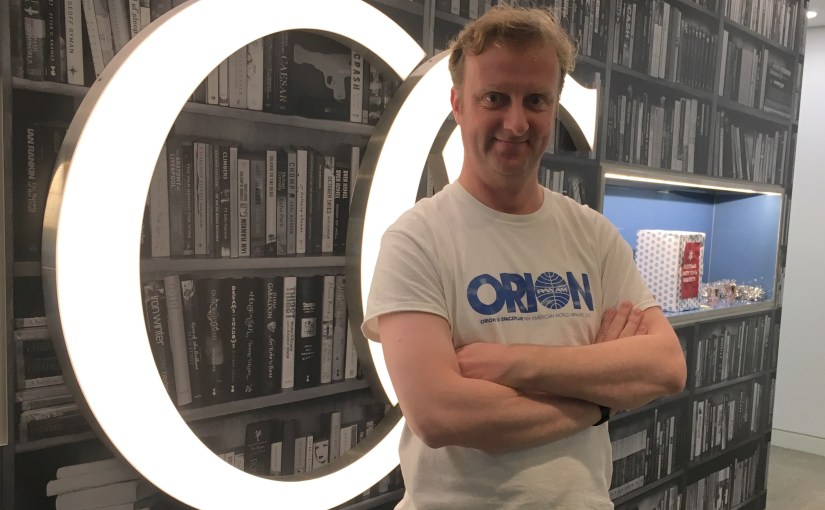
After fifteen years, three months and eighteen days I will be leaving the good ship Orion for the rocky shoals of freelance life.
Why? When? Who? What??
Well, long story short, there was a big sales restructure here and with it came the opportunity to take voluntary redundancy and I grabbed it with both hands. It was just too good a chance to pass up. I have a very long list of things I want to do and now is the time to do them. Like what? Well, the Bestseller Experiment podcast for a start. We’ve had a tricky second year to say of the least, but leaving Orion will afford me the time to do all the things we’ve been wanting to do in the last year, including REDACTED REDACTED REDACTED on a big stick with a sponge on the end.
Orion is an incredible publisher with a genuinely passionate team and some of the best authors in the world (that’s not hyperbole, that’s just bloody true and I can prove it with two felt tip pens and a whiteboard). I have made some incredible memories that will stay with me for a lifetime and I’ve met many of my personal heroes. It would be terribly bad form to drop names, but as Michael Palin said to me once, “Show me those photos of you with Keith Richards, Nick Mason, Richard Wright and David Gilmour.” To which I replied, “Sorry Mikey baby, I’ve loaned them to Christopher Lee, and Judi Dench wants them after that…”
When you have a 9-5 day job you see more of your colleagues than your own family some weeks, and I’ve been fortunate to be working in what is simply the best sales department in publishing. I don’t want to start reeling off names because I would inevitably forget someone, but special mention must go to Jo Carpenter, Dallas Manderson and Ian Diment. Ian was my line manager at Orion and the sweetest man you could meet, with a passion for music and books and a unique dancing groove that was the sensation of many a sales conference. His passing in 2010 devastated us all, but also brought us together in grief. We will never forget him.
Dallas is a one-off. A gentleman of publishing whose negotiating technique is to to deploy Wodehousian courtesy combined with an astonishing attention to detail. I never wanted to disappoint Dallas. Not because I feared his wrath, but because I knew he cared and worked harder than all of us combined to ensure that our authors got the best sales possible. Publishing hasn’t been the same since he retired.
And Jo Carpenter has this uncanny psychic ability to know when something is wrong and she was always the first to ask if she could help, and I’ve lost count of the number of times she’s been my advocate and saved my butt… Oh, and she gave me the job based on little more than my ability to do terrible impersonations of Michael Caine and Sean Connery (it was a different time).
I’ll be gone by the end of the year. Orion have handled this really well. My Mum was made redundant a few years ago and her employers did everything wrong and it all ended up in a legal mess and was horribly stressful. Orion have played a very straight bat with me and for that I am very grateful.
So what will I do with all this spare time? I want to write, I want to be my own boss, I want to earn money doing it, and I especially want to REDACTED REDACTED REDACTED on a big stick with a sponge on the end.
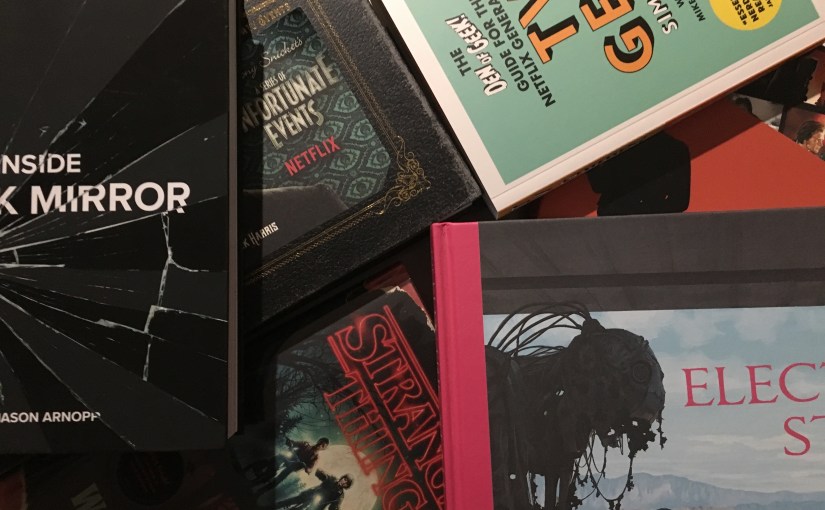
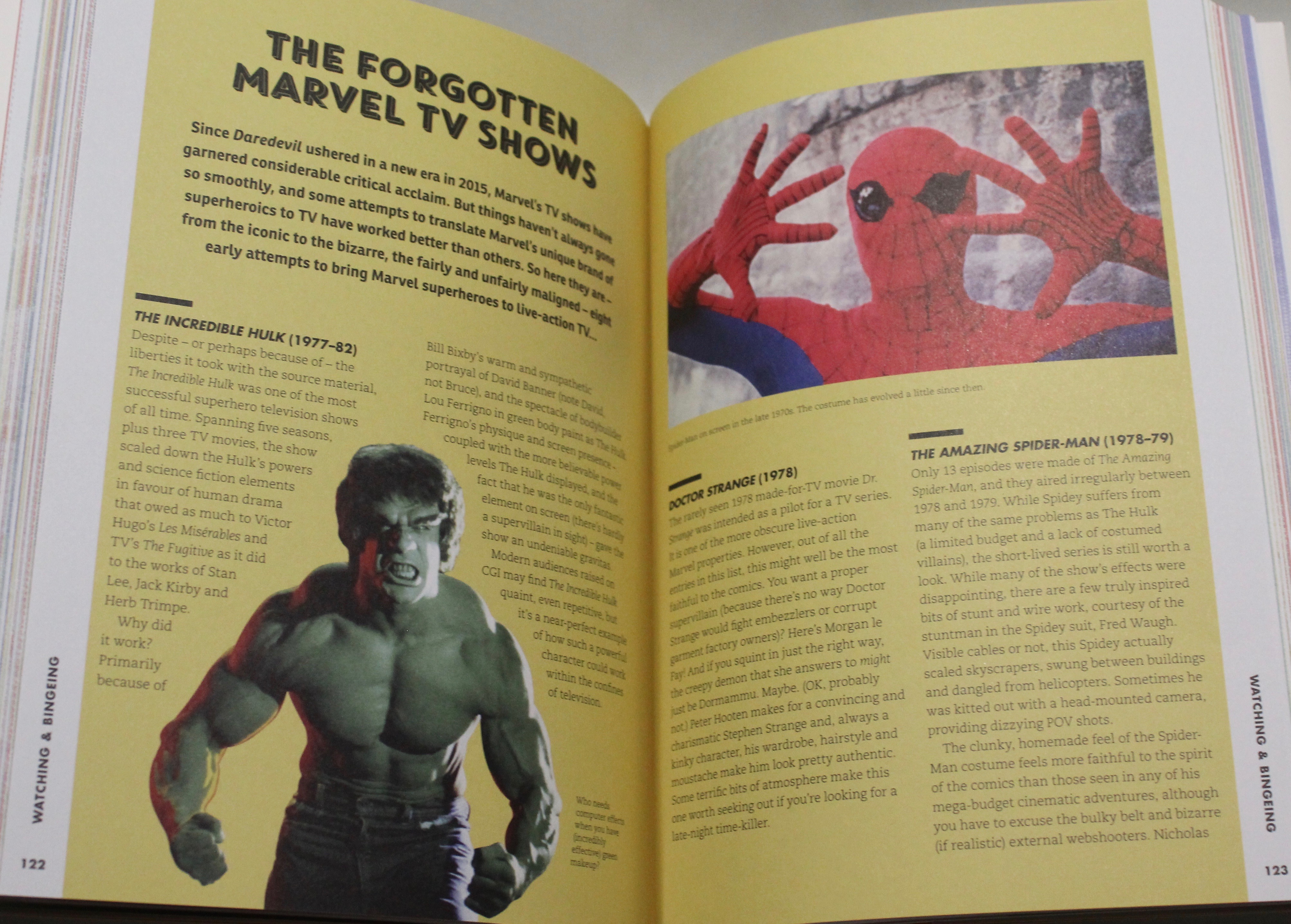
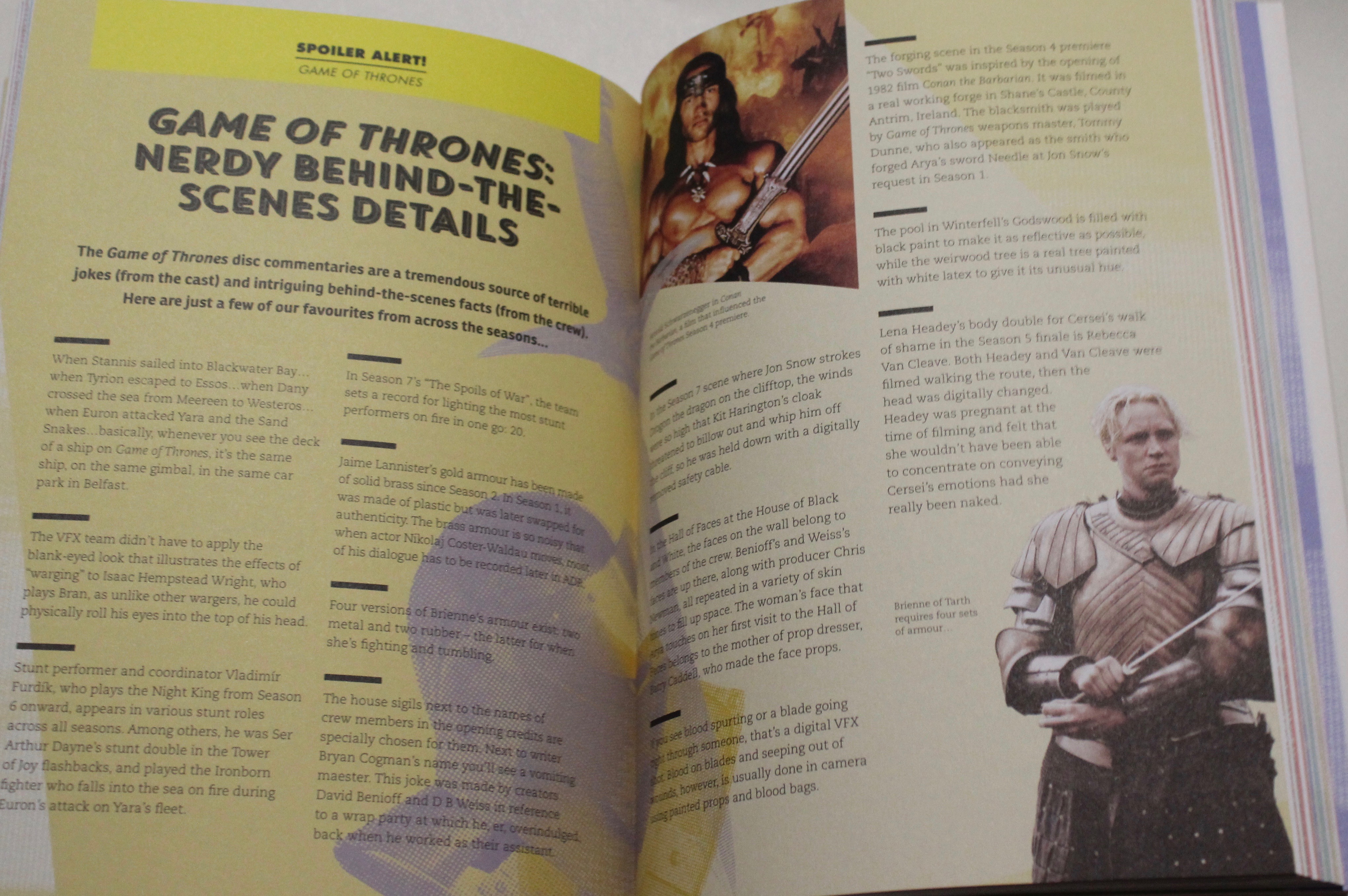
Geeks. We’re tricky buggers to buy for at Christmas. Yes, our loved ones might know that we like that thing with the spaceships/dragons/zombies, but where do they even start when it comes to selecting that special gift book…? Here! That’s where! Just forward this blog in the safe knowledge that whatever they get you, it’ll be awesome.
Below are some of my favourites for this Christmas*
Support your local bookshop! Order a copy of these books from them and help ensure that our High Streets thrive. However, all the links below are to Amazon UK for reasons of a) convenience, and b) I have an affiliates thing with them and I get 5% of each sale, and c) I have no shame.
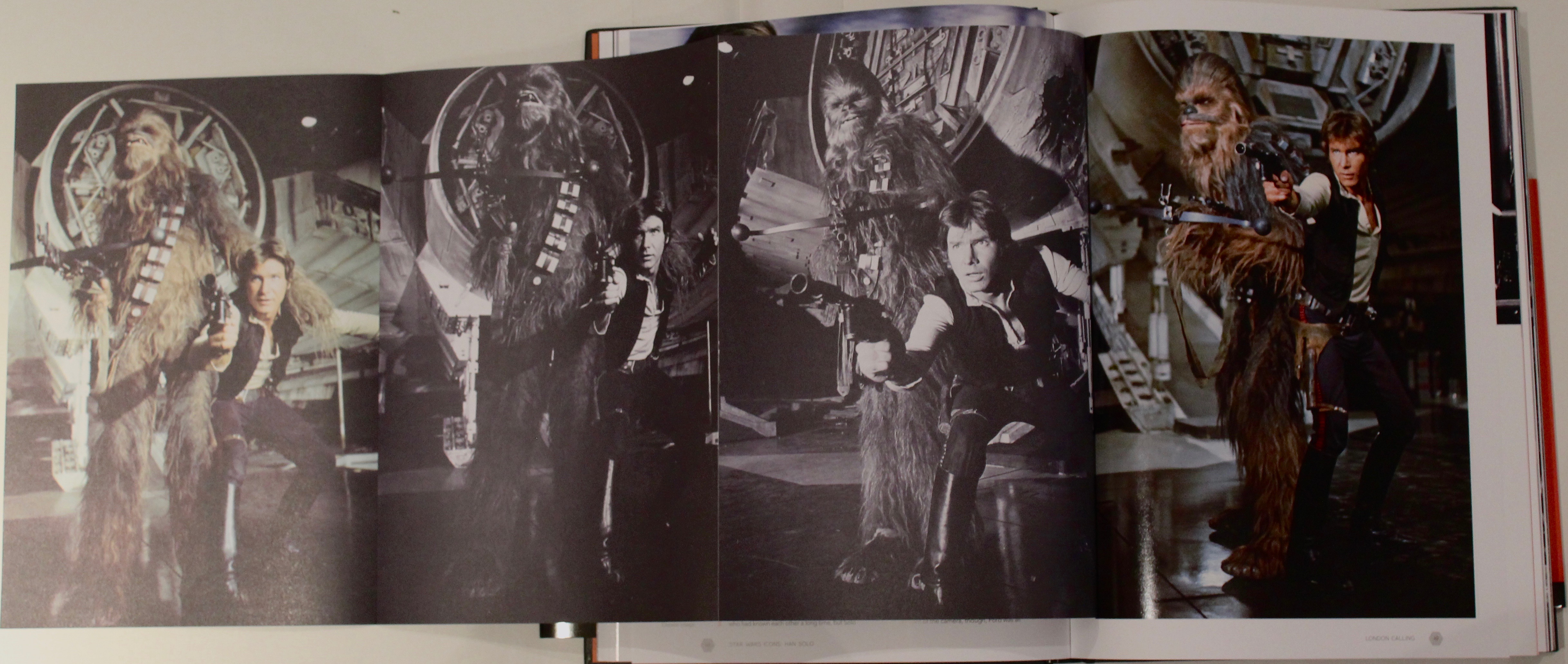
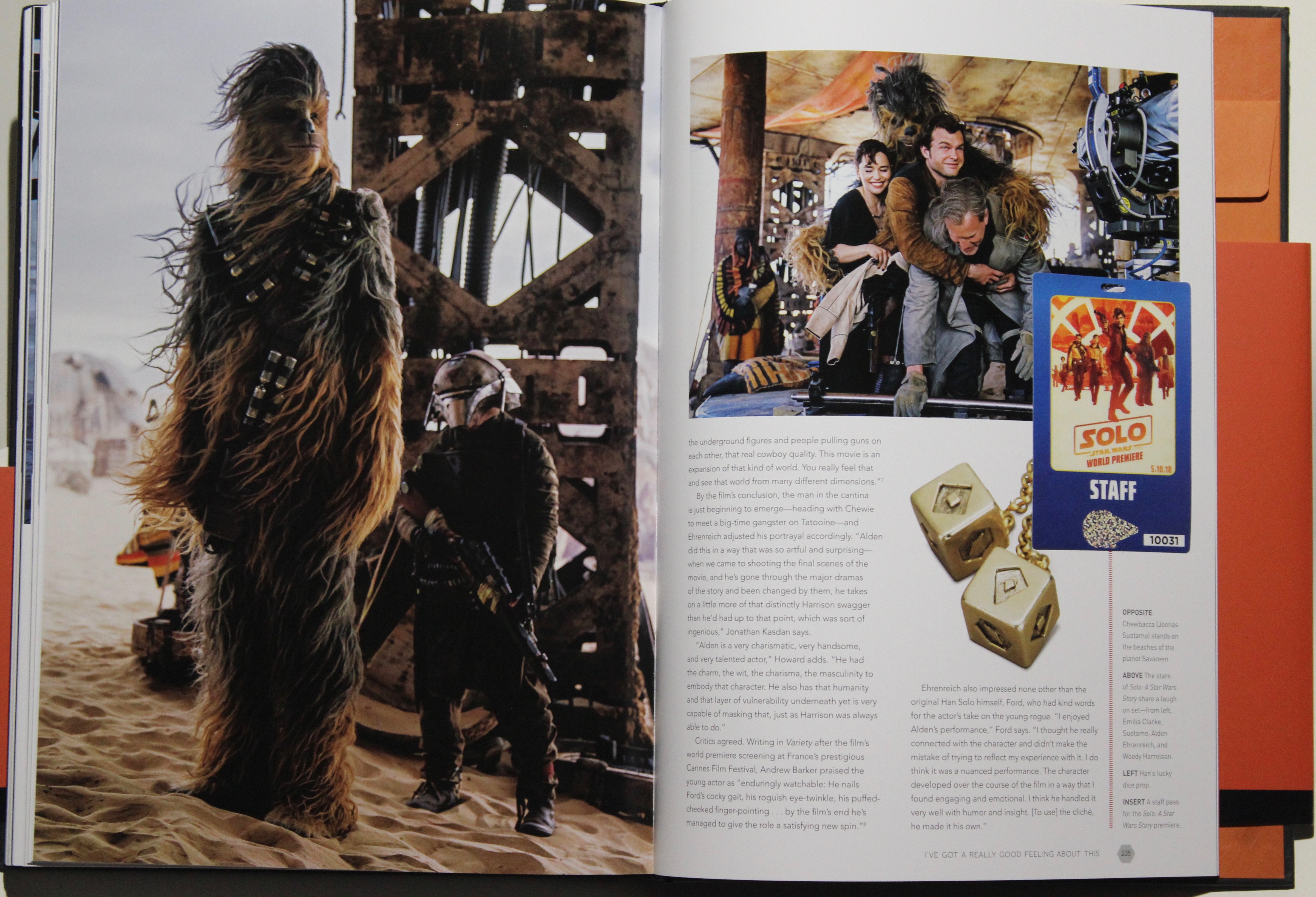
Just gorgeous. A chronicle of everyone’s favourite smuggler from conception to casting, through to movies, comics and novels with fold out pages, replica storyboards, little surprises tucked away in envelopes and more. This is the sort of book that’s nightmare to reprint so get in fast. Buy from Amazon.
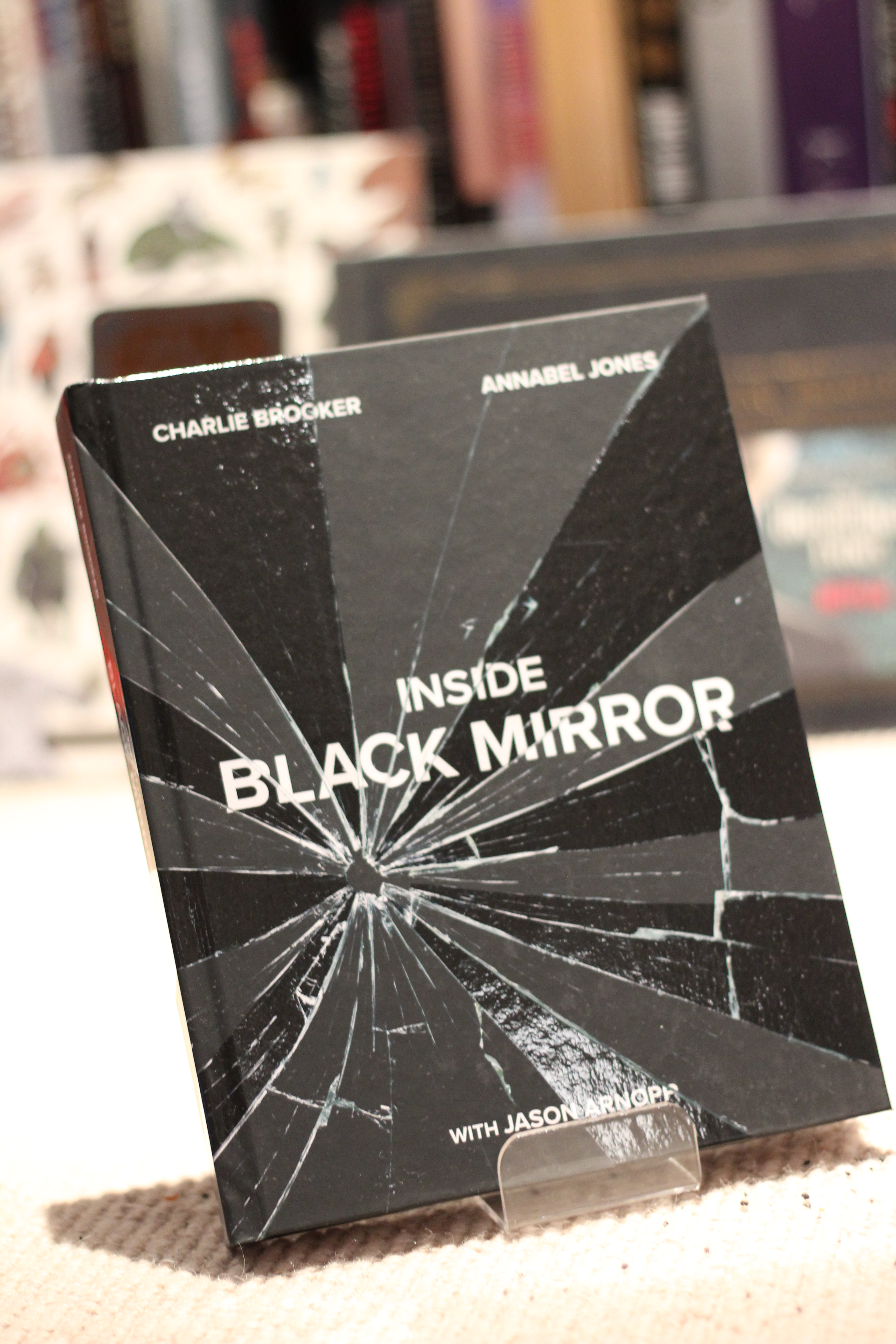
A terrific oral history and making-of book of the four series so far of Black Mirror. Compiled by Jason Arnopp, this takes you episode-by-episode with creator Charlie Brooker, Exec Producer Annabel Jones, and collaborators including Jodie Foster, Jodie Whittaker and other people not called Jodie. Essential for fans of the show.
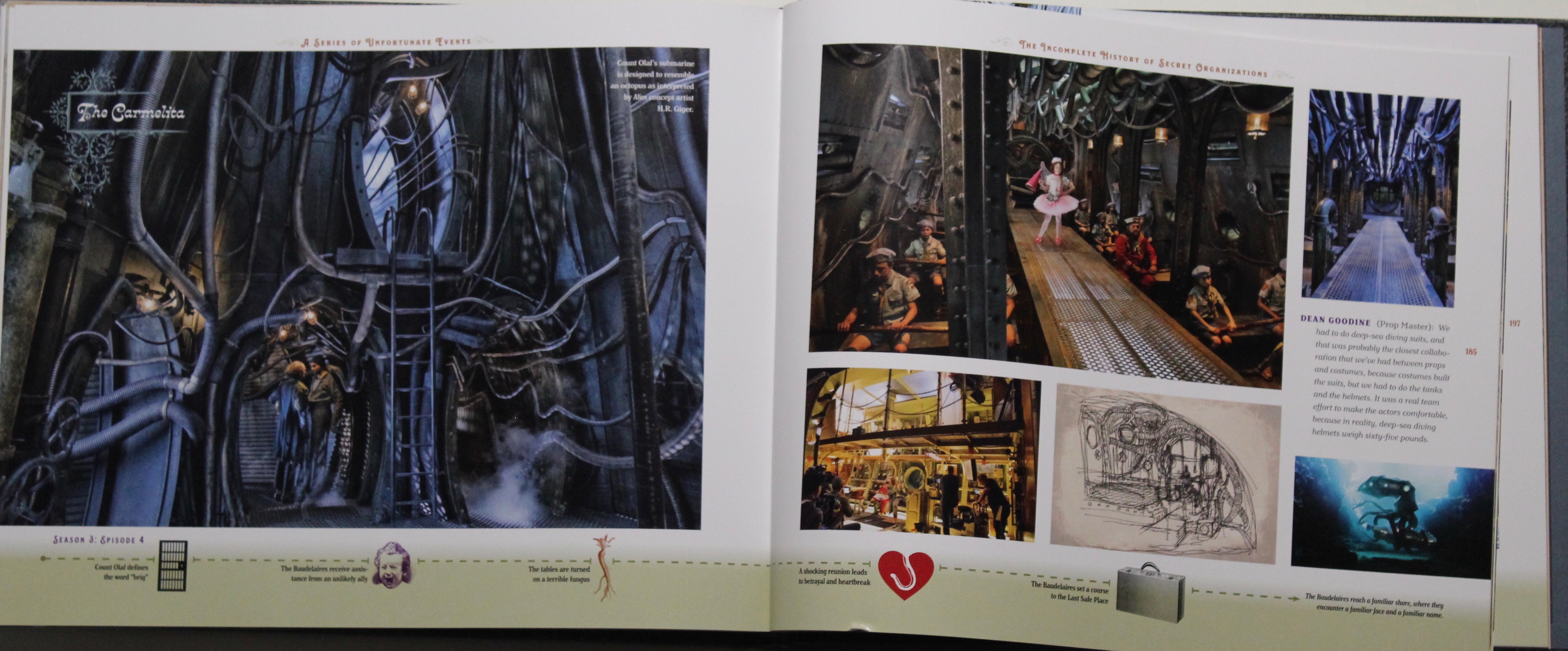
I’ve loved every minute of A Series of Unfortunate Events and this glorious behind the scenes book is ahead of the game with details and photos of the final series (coming in Jan 2019)… I must confess, I’ve had a glimpse and it looks as sumptuous as ever.
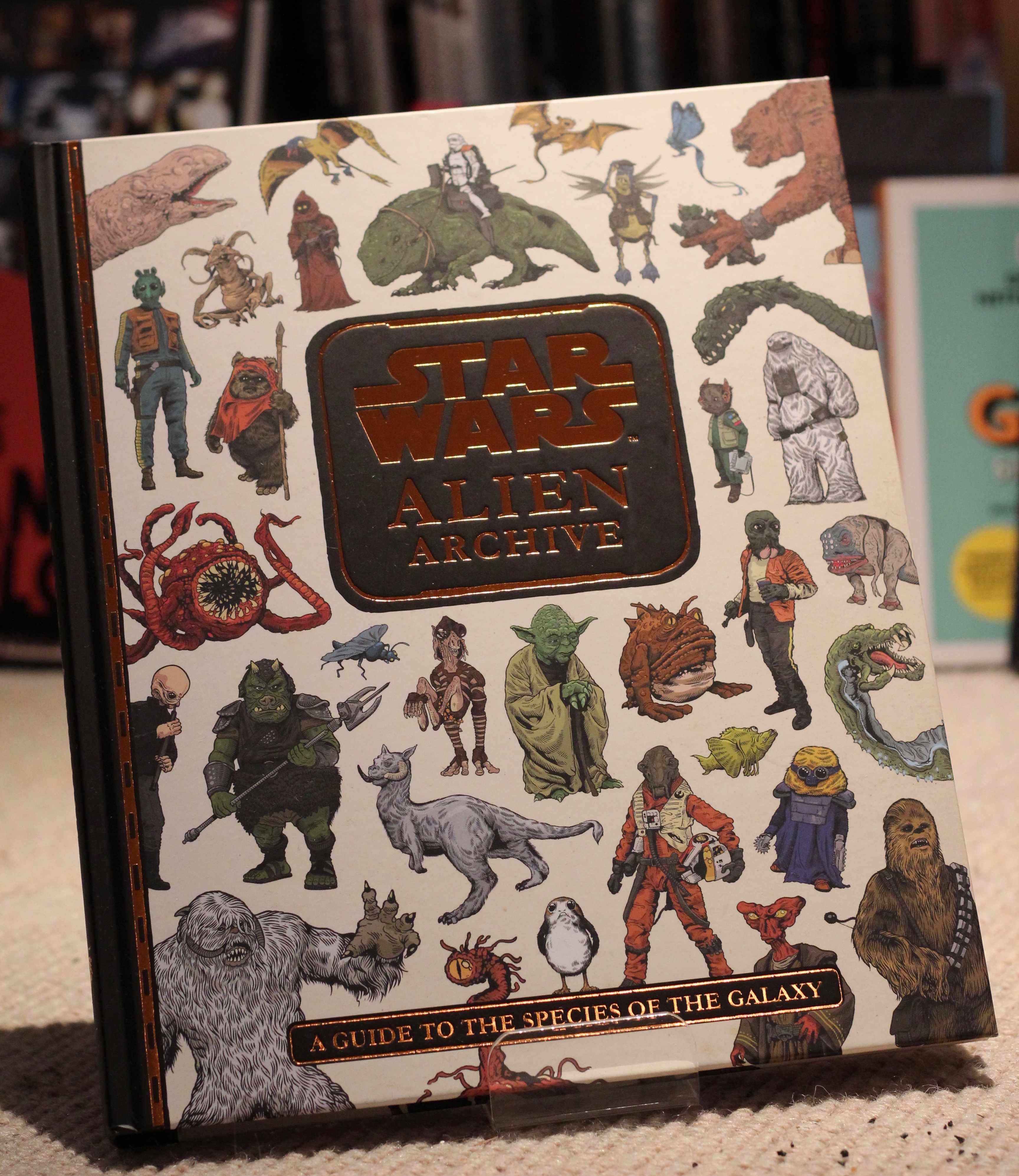
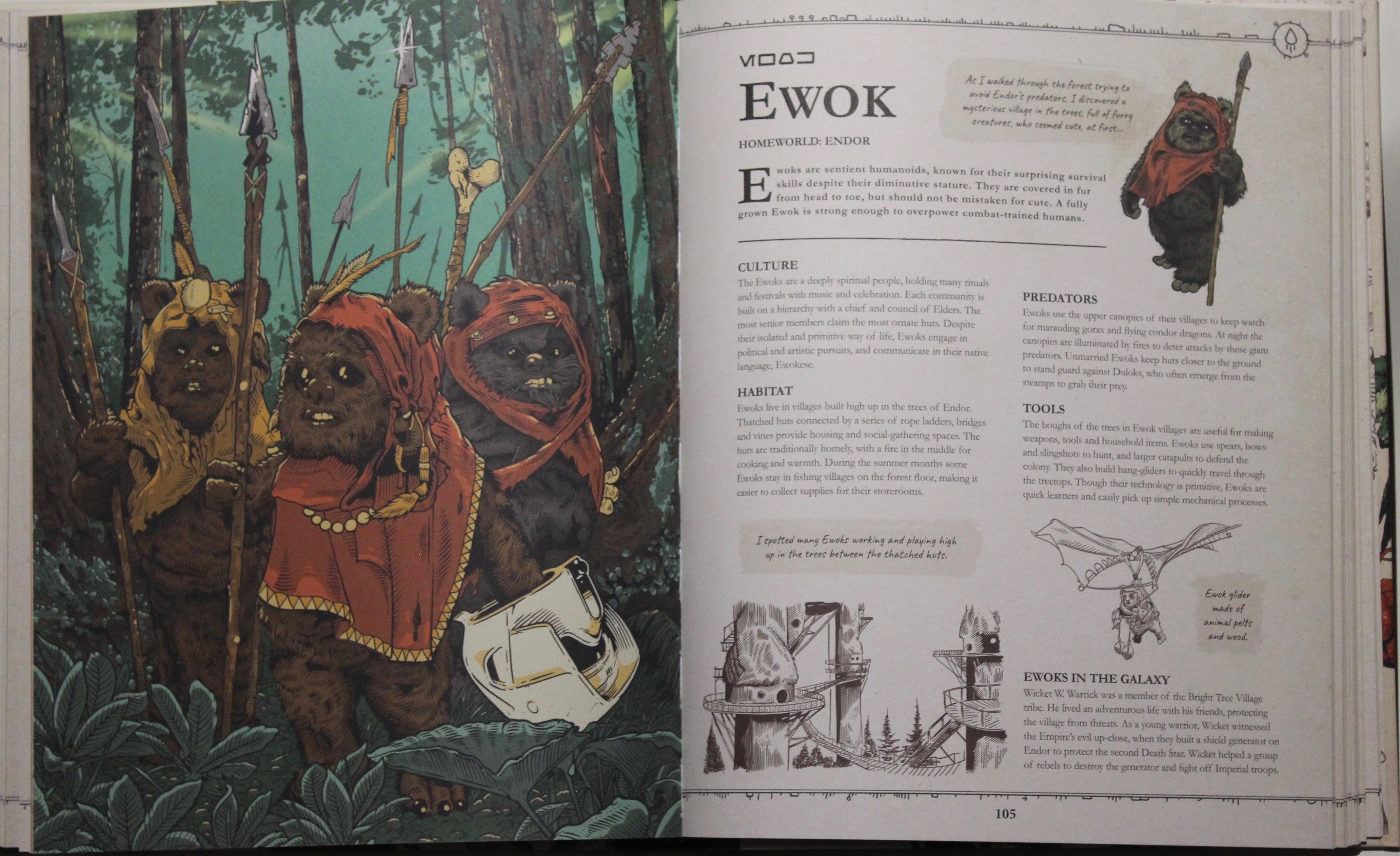
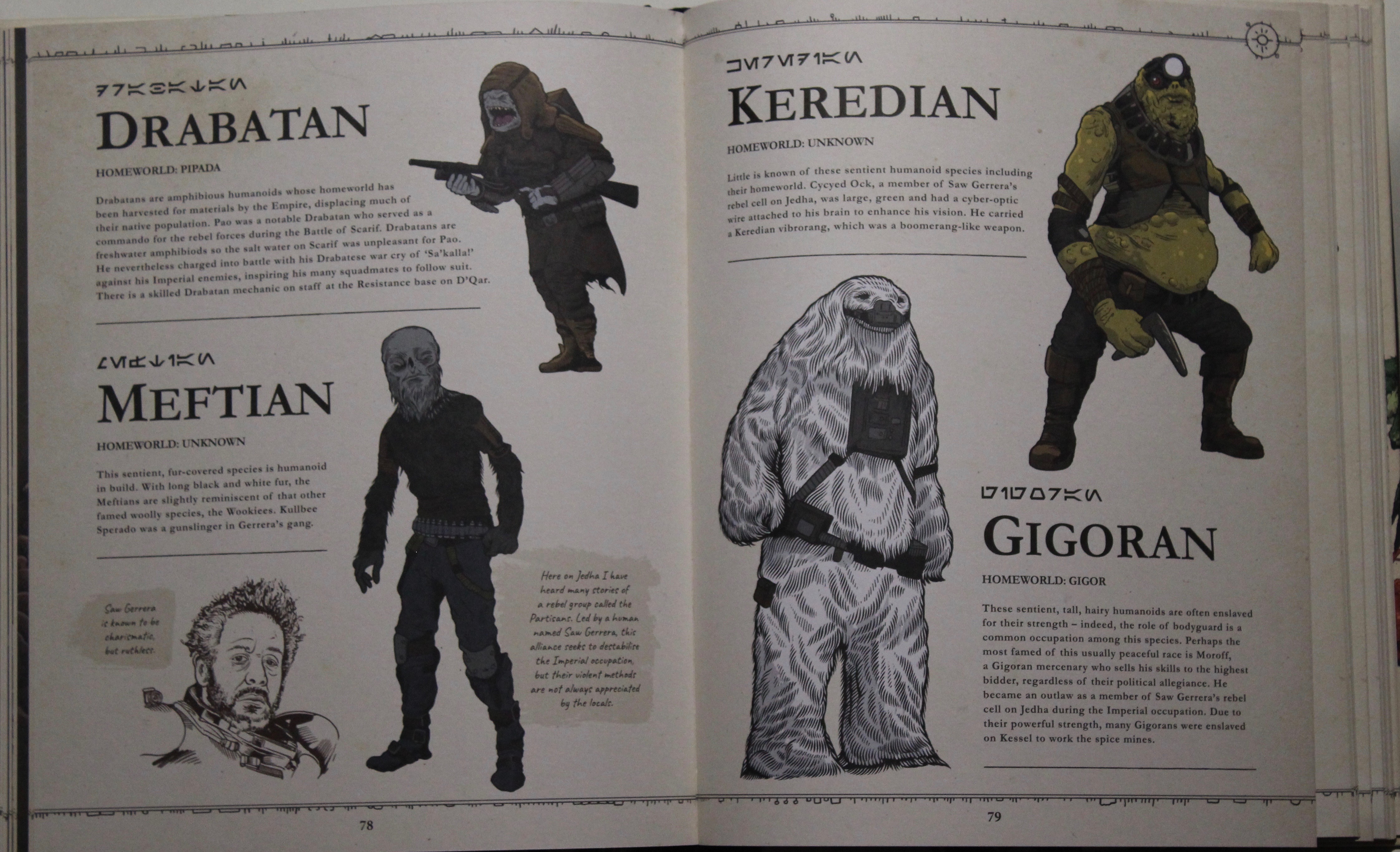
Choc full of Cookies, wampas, Biths and banthas this is crammed full of proper geeky insider knowledge (Porgs have forward-facing eyes to help them catch fish, apparently) for Star Wars fans of any age and for fans of the movies, novels, cartoons and comics.
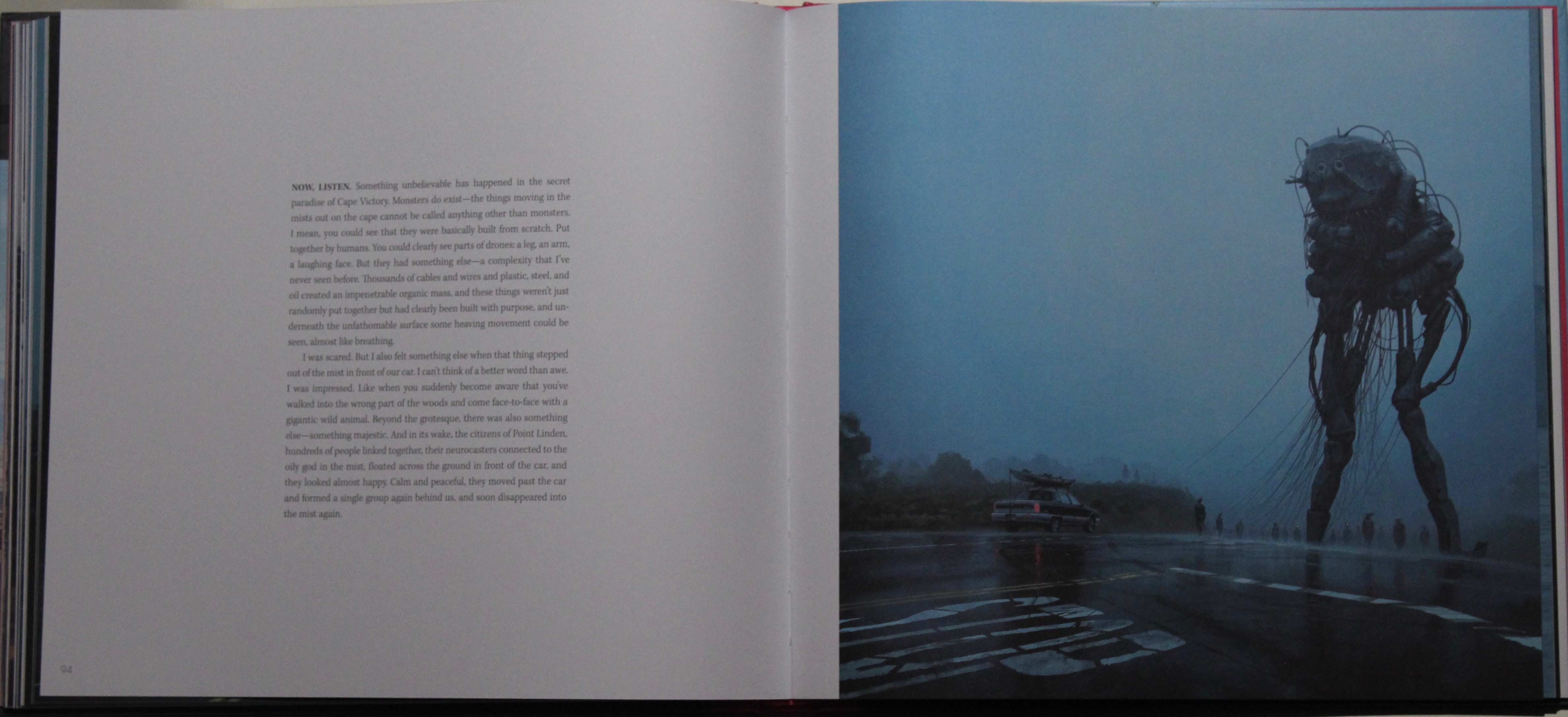
Simon Stålenhag is probably best known for his crowdfunded book Tales from the Loop, which showed children playing among abandoned robots in the aftermath of a particle accelerator experiment gone wrong. The Electric State continues the post-apocalyptic theme on a journey across a ravaged America. This is sublime storytelling and a feast for the eyes (and the Russo brothers have snapped up the film rights!)
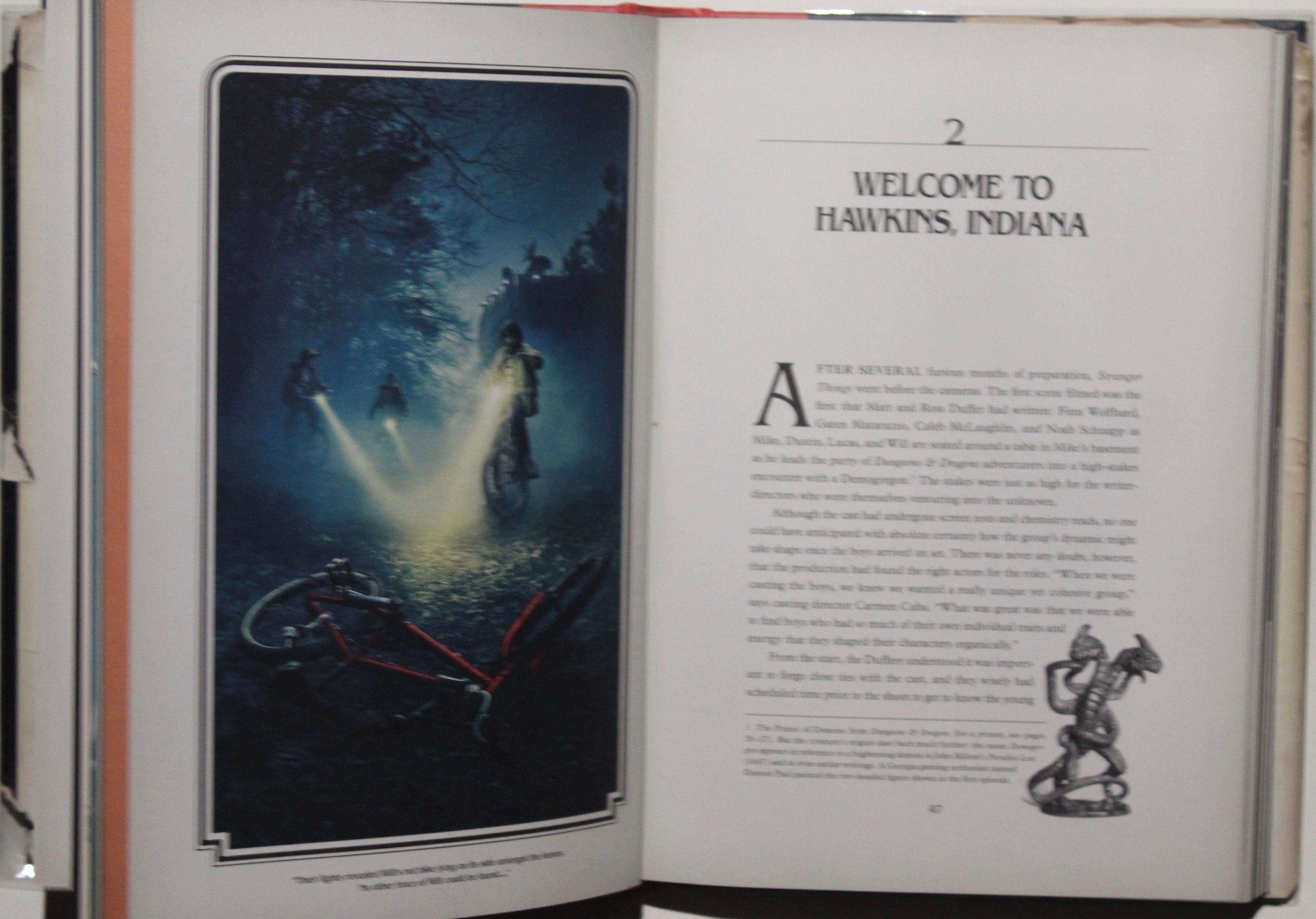
Another incredible piece of production, this behind-the-scenes book is made to look like a well-thumbed library book, wrapped in plastic, stained and with a thorough breakdown of how the show was made and its ’80s inspirations. I saw a pre-publication copy of this at the MCM Comic Con and snapped it up there and then.
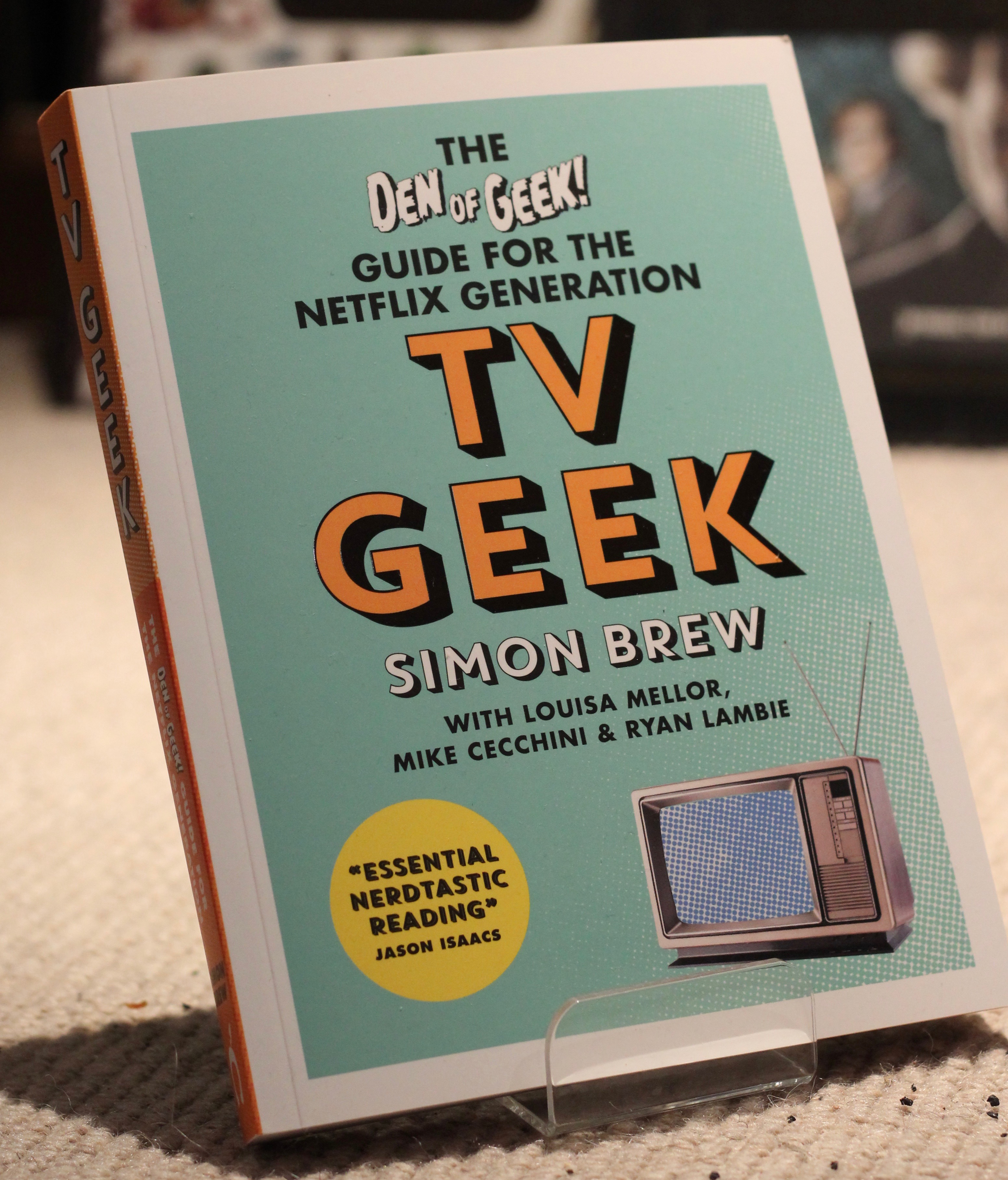
I loved Simon Brew’s previous Movie Geek book, which was like my favourite nerdy movie conversations down the pub, and this is very much in the same format. Endlessly fascinating with chapter headings like Key questions raised by watching Peppa Pig, The symbolism of Peaky Blinders and Spoiler Culture and its effect on outdoor filming, and written in Den of Geek’s positive style, TV fans will lap this up.
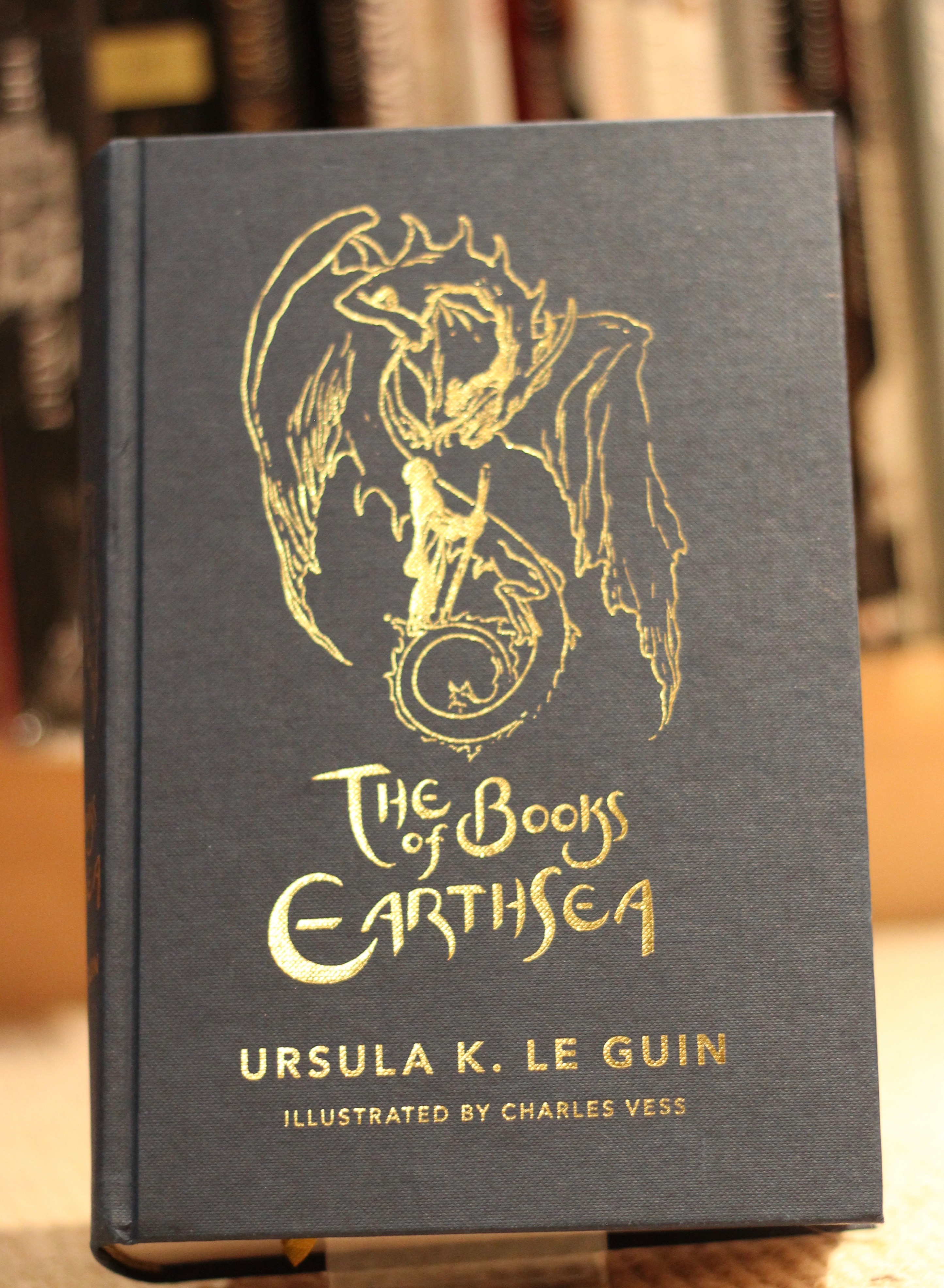
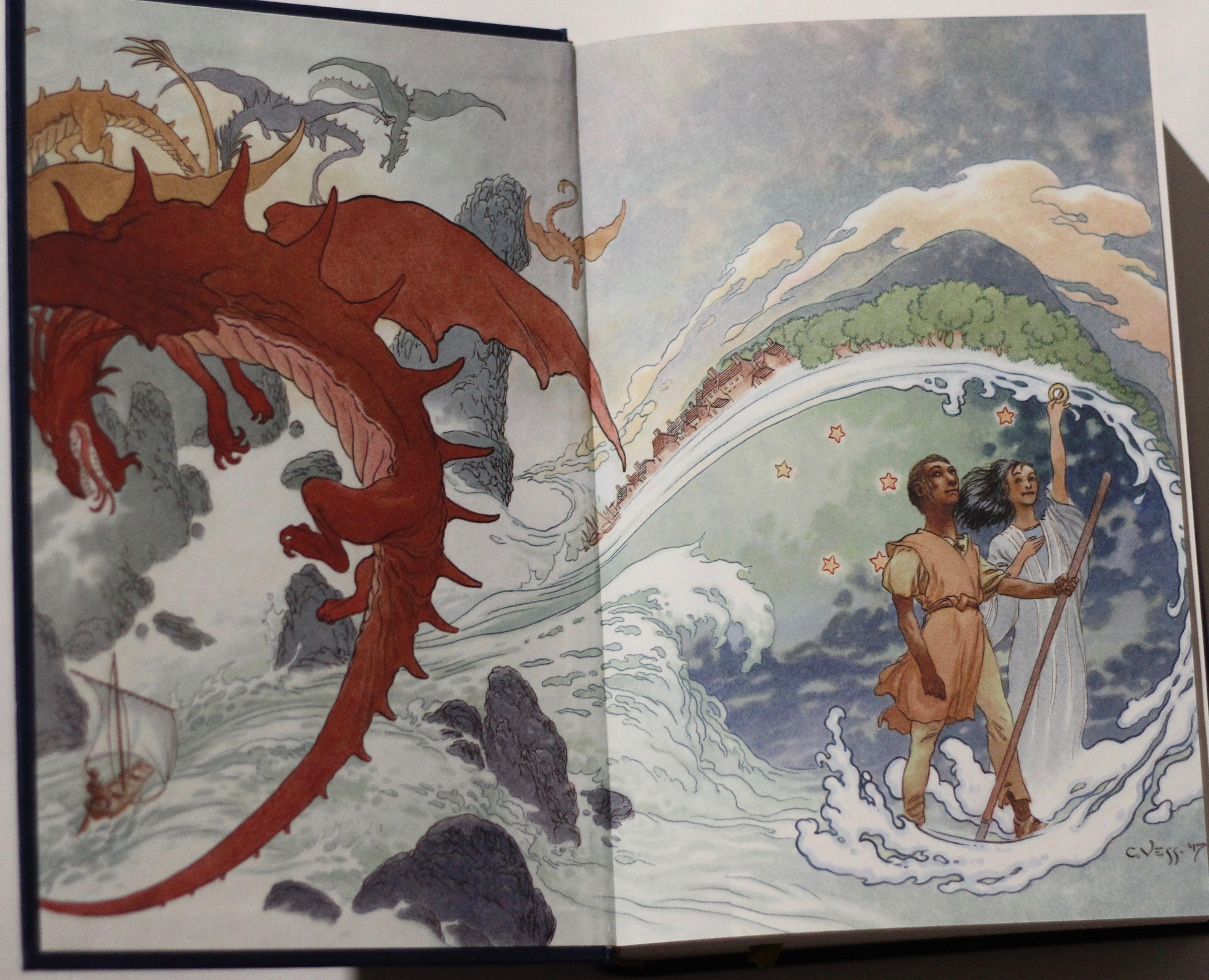
And I’ve saved the best till last. Ursula K Le Guin’s A Wizard of Earthsea was the first fantasy I ever read. More than Lord of the Rings or The Hobbit, this is what first fired my imagination when it came to magic and dragons. This complete illustrated collection, illustrated by Charles Vess, includes Le Guin’s last ever story Firelight, written when she knew she was dying. It reduced me to a sobbing wreck, and I can think of no better reason to recommend it. But just… look at it…
*Full disclosure: some of these were donated by publishers, but only after I begged/cajoled/threatened them for copies because I really wanted them, and some I bought myself…
A few weeks ago, just after finishing the copy edit for The End of Magic, I decided it was time to see if I could get some advance quotes for the book from authors that I knew. I got some ARCs printed and converted my doc into ePub and Mobi (for Kindle) using a free bit of software called Calibre.
I had drawn up a list of authors I knew, popped them on a Google spreadsheet, and started making contact with an introductory message asking if they would be interested in reading the book and giving me a quote, while acknowledging that they are most likely deluged with such requests. I gave a deadline of the first week of December (when the book is going to print) as it would be great to have a positioning quote on the book’s cover.
A few got back saying they were just too busy, and that was to be expected (I was surprised that wasn’t the reply from everyone, to be honest!), but I was delighted to see that most replied saying they would do their best and get back to me before the deadline.
One author replied saying that they couldn’t get into the book, and again that’s fine. I wanted honest reviews and it’s always a big ask to get someone to read your novel, so I was cool with that. All I wanted was one quote. Just one I could pop on the cover. And then, this week, the quotes started coming in…
Gavin G Smith, author of the superb Bastard Legion series, says… “Mark Stay takes the tropes of high fantasy and uses them to wield an original, compelling and intricately plotted story. With some wonderfully human characters (even the elves) and at times laugh out loud funny, The End of Magic is exactly the kind of fantasy that we need more of.”
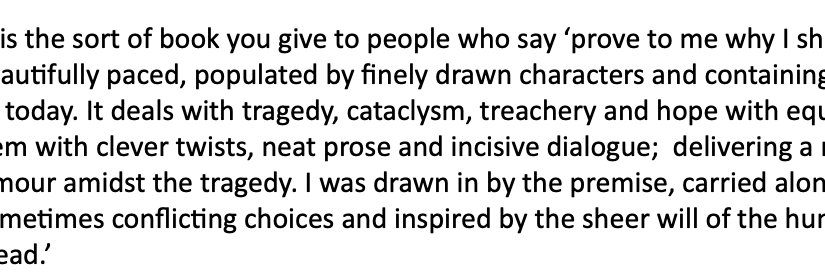
And James Barclay, author of the classic Raven series, says… “Mark Stay’s End of Magic is the sort of book you give to people who say ‘prove to me why I should read fantasy’. It’s an intensely human novel, beautifully paced, populated by finely drawn characters and containing startling allegories to the world we find ourselves in today. It deals with tragedy, cataclysm, treachery and hope with equal skill. It asks difficult questions and answers them with clever twists, neat prose and incisive dialogue; delivering a most satisfying conclusion. I loved the humour amidst the tragedy. I was drawn in by the premise, carried along by the unfolding dramas and disasters, the hard, sometimes conflicting choices and inspired by the sheer will of the human spirit to triumph over disaster. A simply terrific read.”
I currently have an ego the size of Jupiter and I am a very happy writer… Also, James’s email was perfectly timed as it arrived just after a note from my script agent telling me I had just been rejected for a gig, so I’m doubly pleased.
With any luck there will be a few more like this before we go to print, but if it stopped right there I would still be happy. However, I might be cheeky and chance my arm with a few more requests. Even post-publication these quotes still have great value. They position the book for the browsing reader and give the book a credibility beyond me begging you to give it a go…
For regular writing tips, news and other stuff to help a writer get through the day, sign-up to my monthly newsletter, and grab a FREE eBook while you’re at it!
The proof pages for The End Of Magic arrived at the end of last week. Unbound sent them to me as a PDF, and the temptation was to read from the screen, but I was about to take a bit of advice first given to me by my friend and former audio director at Orion, Pandora White.
Pan said that, almost without fail, whenever she recorded an audiobook they would find typos and errors throughout the book. This was after the edit, the copyedit, the proof read and the final check by the author. Usually, by the time the audiobook is recorded the physical book has gone to print and it’s too late to do anything about it (until a reprint). Errors would always slip through. Except…
… when the author took the time to read the book out loud.
Page by page. Word by word.
So I figured what the hell and made a start last weekend. It’s taken me all week, muttering to myself during every lunch break at work, but it’s done the job. I’ve found 40+ errors in that time…
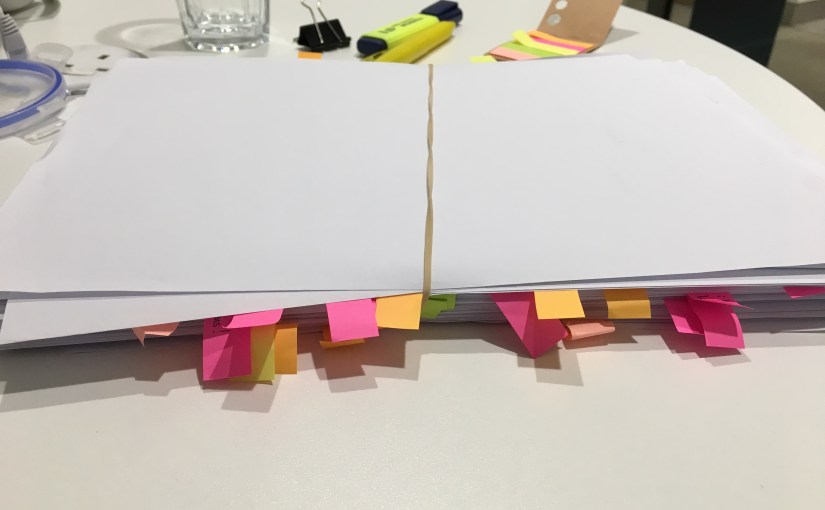
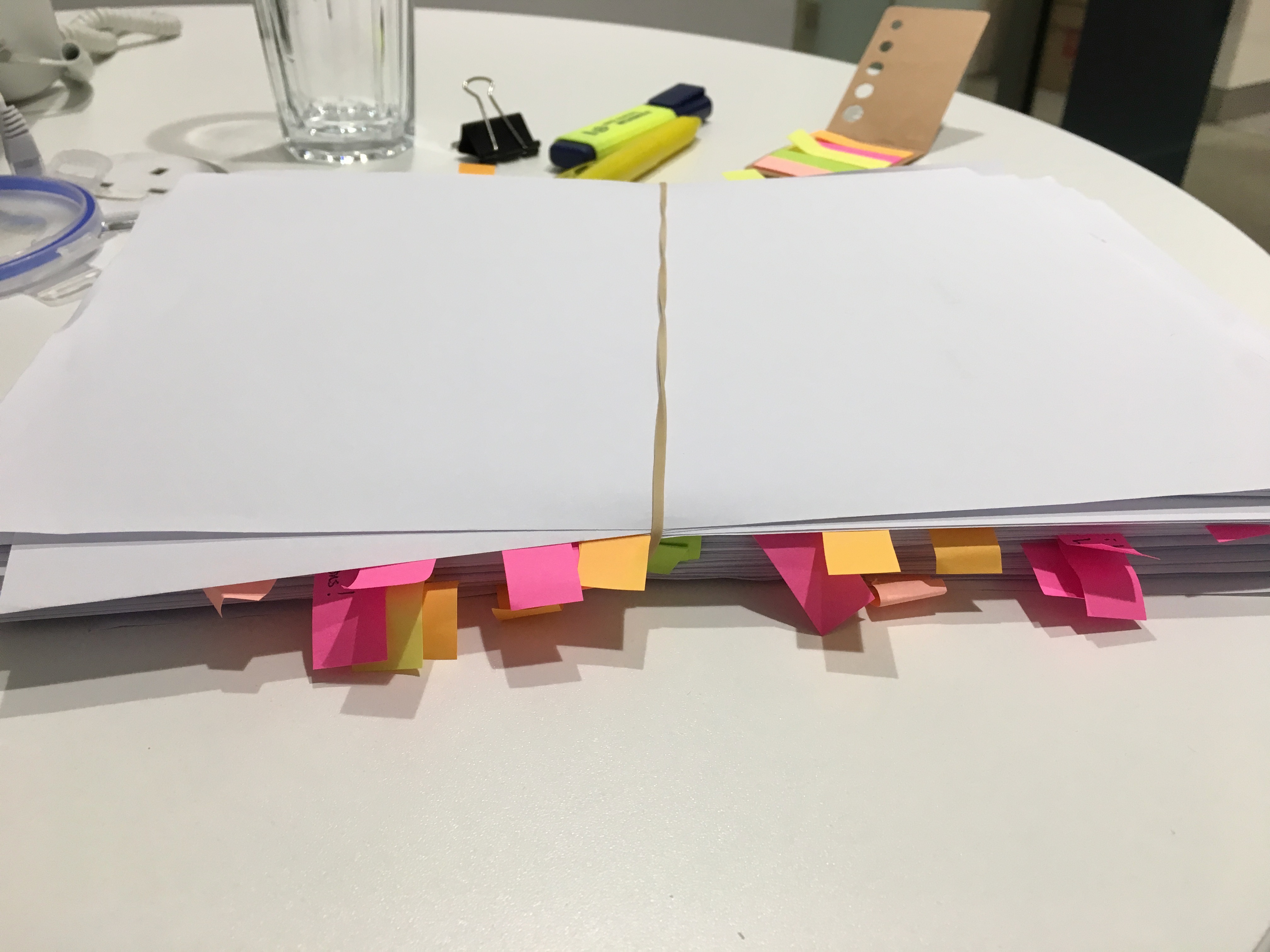
Tools of the trade: mini Post-Its, highlighter pen, a regular pen, a bulldog clip, water for the vocals, and a strong rubber band…
They were mostly small typos and missing words, but also a few sentences that were just too long or made no bloody sense whatsoever. Had that version of the book been published I would have been kicking myself, but now my soft and plump derrière can rest safe in the knowledge that I’ve done all I can to keep it from further bruising.
And that’s it. I’ve sent the changes on a marked-up PDF and now Unbound will make those corrections before going to print.
Next – I’m hoping – will be the cover art. Much excitement and anticipation ahoy!
For regular writing tips, news and other stuff to help a writer get through the day, sign-up to my monthly newsletter, and grab a FREE eBook while you’re at it!
Now that the copy edits are done on The End of Magic, the proof read will be next and after that comes the print deadline* when no further changes can be made. Before we go to print I would love to get at least one quote from an author saying how wonderful the book is. Something that we can put on the cover and on the feed that goes out to all retailers.
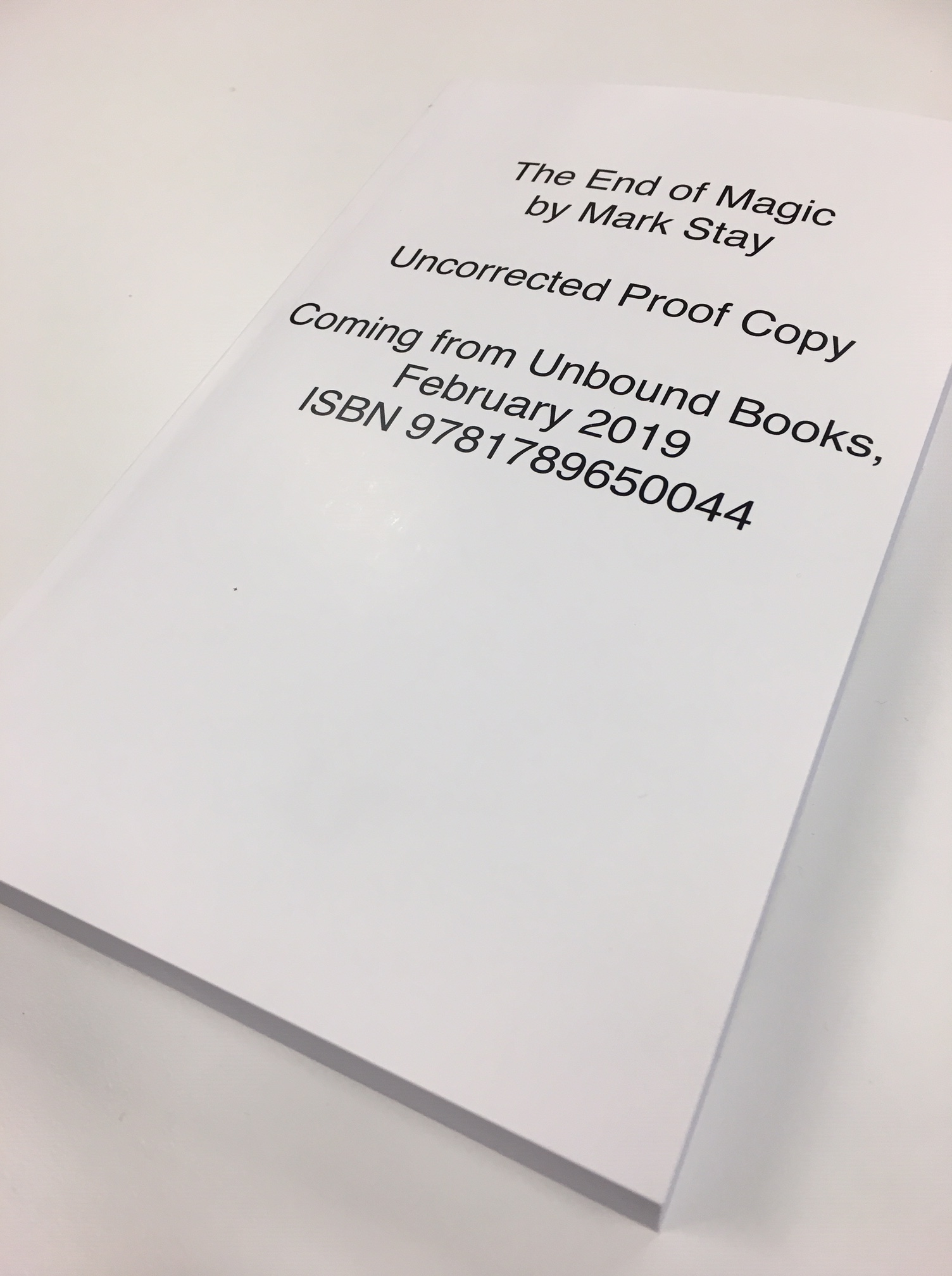
These really help position and legitimise your book in the mind of any potential reader and can help with sales. Unbound don’t have any budget for proofs or ARCs (Advanced Reading Copies), so I had ten printed from scratch for the princely sum of £51.** These are basic… very basic…
… but they’ve come out beautifully.
I created the print version from my copy edit file and tinkered with it in Vellum, creating ePub, Mobi (Kindle) and print versions. Vellum is a fairly pricey piece of software, Mac only, and it’s options are limited, but it really does create a professional-looking book.
I drew up a list of authors I thought might be up for reading it (their names will remain secret, just in case they hate it!), but they’re all writers that I know and whose opinions I respect, so a quote from any one of them would mean the world to me. And, knowing they’ll all be drowning in ARCs and quote requests, I politely approached them first and asked if they were up for reading my book. Most came back and said yes – a couple politely declined, which is fine as I prefer a straight no to a never-maybe – and gave me their preferred format. I then either sent them digital files or added them to the print list. I’ve kept all this on a grid to keep track of when they go out and who to…
And now it’s out there, people I respect and admire might just be reading it, and if you need me I’ll be over here in the corner quietly rocking back and forth and trying not to think about it…
*Oh, and I can now confirm that we have an official publication date!
**UPDATE – a few people have asked where I got these printed. I work at Hachette in the UK and they have an amazing print room in the basement, and this was the fastest and easiest way to get them printed. If that wasn’t an option I would probably go to Ingram Spark or Lulu.
For regular writing tips, news and other stuff to help a writer get through the day, sign-up to my monthly newsletter, and grab a FREE eBook while you’re at it!
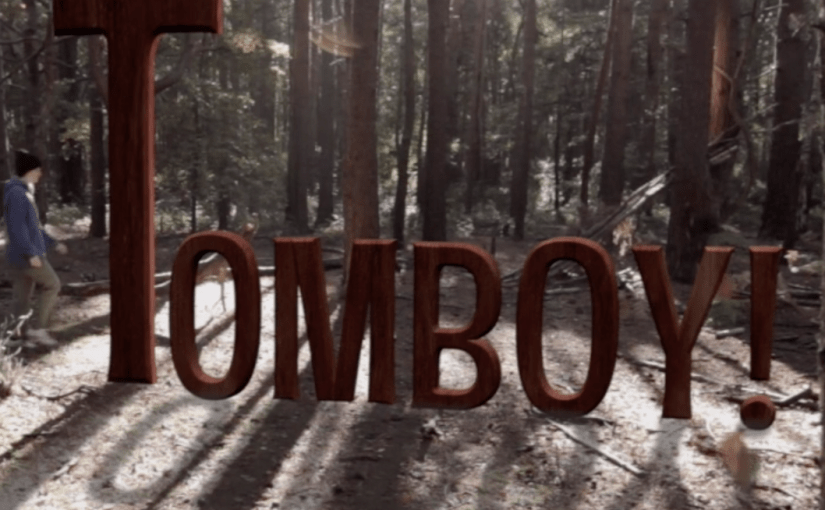
Last weekend my friend and filmmaker Dom corralled myself, my daughter Emily and our friend Paul to make a 15 second horror film for the Raindance Film Festival competition. Paul provided the excellent props, Emily very gamely agreed to wear a tree trunk for a hat, and Dom had a very clear vision and showed me how to use his camera. We had an excellent time making it and the finished film brings horror joy to my black little heart…
Here is the extended director’s cut (22 seconds with credits). Enjoy!
Tomboy! from Dom Currie on Vimeo.
For regular writing tips, news and other stuff to help a writer get through the day, sign-up to my monthly newsletter, and grab a FREE eBook while you’re at it!
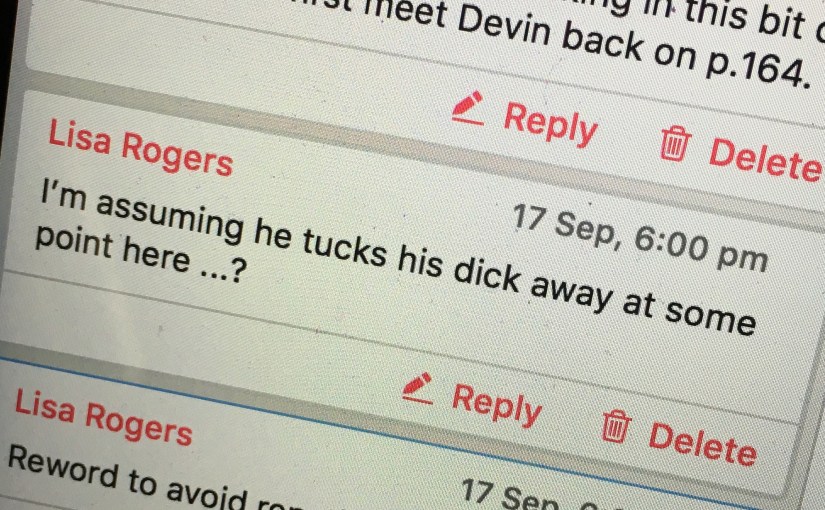
After two rounds, the copy edits on my fantasy novel The End of Magic are done. I was so happy to get Lisa Rogers as the copy editor. Lisa worked on Robot Overlords and I loved her attention to detail, her forensic knowledge of the English language and all its wonderful nuances, but most of all I loved how she saved me from looking like a complete and utter numpty on countless occasions.
A copy editor (sometimes known as a line editor) will check and format your punctuation and grammar, but will also highlight continuity problems, factual errors, inconsistencies and timeline issues. For this book, the timeline was the real bugger. I had characters having breakfast when they should’ve been having supper, I had a character sneaking into a camp to look through a telescope at the stars… in the middle of the day… and, in a first for me, I had a character wander around with their genitals hanging out for all to see after having a pee…
Next comes the proof read, where a new set of eyes will find even more errors. Writing a novel is essentially a process whereby you fail a little less each time, until you reach something that’s not quite perfection, but at least won’t be a tedious collection of typos.
Another exciting development was the cover questionnaire that arrived this week. Unbound’s art department asked me for details about the book, the characters, the settings etc. They also wanted a list of comparable books in the same genre, and a mood board of images. Luckily for me, I’ve been keeping a private Pinterest board for this book since I started writing it and I blogged about book covers a while ago, so I was able to ping these back fairly quickly. It’ll be fascinating to see what they come up with… don’t believe any of that “Don’t judge a book by its cover” nonsense. It will be crucial to get this right.
For regular writing tips, news and other stuff to help a writer get through the day, sign-up to my monthly newsletter, and grab a FREE eBook while you’re at it!
The full-length diaries will be on the Bestseller Experiment podcast soon, so for more hot tub action (and insight into the writing process, of course) don’t forget to subscribe to that here!
For regular writing tips, news and other stuff to help a writer get through the day, sign-up to my monthly newsletter, and grab a FREE eBook while you’re at it!