Ten Years Ago Today: My Pitch for the Robot Overlords Novelisation…

Extracts from my diaries on Wednesday 10th and Thursday 11th April, 2013:

Wednesday 10th

A busy day. Worked on all sorts: the games and novel pitches, the novel sample chapters, and tweaks to the script. All very productive.

I road-tested the novel sample with Emily (daughter, then 13), who really liked it. I then printed it out and proofread very carefully, then sent it to Jon and Piers. They both loved it. Jon made the point of calling me to say so. He got the weird sensation of seeing it through the characters’ eyes.

Just waiting to get the okay from Katie (Williams, my agent at the time at The Agency) and then I’ll send it to Gillian (Redfern, editor at Gollancz).

Thursday 11th

Last tweaks to ORO (Our Robot Overlords, as it was still titled at the time) before it goes out again to cast, production and finance. It’s looking good.

Also sent the novel pitch and samples to Gillian. Fingers crossed.

I was working my little buns off! You can almost smell the desperation.

I’m often asked about pitches for films and books, so I’ve dug mine out and you can read it here…

OUR ROBOT OVERLORDS

A FILM TIE-IN NOVEL PROPOSAL

The robot invasion was unexpected, swift and catastrophic.

The war lasted eleven days, humanity’s losses were devastating.

The survivors now live in controlled ghettos in servitude to…

OUR ROBOT OVERLORDS

A major independent feature film starring Gillian Anderson and Sir Ben Kingsley, coming summer 2014.

The film shares the gang camaraderie of THE GOONIES, the intensity of DISTRICT 9, and    the same heroic mythology of stories like STAR WARS. It’s aimed at the 12a/PG-13 audience: intense action, cool characters, terrifying villains.

THE WORLD OF OUR ROBOT OVERLORDS

MEDIATOR 452

“Our intention is to study all sentient thought in the universe. We will scrutinise this knowledge to ensure that no life form will ever threaten us again.”

Earth has been invaded by a malevolent empire of robots from the far side of the galaxy. They claim to be studying sentient life, yet they confine the human survivors in their homes for the duration of the occupation – over seven years.

MEDIATOR 452

“Don’t be alarmed. We wish you no harm. However… Disobeying our laws will not be tolerated.”

All humans now have a robotic implant behind their ear. This enables the robots to track our every move. If you step outside, beyond the set boundaries, you get just one warning from a patrolling Sentry. Disobey and you’re nothing but ashes floating on the breeze.

SEAN

“Dad always said being frightened of something was the best reason to do it.”

Our hero Sean is confined in his home with his mum (Gillian Anderson). He’s convinced that his dad, a missing-in-action RAF fighter pilot, is still alive. He and his gang of mates will figure out how to disable the robot implants. 

Sean’s mate Nathan is cocky, full of himself, and the first to run headlong into the action.

Nath’s sister Alex starts as the gloomy Eyeore of the group, but Sean’s heroism will give her hope.

Their neighbour Connor is the runt of the litter, but his ingenuity will save the day on more than one occasion.

They’ll dare to break the robot curfew, follow the trail left by Sean’s father, and will ultimately challenge the entire robot empire.

THE TIE-IN NOVEL

BY MARK STAY

AUTHOR’S STATEMENT

I was always a massive fan of film tie-in novels when I was younger. The revelations in Alan Dean Foster’s STAR WARS, Donald F Glut’s THE EMPIRE STRIKES BACK, and THE WRATH OF KHAN by Vonda McIntyre were all favourites of mine, revealing backstory not included in the film, deleted scenes and additional dialogue. These books were almost the only way to experience the film while waiting an eternity for either a theatrical re-release or VHS rental.

But the golden age of film tie-ins is long gone, and many are released as an afterthought, bringing in a jobbing writer to hurriedly cobble something together using the script, some storyboards and concept art.

However, as the co-writer of OUR ROBOT OVERLORDS I am uniquely placed to get a head start on the film’s production and release, and produce a novel that every fan of the film will want to read.

Aimed at the same YA/Family audience as the film, the tie-in novel of OUR ROBOT OVERLORDS will get inside the heads of the characters that director Jon Wright and I have created in a way that film cannot. It will be pacy, action-packed, commercial and will be designed to stand-alone as a gripping read.

We also want to make Gollancz full partners in the film. We can offer exclusive additional material: concept art, storyboards, filmmaker/actor Q&As, webchats and much more.

The novel will also be part of a bigger brand-building exercise that includes the film, its sequels, games, toys, collectibles and future books.

There is also a great opportunity for the film-makers and Gollancz to work together; cross-promoting our film to your fanbase of Gollancz Geeks, and your prestigious list of titles to the film’s fans.

Please find attached sample chapters from the proposed book, concept art and storyboards.

To see a sales trailer, using clips from other movies to give you an idea of the tone and style of the film, visit here (I’ve removed the link as it no longer exists).

Ten Years Ago Today: Robot Overlord Rewrites and Panic Attacks…

Here’s an extract from my diary on Monday 8th April, 2013…

Slept badly last night. Panic attacks. It’s only 7 weeks till I leave. It’s becoming a reality now. Jon was looking at locations in Ireland today. Says he’s found a great ravine and a castle.

I got the official go ahead from Piers to work on the tie-in novel of Robots. Started work on the pitch and opening chapters right away.

PS. Jon and I did some good work on the cuts on Saturday. Molinare was empty. We found a quiet nook, ordered some tea and went about cutting thousands of pound from the VFX budget.

Some context: following on from my previous blog where I was asked to write the Robot Overlords novelisation, our producer Piers had to get it signed off by all the other producers. This will become a recurring motif through the making of the film and publication of the book: it could take forever to get a decision because so many people had to sign off on every major choice. It’s not that people were difficult, it’s just that there were so many producers and they’re all busy people.

In order to convince Gollancz that I was up to the job to write the novel, I put together a pitch which included a document outlining the project, a video with pre-viz VFX from the film (still a relatively new and snazzy thing) and about ten thousand words from the opening chapters.

This may have contributed to the late night panic attacks. To be honest, these weren’t anything new. I’d been having them for years, and still get them occasionally (had one just this week!), but I’m sure the big changes just around the corner we’re giving me conniptions. I had arranged to take a six-month sabbatical from work while the film was in production. This would not only allow me the time to write the novel full time, but I could also be more available to the film at its most crucial time.

Molinare is the post production facility just off Carnaby Street and where the film’s editing etc would be finalised. Jon and I were lucky to have it as a place where we could meet and work on tweaks to the script to shave away VFX in order to meet our budget.

Also, as an aside, Margaret Thatcher died on this day. I was never a big fan, but our current leaders make her look almost palatable. Almost…

More diary updates coming soon…

If you’d like to read the Robot Overlords novelisation you can get a signed copy here.
The film is available to download from Apple, Amazon, Sky etc and is currently streaming in Amazon Prime in the UK.

Robot Overlords: Test Shoot at Pinewood 16th March. 2013

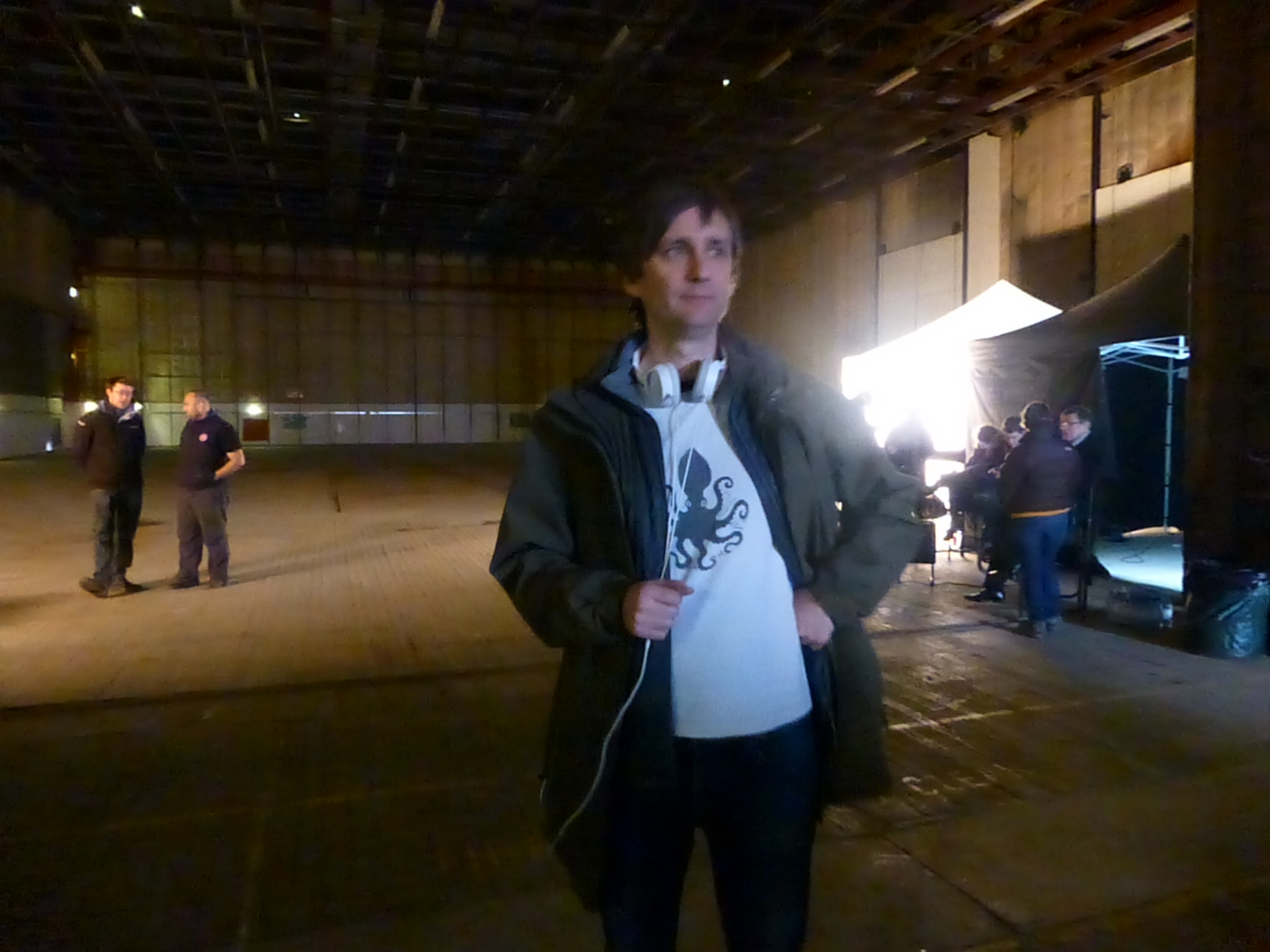
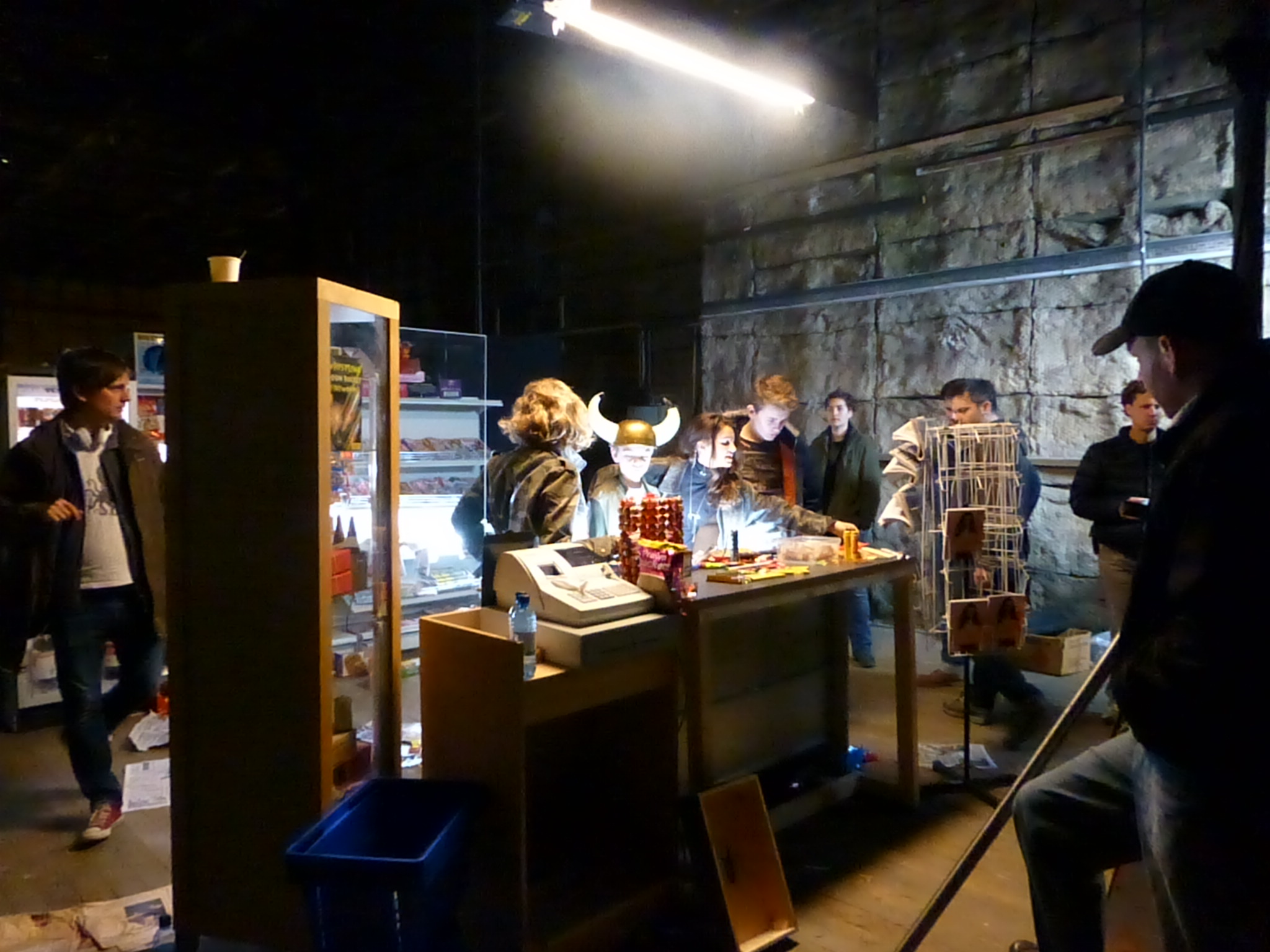
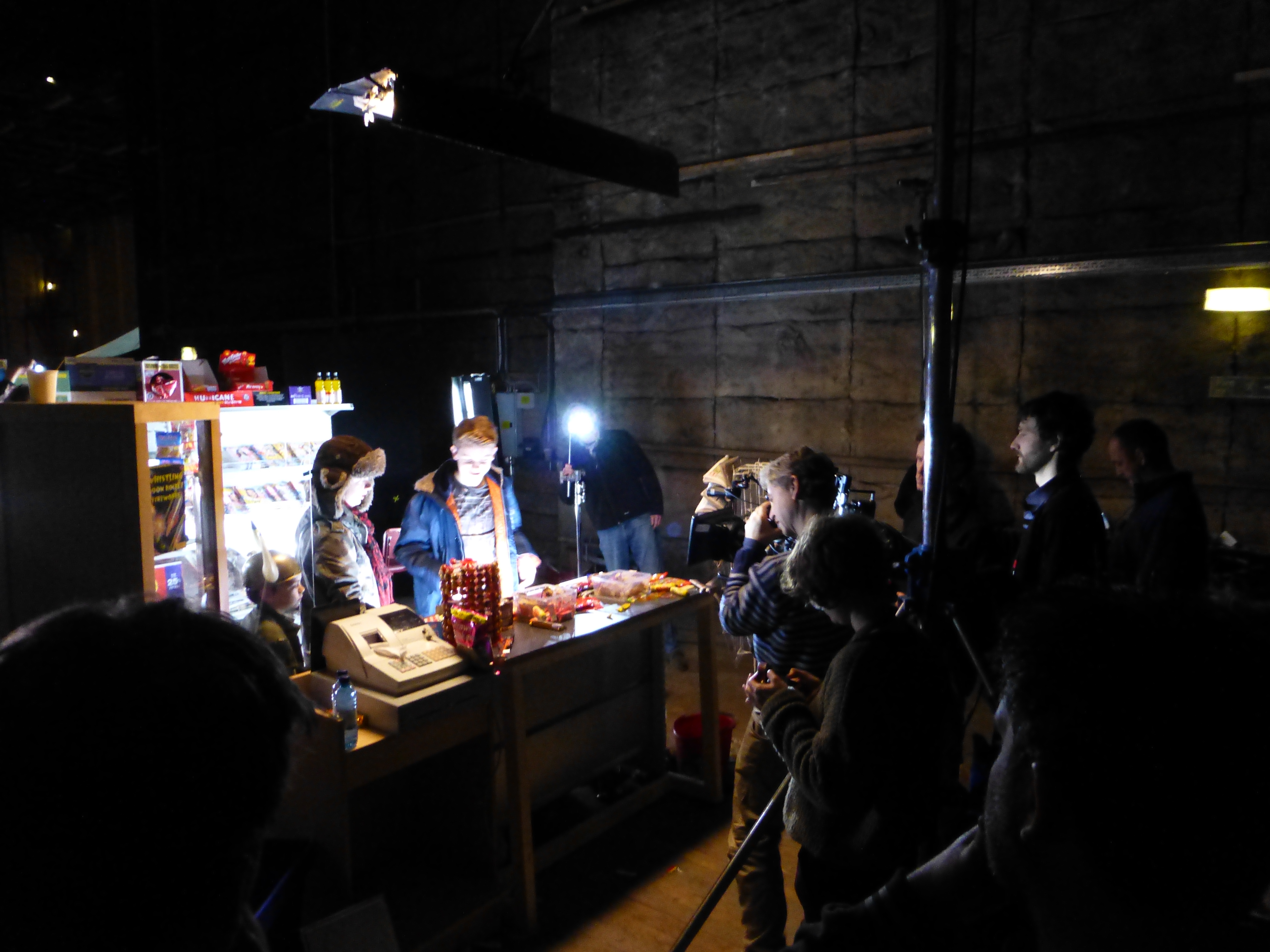
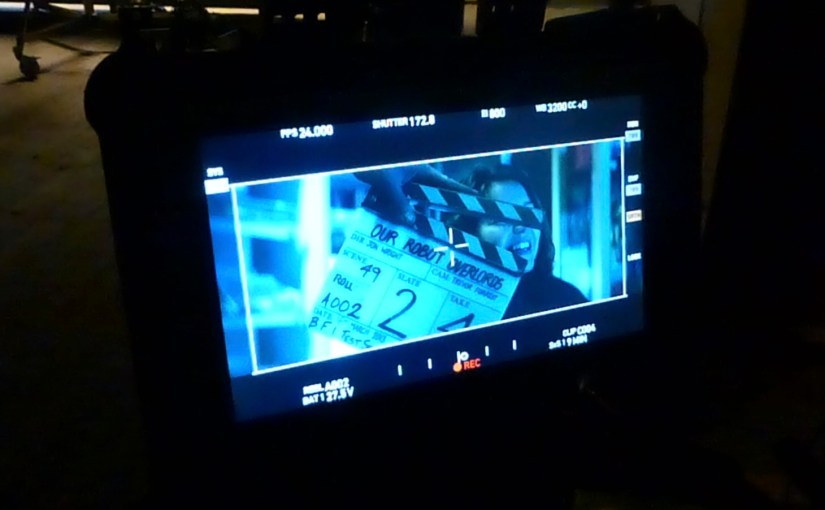
I’ve only recently realised that Robot Overlords is nearly ten years old, and that we started shooting in May 2013. But before that we had a day of test shoots at Pinewood Studios. It was to see how the kids worked together, and so a set was built of a sweet shop for the scene where the gang stock up on fireworks and sweets and decide what to do next. At that point we had two of our eventual cast, Ella Hunt as Alex and Milo Parker as Connor, and two cast members who wouldn’t be in the finished film: Harry Lawtey as Sean and Eros Vlahos as Nathan. Not sure why it didn’t work out with Harry and Eros, who were very good, but such is the nature of the movies and they’ve both gone on to great things.

Jon workshopped the scene with them all day. As screenwriter, I wasn’t really needed (but there was no way I wasn’t going to be there) and so spent most of the day wondering just how much grub I could pinch from craft services before I was evicted from the studio.

Here’s one entry from my diary for that day…

The big surprise was Milo, who — once you stopped him looking at the camera — was just terrific. Funny, watchable and full of energy.

Here are a few pics from that day on Stage H, Pinewood (and more to come throughout the year)…

The Madcap’s Last Laugh, Syd Barrett tribute concert – May 10th, 2007

I’ve been trawling through my diary from ten years ago, chronicling my trials as a writer, but every now and then I find something very special that has nothing to do with my scribblings. Ten years ago today I was lucky enough to go to a gig with my nephew Chris which exceeded all expectations…

Last night Chris and I drove to the Barbican to attend The Madcap’s Last Laugh, a tribute concert to Syd Barrett. I had been looking forward to this since it was first announced. All sorts of rumours had been flying around about who might show up, but when names like Robyn Hitchcock, Chrissie Hynde and Martha Wainwright were officially announced I realised that it would be a sincere tribute from people genuinely influenced by Syd. I had wondered if anyone from Pink Floyd might show up. Guy (Pratt) told me that David Gilmour had been approached and had politely declined. I guess he felt that he had made his tribute already with his very moving rendition of Dark Globe on his last tour. David saying no effectively ruled out Nick and Rick, too, and as for Roger… I knew that he was in the country on tour, but who knows if he had the time?

Anyway, the traffic was terrible and we were fifteen minutes late but, thankfully, the show was late starting and we were in our excellent seats (second row, just right of centre!) in plenty of time for the start. The show was wonderful in a very English and slightly shambolic way. Everyone was just a little under-rehearsed, singers had scraps of paper with the lyrics, roadies wrestled with mic stands to ready them for the next artistes, all of varying heights. The line-up was great. Captain Sensible (looking alarmingly like Paul O’Grady), Nick Laird-Clowes, Damon Albarn, The Bees, and then, to finish the first half, on strode Roger Waters.

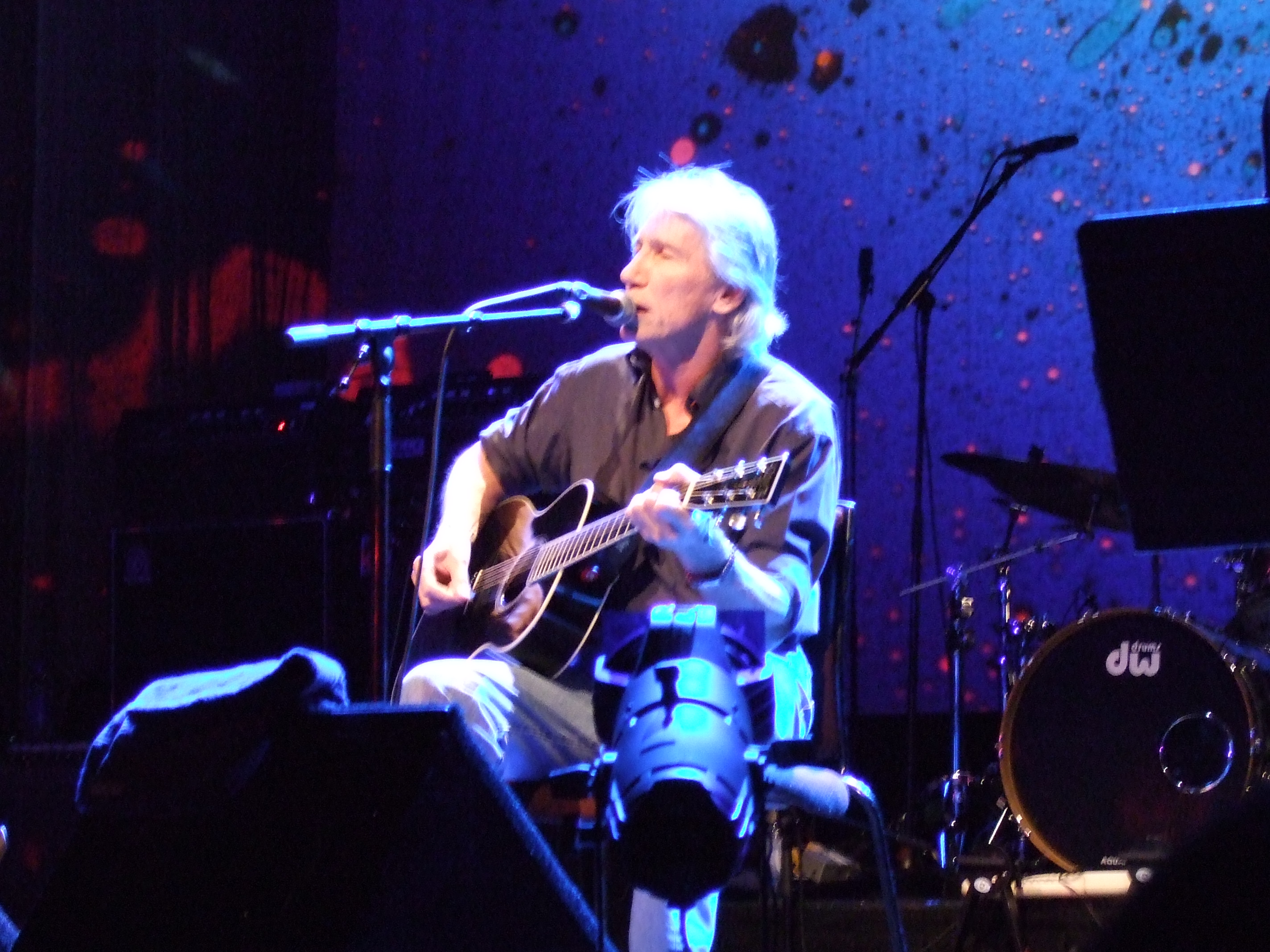
Well, Chris and I jumped to our feet as did the rest of the audience. He looked very nervous – he was shaking like a leaf even when he was playing – and he played Flickering Flame on an acoustic guitar accompanied by Jon Carin on keyboards.

DSCF0724
Roger Waters – Flickering Flame

What a great first half. I even saw Storm Thorgerson queueing for the loo in the break.

The second half was even better. Vashti Bunyan, more Damon Albarn and Captain Sensible, Robyn Hitchcock, John Paul Jones, and Chrissie Hynde. Then Joe Boyd came on and told us he couldn’t think of a better way to round off the evening than to ask David, Nick and Rick onto the stage… Well, we were blown away. I had totally convinced myself that this was not going to happen and here we were. There were shouts of ‘Roger Waters!’ from the crowd, to which David replied, ‘Yes, he was here, too…’ So where was he now? Never mind… They played Arnold Layne – it wasn’t the greatest rendition, there were problems with Rick’s keyboard and mic, but it was just terrific to see them playing again.

DSCF0746.JPG
From L-R: Richard Wright, Andy Bell, David Gilmour, Nick Mason and Jon Carin

And that was it. There were cries for more, not least from me, and they did join everyone else for the final Singalonga Bike. An amazing evening and Chris and I left on a real high.

I later learned from Guy that David had called him at 2pm that day asking what he was up to that night. Guy had a Bryan Ferry gig in Cambridge and couldn’t attend. He was gutted. He also explained Roger’s no-show with the band: apparently he had to get back to his hotel to meet his girlfriend. I hate to think that I missed my one opportunity to see the classic Floyd line-up because Rog’ fancied a quickie with his bit of stuff*…

Anyway, it was a great evening, a worthy tribute to Syd and I got some good photos. I had hoped to meet Matt Johns from the Brain Damage website, but I couldn’t get a signal on my phone in the Barbican. Turns out he was sitting about four seats down from us.

*I realise I’m being very uncharitable here!

For a full setlist, the wonderful Brain Damage site has it all here.

All photos by Mark Stay

Enjoyed this? Then please…

Just say No, kids! My Writing Diary, Ten Years On: Monday 8th – Wednesday 10th January, 2007

Thanks to my Odeon Limitless card, I’ve seen more movies than ever before in the last twelve months, but I still haven’t got around to seeing this…

And there’s a very specific reason for that. I just can’t bring myself to see it. To do so would be like revisiting a very bad toothache. Let’s go back to my diary entries for ten years ago today, when I had a meeting with Dean Fisher, who was producing Waiting For Eddie, which I hoped would be my debut film (it wasn’t)


Monday 8th January, 2007

Dean asked if I was interested in another project he’s developing. It’s called ‘The Office Christmas Party’, and comes from a party witnessed by his brother. So far it’s just a series of ‘It really happened’ events. There’s no story or even a rough outline, but in some ways that’s best if it gives me more of a free reign. Anyway, I’ll look at what he’s got and see if it’s do-able.

Tuesday 9th January, 2007

I read the notes for Dean’s ‘Office Christmas Party’ idea… Yikes. There’s really nothing to work with. It’s basically what happens when you give people a free bar and too much coke. The concept is a good one, but I’d have to start from scratch and I have a nagging doubt that Dean doesn’t have the money to pay me for that.

Wednesday 10th January, 2007

Agreed with Dean to put together a two-page treatment for his April deadline…

The more observant of you might be asking, ‘What the hell? You clearly didn’t like the idea, so why are you writing a treatment for it?’ Indeed, and you’d be right to be confused. But I was inexperienced, eager to please a producer who was developing another project of mine, and I had the writer’s hubris to think that I could mould this idea into a personal statement. How wrong was I? Well, let’s say this led to a further three and a half years of working on a film that would never happen. Three and half years! I know this because I looked it up in my diary…


Wednesday 8th September, 2010

Dean called yesterday and I think I’ve finally laid the ghost of The Christmas Office Party to rest. I simply told him I’d run cold on the idea. He was disappointed, but seemed resigned to it.

You’ll note the slight title change there (because we didn’t anyone thinking it was anything to do with Ricky Gervais’s The Office… how times have changed). It’s not a question of the time taken, or not being paid – I’ve worked longer and for less on other projects – but the difference here is I was completely wrong for the project. I didn’t believe in it, I didn’t like the tone they wanted, nor had I any experience in writing a raucous comedy, but I still said yes. It was an interesting concept, and I thought it could get made, and when you’re an un-produced screenwriter, all you really want in life is to get something  made.

The lesson I had yet to learn is the most powerful thing a writer can do is say No.

Seriously, try it.

Saying no means you can move and find something new and follow your passions. Saying no means you still have all the power. Saying no means they might even consider paying you for the project.

Saying yes means you’re suddenly obliged to deliver writing, for little or no money, and with no end in sight.

This isn’t to disparage Dean as a producer. Like all indie producers, he’s building a slate and simply doesn’t have the money to pay writers for endless drafts. The mistake was all mine, and hindsight is a wonderful thing.

So, it was with very mixed feelings when I first saw the trailer for ‘The Office Christmas Party’. It was a good idea, and Dean had beaten Hollywood to it by ten years… he just needed the right writer. Trouble is, it wasn’t me.


Film London Microschool, My Writing Diary, Ten Years On, Thursday 12th & Friday 13th October, 2006

Ten years ago, my script Waiting For Eddie had a producera director and had been chosen for the first ever Film London Microwave scheme, which was designed to produce at least two debut films with a budget of £100k.

After three days of intense workshopping (see previous blog entries), we were given a day away to prepare our pitches for the real thing on Friday…

Thursday 12th October, 2006

A blissful day at home working on the pitch and the script for Eddie. Got lots done. Had a conference call with Dean and Jon. I was confident then, but nerves are starting already.

Friday 13th October, 2006

Dean, Jon and I pitched to Film London this morning. As pitches go, it was textbook stuff and we covered everything. However, Dean called a little after to nine to say that we didn’t get the green light. No reason was offered and he didn’t ask. The positive spin is that we can now go and raise a proper budget instead rather than be constrained by the strict £100k that Film London insisted on. Dean’s right: at least this way we get to make it on our terms. Still, I can’t help but feel really disappointed. The green light from Film London could have meant that the film would be in cinemas next year and would have got us all some quick recognition.

Dean also reminded me that Film London’s remit is to support independent/arthouse film, and our script is very much mainstream and commercial and much more likely to get funding elsewhere than some of the other projects on the Microwave scheme. There’s no news yet on who actually did get through. Apparently an announcement will be made in the next ten days.

Aah, can you hear it? The post-disappointment rationalisation? There is some truth in our reasoning: the script is a ghost story, with a far more substantial VFX budget than any other script on the scheme (a habit I can’t seem to shake!), and it would have been nigh-on impossible to make effectively on such a small budget. All that fluff about arthouse versus commercial is balls, though. Looking back at my script ten years on, it’s far too idiosyncratic to be commercial, and the films that were selected by Film London were both eminently marketable and, while not runaway box offices successes, earned their money back, were highly acclaimed, and successfully launched careers.

The first I saw was Eran Creevy’s Shifty, which is a fantastic debut with terrific performances from Riz Ahmed and Daniel Mays. The second was Mum and Dad, a nicely twisted horror directed by Steven Shiel.

We eventually learned that we were ultimately rejected because my script was “too TV”, which burned at the time (and felt a bit of a flannely excuse), though now it’s got my cogs whirring and wondering if there’s mileage in a London-set TV series about a haunted house and guy called Eddie trying to figure out who murdered him. TV execs: you know where to find me!

Film London Microschool: Day Three. My Writing Diary, Ten Years On, Wednesday 11th October, 2006

Ten years ago, my script Waiting For Eddie had a producera director and had been chosen for the first ever Film London Microwave scheme, which was designed to produce at least two debut films with a budget of £100k.

Wednesday 11th October, 2006

Last full day of Microschool. First of all, I have to tip my hat to our fellow filmmakers… a thoroughly nice bunch. An awful word was coined by a producer (who shall remain anonymous): “co-opetition”. A mash of co-operation and competition that he felt summed-up the spirit in which he wanted us to work. We ignored his banal wittering and just got on with each other anyway. Special mention should go to Rani Creevy, writer/director of Shifty, and Carol Morley, writer/director of Hotel Deadly – she was a straight-talking breath of fresh air, as was her producer Cairo Cannon.

Producer Christine Alderson was really helpful, too. She basically guided our group through the sessions with plenty of wise and practical advice. Judy Counihan, co-writer of the excellent Faber book The Pitch, came along to talk for an hour on pitching and I made nearly three pages of notes.

Dean (Fisher) is still wary of the restrictions on the budget, but Jon (Wright) is still confident that we can pull it off. I’ll work on our pitch script at home tomorrow and Friday is the day we pitch to the Film London panel!

What’s fascinating about looking back on this entry is the wealth of talent at this first Microschool. I didn’t know it at the time, but Eran (Rani) Creevy would win the first Microwave and go on to make Shifty, and then Welcome To The Punch, and Carol Morley, who, like us, would not win, but went on to make some of my favourite films of the last decade including Dreams Of Life and The Falling. What’s doubly fascinating is I recall their passion and no-nonsense approach to their filmmaking. No “co-opetition” for them, they just wanted to get their fucking films made…

Oh, and Faber books have somehow let The Pitch go out of print! Boo, Faber, boo! Simply the best book on pitching your film ever written. Totally essential, and grab a copy if you can.

More on how turned out soon (though I guess if you’ve been paying attention you already know the ending)…

Film London Microschool: Day Two. My Writing Diary, Ten Years On, Tuesday 10th October, 2006

Ten years ago, my horror-comedy script Waiting For Eddie had a producera director and had been chosen for the first ever Film London Microwave scheme, which was designed to produce at least two debut films with a budget of £100k. And day two saw the script get some serious interrogation from some industry professionals. Would it be knocked out in the first round, or would it pick itself up, battered and bruised, and ask for more…?

Tuesday 10th October, 2006

Day two of Microschool. Jon (Wright) and I had a meeting with script editor Toby Rushton that was so good it gave me goosebumps. He started by saying some very nice things about the script, we then all agreed on some of the problems. He liked the suggestion in the script that the house has something to do with its murderous history. Jon and I were initially wary: we didn’t want to go down the Amityville Horror route, but then I latched on to the slaughtered Victorian family in the Fleetwood sequence and we now have a new character called Cassandra and an ending that is ten times better.

Poor Dean (Fisher) was stuck in the basement at the Institute Francais, poring over the budget with all the other producers. He’s still wary of making of making Eddie for £100k, but Jon is more optimistic.

This was the first time the script had been read by anyone not directly associated with the film, and it was something of a relief to be told that it wasn’t a steaming turd, and how dare I call myself a writer? I remember the goosebumps came when Toby took a tiny part of the script — a throwaway line about previous murders in this haunted house — and started talking about how we could extrapolate that into something bigger, and by the time our session was over we had a new character and a better ending (and I had a ton of revisions ahead of me… years of them, in fact).

Getting feedback and notes can be a traumatic experience, but this was such a thrill to be given permission almost to dig deeper and explore these characters and situations all the more. At the end of day two I was certain of one thing: our film would get the £100k and would be made within the year (spoiler alert: nah).

For more on Day Three of Microschool, tune in tomorrow!

Film London Microschool, My Writing Diary, Ten Years On, Monday 9th October, 2006

My script Waiting For Eddie had a producer, a director and had been chosen for the first ever Film London Microwave scheme, which was designed to produce at least two debut films with a budget of £100k. But we weren’t the only ones, of course, and first had to survive a week of Microschool: a kind of Bake Off for filmmakers. Jon and I were treated to masterclasses from producers, writers and sales agents, while our poor producer Dean was sent to a dark basement for a week of budget school (some people get all the luck). Reading this ten years on I feel like I come across as a cocky little know-it-all. Don’t worry, dear reader, the next ten years of trying to get scripts off the ground will knock that out of me…

Monday 9th October, 2006

Day one of Microschool. An up and down sort of day. It started with some sales agents telling us exactly what sort of things they were looking for in a film. A lot of what they said could be filed under “The Bleeding Obvious”, but it was surprising just how few of our fellow filmmakers have twigged to the basic tenets of writing for a market. Some just want to experiment at the artistic end of the spectrum and that’s great, but I think Film London are looking for a hit to come out of this scheme and, as far as the comedy films are concerned, we’re the only one of this scheme that comes close. That said, there’s a lot of work to do this week: budgets need a rethink and the script will need to be knocked into a practical shape. Dean is torn: he’s still totally convinced that he can get £400k for Eddie, but Jon and I feel that we should really get our teeth into this week and go for a win!

This was my first time surrounded by other filmmakers in a hotbed of talent and competition, and it was pretty intimidating at first, but you soon discover that they’re just as terrified (or as full of shit) as you are, and you start to realise that you might actually deserve a place at the table here.

You hear people talking about breaking into the film industry like you just need to kick down one door and suddenly you’re a filmmaker. It’s nothing like that at all. More a series of incremental inch-like shuffles in a never-ending post office queue, but while you’re in the queue you get talking to others who have just as far to go as you and before you know it you have a peer group and a sense of belonging. I’ll always be grateful to the Microwave scheme and Dean and Jon for getting me a place at the back of the line, and I’ll stop now before this metaphor completely exhausts itself.

More on day two of Microwave tomorrow!


You Are Not Your Software – My Writing Diary, Ten Years On, Monday 18th September 2006

There’s a lot of fetishisation* around the writing process. Articles and books on screenwriting would tell you about George Lucas only writing on yellow legal pads in pencil, attributing part of the mystique of Star Wars’ success to this arcane ritual.

Then he went and wrote the prequels the same way.

And perhaps you’ve heard the quote about Hemingway writing drunk and editing sober (though he probably never said it)? Or of Anthony Trollope getting up at the crack of dawn to write for three hours before going to work at the post office? Or of the many authors renowned for writing in bed?

Everyone seems to have their rituals, and accompanying magic talismanic devices to ensure that the muse is welcomed into their aura and the magic can begin. If the modern screenwriter is a knight valiantly overcoming the onslaught of movie execs and development notes, then our hero’s sword and shield are Final Draft and a Macbook. In September, 2006, I came into a bit of money thanks to a defunct pension scheme. I had two grand spare! My wife wanted a new kitchen. Guess what I got instead…?

Monday 18th September, 2006

The Mac came with me on the commute to work. Progress on the script was slower than I would have liked as I’m still getting used to the peculiarities of Final Draft. It was distracting, too, as I spent more time worrying about formatting than the script itself. I’ll get used to it though**

Final Draft touts itself as the industry standard, with the inference being that you simply can’t call yourself a screenwriter unless you have a copy. It’s expensive and brimming with features that you probably won’t ever use, even if you go into production. In my experience it’s been fairly well behaved, but like Microsoft Word it has to be all things to all screenwriters and as a result it feels very top-heavy… Oh, and every now and then they update it in a way that means you can’t open old versions of your script (at least, not without a huge hassle) and they charge you more dosh for the privilege. That’s always fun. For a very entertaining debate on the vagaries of FD, do check out the transcript of this episode of Scriptnotes. These days I keep it simple. Slugline is favourite, though I also dabble with Highland and Fade-In, all of which are based on Fountain, a plain text markup language.

But back in 2006 I felt like I had joined a secret club. Until now I had been writing in MS Word and formatting everything manually. Final Draft did all the formatting as I typed, which was very nifty, and I had a MacBook! Surely a Hollywood movie deal was just around the corner?

Not exactly. I still had to write. Once I got used to all the keyboard shortcuts, I was still just a writer trying to make words on a page jump into the reader’s head and screen a movie. There’s no software for that.

A ritual does not make you a writer, Final Draft and a Macbook does not make you a screenwriter, a Fender Stratocaster does not make you Eric Clapton. You are not your software. I should have bought a kitchen.

Just get words on a page. Pen on paper, pencil on a yellow legal pad, words on a screen. Build a story. You can worry about the formatting shizzle later.

By the way, MacBooks are also expensive and brimming with features you will never use. But they’re bloody awesome, and the software updates are free.

*A word I can type, but simply cannot say aloud without sounding like a drunk.

**Sort of did… eventually…