Film London Microschool, My Writing Diary, Ten Years On, Thursday 12th & Friday 13th October, 2006

Ten years ago, my script Waiting For Eddie had a producera director and had been chosen for the first ever Film London Microwave scheme, which was designed to produce at least two debut films with a budget of £100k.

After three days of intense workshopping (see previous blog entries), we were given a day away to prepare our pitches for the real thing on Friday…

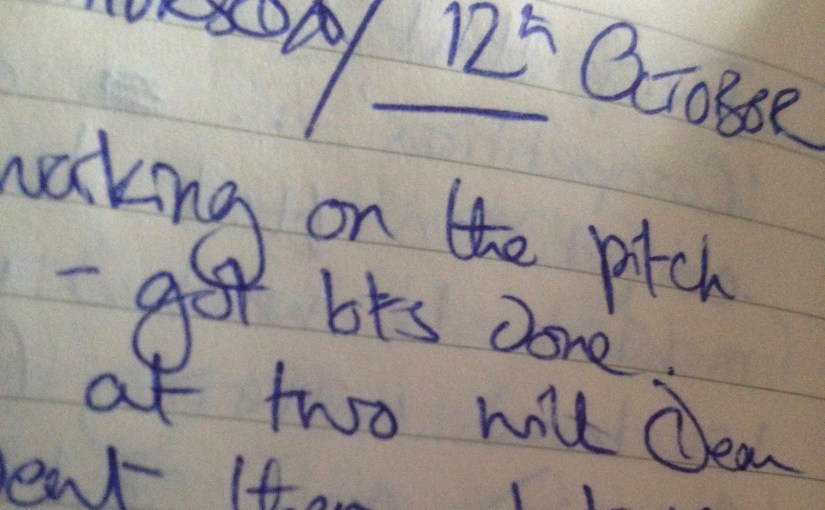
Thursday 12th October, 2006

A blissful day at home working on the pitch and the script for Eddie. Got lots done. Had a conference call with Dean and Jon. I was confident then, but nerves are starting already.

Friday 13th October, 2006

Dean, Jon and I pitched to Film London this morning. As pitches go, it was textbook stuff and we covered everything. However, Dean called a little after to nine to say that we didn’t get the green light. No reason was offered and he didn’t ask. The positive spin is that we can now go and raise a proper budget instead rather than be constrained by the strict £100k that Film London insisted on. Dean’s right: at least this way we get to make it on our terms. Still, I can’t help but feel really disappointed. The green light from Film London could have meant that the film would be in cinemas next year and would have got us all some quick recognition.

Dean also reminded me that Film London’s remit is to support independent/arthouse film, and our script is very much mainstream and commercial and much more likely to get funding elsewhere than some of the other projects on the Microwave scheme. There’s no news yet on who actually did get through. Apparently an announcement will be made in the next ten days.

Aah, can you hear it? The post-disappointment rationalisation? There is some truth in our reasoning: the script is a ghost story, with a far more substantial VFX budget than any other script on the scheme (a habit I can’t seem to shake!), and it would have been nigh-on impossible to make effectively on such a small budget. All that fluff about arthouse versus commercial is balls, though. Looking back at my script ten years on, it’s far too idiosyncratic to be commercial, and the films that were selected by Film London were both eminently marketable and, while not runaway box offices successes, earned their money back, were highly acclaimed, and successfully launched careers.

The first I saw was Eran Creevy’s Shifty, which is a fantastic debut with terrific performances from Riz Ahmed and Daniel Mays. The second was Mum and Dad, a nicely twisted horror directed by Steven Shiel.

We eventually learned that we were ultimately rejected because my script was “too TV”, which burned at the time (and felt a bit of a flannely excuse), though now it’s got my cogs whirring and wondering if there’s mileage in a London-set TV series about a haunted house and guy called Eddie trying to figure out who murdered him. TV execs: you know where to find me!

Film London Microschool: Day Three. My Writing Diary, Ten Years On, Wednesday 11th October, 2006

Ten years ago, my script Waiting For Eddie had a producera director and had been chosen for the first ever Film London Microwave scheme, which was designed to produce at least two debut films with a budget of £100k.

Wednesday 11th October, 2006

Last full day of Microschool. First of all, I have to tip my hat to our fellow filmmakers… a thoroughly nice bunch. An awful word was coined by a producer (who shall remain anonymous): “co-opetition”. A mash of co-operation and competition that he felt summed-up the spirit in which he wanted us to work. We ignored his banal wittering and just got on with each other anyway. Special mention should go to Rani Creevy, writer/director of Shifty, and Carol Morley, writer/director of Hotel Deadly – she was a straight-talking breath of fresh air, as was her producer Cairo Cannon.

Producer Christine Alderson was really helpful, too. She basically guided our group through the sessions with plenty of wise and practical advice. Judy Counihan, co-writer of the excellent Faber book The Pitch, came along to talk for an hour on pitching and I made nearly three pages of notes.

Dean (Fisher) is still wary of the restrictions on the budget, but Jon (Wright) is still confident that we can pull it off. I’ll work on our pitch script at home tomorrow and Friday is the day we pitch to the Film London panel!

What’s fascinating about looking back on this entry is the wealth of talent at this first Microschool. I didn’t know it at the time, but Eran (Rani) Creevy would win the first Microwave and go on to make Shifty, and then Welcome To The Punch, and Carol Morley, who, like us, would not win, but went on to make some of my favourite films of the last decade including Dreams Of Life and The Falling. What’s doubly fascinating is I recall their passion and no-nonsense approach to their filmmaking. No “co-opetition” for them, they just wanted to get their fucking films made…

Oh, and Faber books have somehow let The Pitch go out of print! Boo, Faber, boo! Simply the best book on pitching your film ever written. Totally essential, and grab a copy if you can.

More on how turned out soon (though I guess if you’ve been paying attention you already know the ending)…

Film London Microschool: Day Two. My Writing Diary, Ten Years On, Tuesday 10th October, 2006

Ten years ago, my horror-comedy script Waiting For Eddie had a producera director and had been chosen for the first ever Film London Microwave scheme, which was designed to produce at least two debut films with a budget of £100k. And day two saw the script get some serious interrogation from some industry professionals. Would it be knocked out in the first round, or would it pick itself up, battered and bruised, and ask for more…?

Tuesday 10th October, 2006

Day two of Microschool. Jon (Wright) and I had a meeting with script editor Toby Rushton that was so good it gave me goosebumps. He started by saying some very nice things about the script, we then all agreed on some of the problems. He liked the suggestion in the script that the house has something to do with its murderous history. Jon and I were initially wary: we didn’t want to go down the Amityville Horror route, but then I latched on to the slaughtered Victorian family in the Fleetwood sequence and we now have a new character called Cassandra and an ending that is ten times better.

Poor Dean (Fisher) was stuck in the basement at the Institute Francais, poring over the budget with all the other producers. He’s still wary of making of making Eddie for £100k, but Jon is more optimistic.

This was the first time the script had been read by anyone not directly associated with the film, and it was something of a relief to be told that it wasn’t a steaming turd, and how dare I call myself a writer? I remember the goosebumps came when Toby took a tiny part of the script — a throwaway line about previous murders in this haunted house — and started talking about how we could extrapolate that into something bigger, and by the time our session was over we had a new character and a better ending (and I had a ton of revisions ahead of me… years of them, in fact).

Getting feedback and notes can be a traumatic experience, but this was such a thrill to be given permission almost to dig deeper and explore these characters and situations all the more. At the end of day two I was certain of one thing: our film would get the £100k and would be made within the year (spoiler alert: nah).

For more on Day Three of Microschool, tune in tomorrow!

Film London Microschool, My Writing Diary, Ten Years On, Monday 9th October, 2006

My script Waiting For Eddie had a producer, a director and had been chosen for the first ever Film London Microwave scheme, which was designed to produce at least two debut films with a budget of £100k. But we weren’t the only ones, of course, and first had to survive a week of Microschool: a kind of Bake Off for filmmakers. Jon and I were treated to masterclasses from producers, writers and sales agents, while our poor producer Dean was sent to a dark basement for a week of budget school (some people get all the luck). Reading this ten years on I feel like I come across as a cocky little know-it-all. Don’t worry, dear reader, the next ten years of trying to get scripts off the ground will knock that out of me…

Monday 9th October, 2006

Day one of Microschool. An up and down sort of day. It started with some sales agents telling us exactly what sort of things they were looking for in a film. A lot of what they said could be filed under “The Bleeding Obvious”, but it was surprising just how few of our fellow filmmakers have twigged to the basic tenets of writing for a market. Some just want to experiment at the artistic end of the spectrum and that’s great, but I think Film London are looking for a hit to come out of this scheme and, as far as the comedy films are concerned, we’re the only one of this scheme that comes close. That said, there’s a lot of work to do this week: budgets need a rethink and the script will need to be knocked into a practical shape. Dean is torn: he’s still totally convinced that he can get £400k for Eddie, but Jon and I feel that we should really get our teeth into this week and go for a win!

This was my first time surrounded by other filmmakers in a hotbed of talent and competition, and it was pretty intimidating at first, but you soon discover that they’re just as terrified (or as full of shit) as you are, and you start to realise that you might actually deserve a place at the table here.

You hear people talking about breaking into the film industry like you just need to kick down one door and suddenly you’re a filmmaker. It’s nothing like that at all. More a series of incremental inch-like shuffles in a never-ending post office queue, but while you’re in the queue you get talking to others who have just as far to go as you and before you know it you have a peer group and a sense of belonging. I’ll always be grateful to the Microwave scheme and Dean and Jon for getting me a place at the back of the line, and I’ll stop now before this metaphor completely exhausts itself.

More on day two of Microwave tomorrow!


You Are Not Your Software – My Writing Diary, Ten Years On, Monday 18th September 2006

There’s a lot of fetishisation* around the writing process. Articles and books on screenwriting would tell you about George Lucas only writing on yellow legal pads in pencil, attributing part of the mystique of Star Wars’ success to this arcane ritual.

Then he went and wrote the prequels the same way.

And perhaps you’ve heard the quote about Hemingway writing drunk and editing sober (though he probably never said it)? Or of Anthony Trollope getting up at the crack of dawn to write for three hours before going to work at the post office? Or of the many authors renowned for writing in bed?

Everyone seems to have their rituals, and accompanying magic talismanic devices to ensure that the muse is welcomed into their aura and the magic can begin. If the modern screenwriter is a knight valiantly overcoming the onslaught of movie execs and development notes, then our hero’s sword and shield are Final Draft and a Macbook. In September, 2006, I came into a bit of money thanks to a defunct pension scheme. I had two grand spare! My wife wanted a new kitchen. Guess what I got instead…?

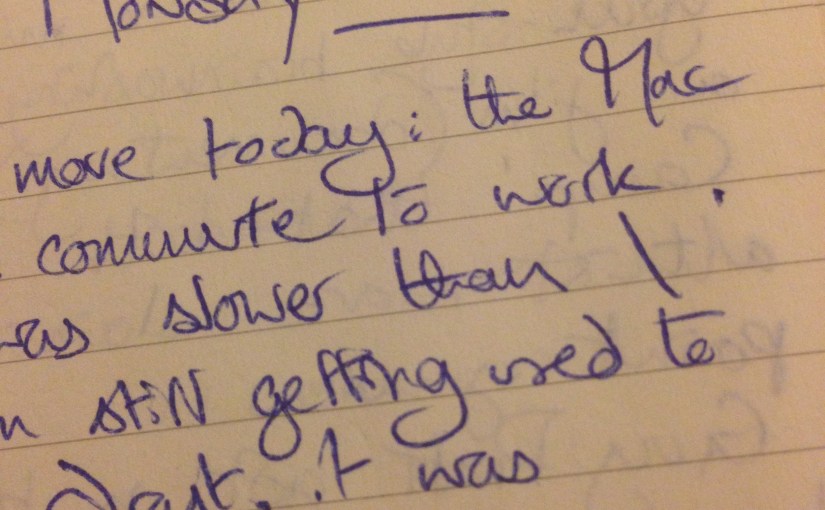
Monday 18th September, 2006

The Mac came with me on the commute to work. Progress on the script was slower than I would have liked as I’m still getting used to the peculiarities of Final Draft. It was distracting, too, as I spent more time worrying about formatting than the script itself. I’ll get used to it though**

Final Draft touts itself as the industry standard, with the inference being that you simply can’t call yourself a screenwriter unless you have a copy. It’s expensive and brimming with features that you probably won’t ever use, even if you go into production. In my experience it’s been fairly well behaved, but like Microsoft Word it has to be all things to all screenwriters and as a result it feels very top-heavy… Oh, and every now and then they update it in a way that means you can’t open old versions of your script (at least, not without a huge hassle) and they charge you more dosh for the privilege. That’s always fun. For a very entertaining debate on the vagaries of FD, do check out the transcript of this episode of Scriptnotes. These days I keep it simple. Slugline is favourite, though I also dabble with Highland and Fade-In, all of which are based on Fountain, a plain text markup language.

But back in 2006 I felt like I had joined a secret club. Until now I had been writing in MS Word and formatting everything manually. Final Draft did all the formatting as I typed, which was very nifty, and I had a MacBook! Surely a Hollywood movie deal was just around the corner?

Not exactly. I still had to write. Once I got used to all the keyboard shortcuts, I was still just a writer trying to make words on a page jump into the reader’s head and screen a movie. There’s no software for that.

A ritual does not make you a writer, Final Draft and a Macbook does not make you a screenwriter, a Fender Stratocaster does not make you Eric Clapton. You are not your software. I should have bought a kitchen.

Just get words on a page. Pen on paper, pencil on a yellow legal pad, words on a screen. Build a story. You can worry about the formatting shizzle later.

By the way, MacBooks are also expensive and brimming with features you will never use. But they’re bloody awesome, and the software updates are free.

*A word I can type, but simply cannot say aloud without sounding like a drunk.

**Sort of did… eventually…

Scott Lynch, Elizabeth Bear, Bradley Beaulieu and Ezekiel Boone walk into a pod booth…

GollanczFest 2016 kicked off today and I was delighted to be in conversation with a most excellent collection of SF&F authors on a pair of fun Google Hangouts. I began with Bradley Beaulieu and Ezekiel Boone and we discussed flesh-eating spiders, pit fighters, and how not to slavishly follow the rules of writing, while we waited in vain for Scott and Elizabeth to arrive before our hangout ended… somewhat alarmingly…

Then Scott and Elizabeth, who had been held hostage by a taxi driver, finally arrived and we discussed arson, the tenth anniversary of The Lies Of Locke Lamora, pulling the rug from under your readers and killing off beloved characters. This one ended with a major technical hitch (the sound dies about 17 minutes in)… but we had a backup audio recording and there will be more on an audio podcast coming soon – enjoy!

Eager or hopelessly naive? – My Writing Diary, Ten Years On, Wednesday 6th September 2006

I was at the London Screenwriters’ Festival last weekend, and it was delightful to meet so many writers, young and old, starting out on their writing careers. Their optimism, energy and determination made me feel very old invigorated me… and they reminded me of myself ten years ago. My script, Waiting For Eddie, had a producer in Dean Fisher, a director in Jon Wright, and we were waiting for news on our submission to London Film’s inaugural Microwave film scheme…


Wednesday 6th September, 2006

A most excellent day. Dean called to confirm that we’re through to the final stage of the Microwave scheme! A week of intensive script development awaits me in October and, with any luck, we’ll start production.

Told my agent and she was very excited. She also let slip that Working Title have agreed to read The Last Time Machine – they’ll reject it, of course, but it’ll be interesting to hear what they say.

I also bought my Apple MacBook today. It’s gorgeous, though I’ve spent most of the evening trying to figure out how it works.


Cos you can’t be a writer unless you have a MacBook, people!* And Final Draft. Can’t call yourself a screenwriter unless you have Final Draft!**

Before you go rushing off to IMDb, I should warn you that (spoiler alert) neither Waiting For Eddie or The Last Time Machine were made into films, so all that talk of ‘Going into production’ was fuelled by the same kind of optimism, energy and determination those new writers had at the London SWF. Okay, you might call it hopeless naivety, and some days that’s all you’ve got, but when someone else shows interest in your work I would encourage every writer to enjoy and revel in the moment… then put it aside and get on with writing the next thing. Because, even if it your script is picked up and made into a movie, they’ll want something new right away, and if they don’t, you’ll need something new for the next round of crashing disappointments submissions.

Keep writing!


*Not true.

**Even less true.

Meeting Your Mentor – My Writing Diary, Ten Years On, September 1st, 2006

Summer 2006 suddenly went very quiet on the writing diary front. Producer Dean Fisher was pitching my script Waiting For Eddie around town, and then everyone goes on holiday in August. These are always worrying times for a writer. The phone stops ringing, emails don’t ping in your inbox, and you begin to wonder if all the enthusiasm for your project has just evaporated… Then summer ended and it all started kicking off again. September 2006 began with a fortuitous meeting with someone who was to change the course of my writing career, film director Jon Wright


Friday, 1st September, 2006

I jumped on a train to London for the really important meeting of the week. Dean, Jon Wright and I headed off to a meeting with Film London (to pitch Waiting For Eddie for the first ever Microwave Scheme).

Jon and I hit it off immediately. Quite literally: we bumped heads as we both sat down. Jon had some notes on the script, which were excellent. He definitely gets the script and it’s hugely gratifying to hear someone enthuse about it who will hopefully be in a position to make it a reality.

The Film London meeting went really well. Both Maggie Ellis and Sol Gatti-Pascual were friendly and encouraging and I have to say that Dean, Jon and I certainly held our own (I was a bag of nerves). I got the feeling that Sol really wants to work with Jon, so this could definitely work in our favour. We’ll hear if we get through to the next stage on Tuesday, but both Jon and Dean said they wouldn’t be despondent if we didn’t get through as they’re confident we can raise the budget elsewhere.

So, yes, in the kind of meet-cute you could only find on the corniest romcom, Jon and I met by head-butting each other. To put it in some kind of context, he was the first proper film director that I had ever had a meeting with, and I started by giving him a Glasgow Kiss. For a second I seriously thought I had completely ruined any chance I ever had of working in film ever, but fortunately he laughed it off and we got down to business.

The real boost was getting his very insightful and thoughtful notes. Like I said, he really understood the tone of my warped ghost story and it became clear that we shared many sensibilities, which would definitely pay off in the future, as he would eventually become Obi-Wan to my… Jar Jar…? Stay tuned for more…

Coping With A Non-Ringing Phone – My Writing Diary, Ten Years On, 21st June 2006

It’s been about a month since my last 2006 diary entry. Why? Because when you’re a writer, and especially when you’re starting out, there are long periods where precisely sod-all happens. The phone doesn’t ring, your agent seems to have disappeared off the face of the planet, you’re beginning to think that pitch/script/treatment you sent out two weeks ago has ended up in a development exec’s junk folder, and because you’re cursed with an imagination you begin to imagine a future where you’re stopping strangers in the street offering to knock-up series bibles for food.

So, how do you cope with these lulls? First of all you have to stop thinking that your career is in the hands of other people, that some magical career fairy will appear in a puff of smoke dispensing commissions and making you a showrunner overnight. Yes, you might be lucky enough to have an agent, but you can’t sit back, twiddling your thumbs hoping that he or she will call to announce out of the blue that you’re writing Star Wars IX.

I try and do two things every day:

I write every day, seven days a week. Even if it’s only a few words, they’re words that weren’t there yesterday.

And I try and do a little business every day. Because this is a business. I try and create work by making contact with people in the industry, reminding them that I’m here, letting them know what I’m up to and what I want.

By creating and touting for work, you can vastly increase the odds of actually getting work, and when the odds are stacked against you the way they are in this business, that’s no bad thing at all. Of course, there’s a fine line between being pushy and assertive, cockiness and confidence, and being able to discern the difference between these is a skill in itself. And you can’t afford to sound too desperate either… I still don’t think I’ve mastered that one.

The following diary entry came after I nudged a producer called Dean Fisher, a splendid chap who had optioned my script Waiting For Eddie and took it to Cannes as part of slate he was developing. I had marked his return on my calendar, and dropped him an eager “How did it go?” email the day after…

Wednesday 14th June, 2006

Got an reply from Dean at Scanner Rhodes – Cannes went well, plenty of promises on funding, but he needs people to put their money where their mouths are. He mentioned a new Film London project called Microwave: you get £100k to make a movie in London (plus all sorts of facilities and services for free). He’s thinking of putting Waiting For Eddie up for this. Sounds good to me, and I’ve asked my agent for advice.

Wednesday 21st June, 2006

Received an email from Dean today; he’s definitely entering ‘Waiting For Eddie’ in the Film London Microwave scheme and, even better, he’s meeting a director next week with a view to getting him on board. His name is Jon Wright and if his website/showreel is anything to go by he is perfect for the job. His short films are nothing short of brilliant; they look great, are well written (he wrote them himself) and they have terrific sound design. Apparently he’s keen to work with Dean, so hopefully this could be very fruitful.

Friday 23rd June, 2006

Good news – Jon Wright loved Waiting For Eddie! Dean’s going to enter us in the Film London thing and we should hear if we’re in by the end of July.

Yes! The first appearance in the diaries from one Mr. Jon Wright, who would turn out to be somewhat significant in my own career. A Magical Career Fairy, if you will? Or not… More on him soon…


Getting Paid – My Writing Diary, Ten Years On, Thursday 25th May, 2006

If you’re an aspiring screenwriter and cursed/blessed with a vivid imagination, you might get a bit carried away when fantasising about that first ever professional payment. Would it be for a life-changing sum of money? A million dollar deal that meant you could finally say sayonara to the day job and pursue your dream full time? Or would it be for about £82.73 (less tax) and take forever to arrive? Guess which one happened to me!

My script Waiting For Eddie had been optioned by a producer back in November 2005. The producer paid promptly, but whenever I asked my agent about the money I only ever got vague replies. Things were complicated by the fact that I had two agents: one for film and a literary agent. The film agent did the deal, but all the money went through the lit agent. I found a handful of mentions of it in my 2006 diaries, and I’m clearly getting a bit fed-up at this point…

Tuesday 18th April, 2006

Script agent emailed me to day and told me that the Literary Agent has had my Waiting For Eddie option money since November… It’s only £85, but it doesn’t instil me with much confidence.

Then, over a month later…

Tuesday 23rd May, 2006

I got another rejection today… Oh, and they (Literary Agent) found my cheque. It was at the bottom of an in-tray… I should get it tomorrow.

Thursday 25th May, 2006

The cheque arrived today. My first money earned from writing. I suppose I can call myself a writer now… £82.73. I don’t think I’ll be quitting the day job just yet.

Nearly six months from option to pay! Believe me, that would not happen now. I’d be on the phone with an earful of righteous indignation for someone in less than 48 hours. When you’re starting out, it’s not uncommon to be coy about getting paid, but never forget that what you do as a writer has a value. No one would be on that set if not for you and your ideas. Forget any bullshit about getting exposure, or publicity value, or an opportunity to “get on the ladder”. You have worked your butt off producing a work, and if they want to make it, they have to pay you, and pay you the going rate. If they can’t afford to pay you, then they shouldn’t be in business. No other industry puts up with this crap – try asking a baker to make you some bread for free – and yet it still goes on today: see the recent scandal over Sainsbury’s attempt to get an artist to work for free.

And just put yourself in the producer’s shoes for a minute. They have a slate of projects, including your script, which they optioned for free, and another script which they paid money for. Which one do you think will be their priority? They have to make a return on their investment, and producers hate losing money, so your little freebie won’t be getting to the top of their pile anytime soon. It’s all about being valued. Make sure you are.

I’ll leave the last word to the wonderful Harlan Ellison. This video has been doing the rounds for a few years now and it’s one of my favourites (and yes, I’m aware of the irony that, this being YouTube, Mr. Ellison probably doesn’t see a penny from this), but he sums it up better than I ever could…

By the way, I still have a day job, so clearly need to work harder at this payment malarkey myself.